
Meal planning is good for your diet, but it can also be good for your wallet. Most of the focus is usually on weight loss or macros, but the same habits, planning before you shop, building around what you already own, and cooking with intent, cut your grocery bill noticeably too.
The basics aren’t complicated. Budget meal planning just takes a bit more thought: picking the right ingredients, knowing when to bulk buy, and planning so nothing goes to waste. Here are ten habits that make the real difference.
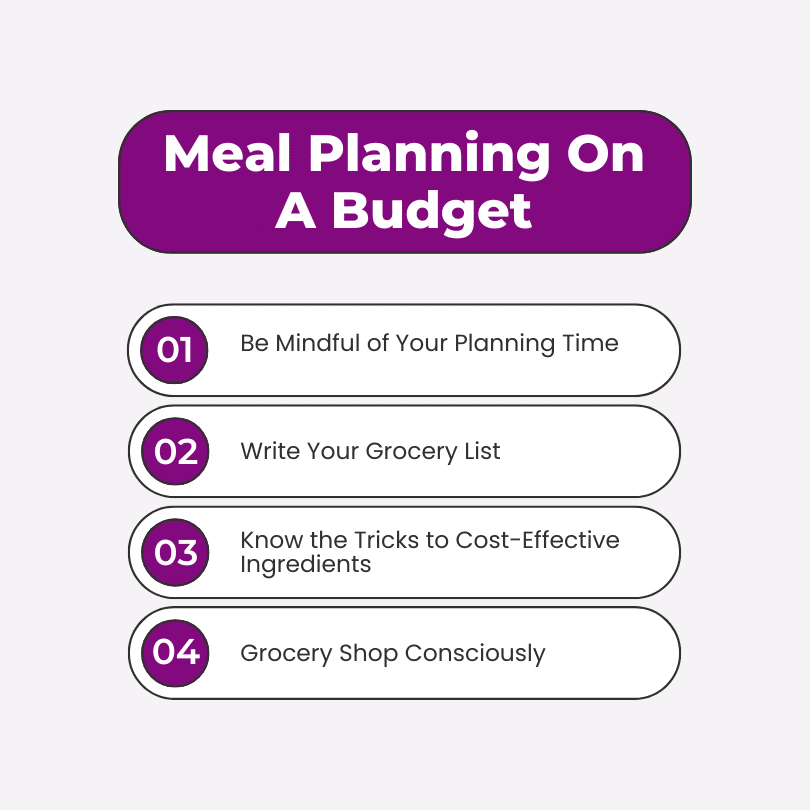
Jump to a Topic
Plan Before You Shop
Block out time to plan
Before any meal planning happens, make a plan for when you’re going to do it. A proper meal plan plus grocery list usually takes an hour, especially if you’re checking what’s already in the pantry. Block the time in your calendar like you would any other appointment.
Friday or weekends work for most people, because you can shop on the way home or first thing the next morning. If you’re going to meal prep in bulk rather than cook each meal on the day, block out time for that too. The plan only works if you actually have time to cook what’s on it.
Make a list (and don’t shop hungry)
Once your meals are planned, write the grocery list and stick to it. Set a budget for the week and stick to that too. Both are simple in concept and frequently ignored in practice.
The single oldest tip in grocery shopping is also one of the best: don’t shop hungry. Low blood sugar amplifies cravings, and supermarket layouts are designed to play to exactly that. Eat something before you go and the list becomes much easier to stick to.
Shop Smarter for Less
Know the cost-effective swaps
Some ingredients will always cost more than others. Where you can save real money is on the ingredients where the cheap option is just as good as the expensive one, or genuinely better. A few worth knowing:
Vegetables are the area with the most low-hanging fruit (so to speak). Pre-chopped is almost always a tax on convenience, not a deal. But there are real exceptions: frozen spinach is one of the best veg hacks going. Fresh spinach is surprisingly expensive for how much wilts on the journey home, and it spoils within days. Frozen costs less per serving and keeps for months. The same logic applies to mushrooms, which often go bad within a week of buying them fresh.
For pantry staples, knowing when to drop down to a store brand matters. Tinned tomatoes are the classic example: name brands are objectively higher quality, but you can’t taste the difference in a slow-cooked pasta sauce. Add a small pinch of sugar to compensate for the higher acidity of budget brands and you’re set.
Buy in bulk only when it makes sense
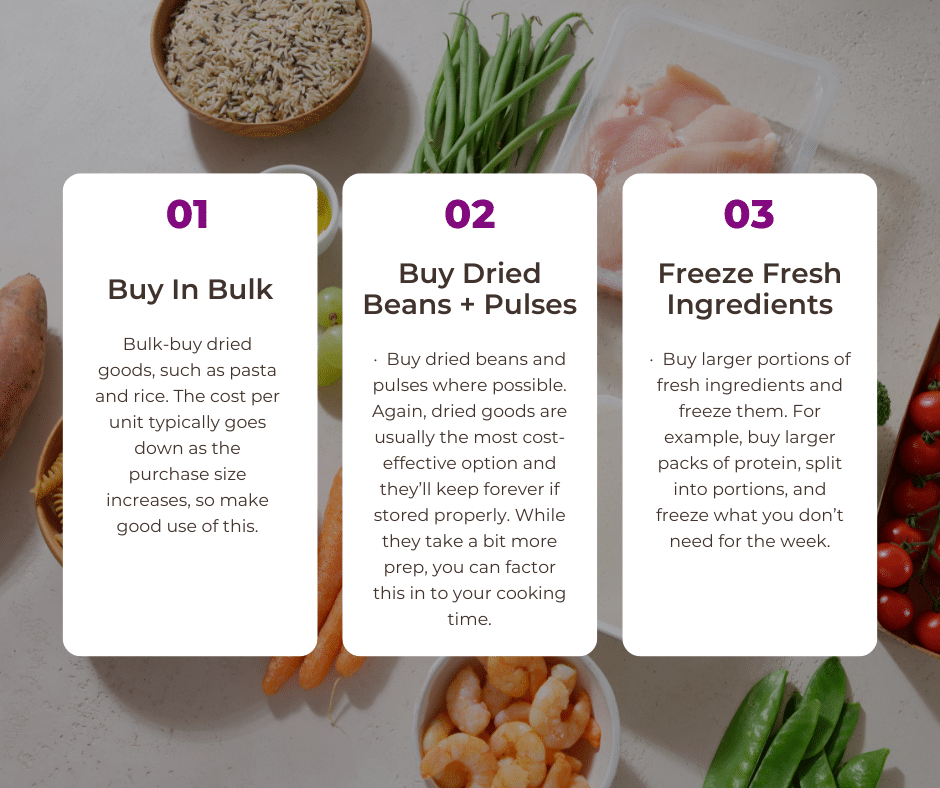
Bulk buying can save real money on staples, but only if you’ll actually get through it. Before throwing the family-size pack of ground turkey in the cart, ask yourself four questions:
- Will I really use this much?
- Can I use it (or freeze it) before it goes bad?
- Is the unit price actually better than the smaller pack?
- Do I have the storage space for it?
A bulk pack of mince looks great for the protein-per-dollar ratio, but if half of it ends up in the bin you’ve spent more than the small pack would have cost. Buy the smaller size, or commit to prepping and freezing the second half before you leave the store.
Save money on protein
For most people, meat is the most expensive part of the grocery bill. The fix isn’t to eat less protein, it’s to mix in cheaper sources for some of your meals. Lentils slot into pasta sauces, lasagnas, and chilis with almost no recipe change. Quinoa, beans, chickpeas, and other pulses cost a fraction of meat per gram of protein and store basically forever when dried.
The goal is still to hit your protein target. Around 30g of protein per meal is a reasonable default. You can get there with a 4oz chicken breast for $2.50 or with a cup of lentils for $0.50 plus a little extra creativity. Both count.
Stretch Every Ingredient
Cook around multipurpose ingredients
Plan meals around ingredients that can pull double or triple duty, especially anything perishable. If half a head of lettuce is left after Monday’s salad, build Tuesday around a wrap that uses the other half. If you’ve found bulk protein on sale, plan two or three different meals that use it.
The clearest example is a basic bolognese sauce. Make it in bulk on Sunday, eat it over pasta on Monday, layer it into a lasagna on Wednesday, turn it into a chili with the addition of beans and spices on Friday, or use it as the base for a moussaka. One sauce, four meals, with only a few extra ingredients each time. For more on this kind of stretchable cooking, our 40+ macro-friendly recipes roundup is full of meals built around staple ingredients.
Double up and freeze the second half
When you’ve already got the pan out and the oven on, cooking a double batch costs almost no extra effort. Eat half this week, freeze the other half in single-portion containers. The future version of you who comes home tired on a Wednesday and doesn’t want to cook will thank you. Most cooked meals freeze well for 2 to 3 months.
Plan for leftovers
Leftovers either save you money or quietly cost you money, depending on what happens to them. If they get eaten, you’ve effectively halved the cost (and the cooking time) of that meal. If they sit in the fridge until they go off, you’ve paid full price for half a meal.
The difference is whether they’re on the meal plan. If Monday’s dinner makes enough for two portions, pencil in the second portion as Wednesday’s lunch. Treat leftovers as a planned meal, not a vague hope.
Stay Disciplined (Not Rigid)
Use deals (only on what you’d already buy)
Most store apps and websites have decent weekly deals. A few minutes scrolling can shave a few dollars off the things you were buying anyway. That’s the catch though: it’s only a deal if it’s something you actually need. Saving $2 on a product you wouldn’t otherwise have bought is still $5 you didn’t need to spend.
Write down every meal (with flexibility)
Don’t just plan dinners. Plan breakfasts, lunches, snacks too. The more your full day is mapped out, the less impulse spending happens (and the easier it is to spot which meals are pulling double duty for leftovers).
That said, the plan isn’t a contract. If the chicken you bought has a tighter use-by date than expected, swap Friday’s dinner in for Tuesday’s. As long as a week of meals exists on paper, the order can shuffle without breaking the budget.
Need Budget-Friendly Recipe Ideas?
Our macro-friendly recipe library is full of meals built around staple ingredients, with full calorie and macro breakdowns so the planning’s already done.
Free Meal Planner Template
If you’d like a template to work from, our printable meal planner gives you a structured layout for the week’s meals, grocery list, and budget. Drop your email below and we’ll send it over:
The Trade-Off Worth Knowing
Budget meal planning saves real money once the habits stick, but it has a ceiling. Spend three hours every weekend optimizing for $30 of savings and you’ve effectively earned $10 an hour, which isn’t always a great trade. The biggest wins come from the first few habits: planning before you shop, sticking to the list, and not letting food go to waste. Diminishing returns kick in past that.
If you’d rather skip building the system from scratch and have a coach work the planning, budget, and macro targets around your actual schedule, our coaching packages include exactly that. We’ll match you with a coach who’ll set your numbers, adjust them as needed, and help you build a routine that’s sustainable rather than punishing.
No gimmicks. No restrictions.
Start your journey with expert coaching, personalized nutrition, and real results, absolutely free for two weeks.
