Most diet content sells meal plans as the answer. Cook these seven meals, eat at these times, hit these numbers, and you’ll lose weight. If you can stick to the plan, the math works.
The “stick to the plan” part is the catch. Plans work fine while you’re on them. They stop working the moment life gets in the way: a work trip, a wedding, three weeks where you can’t bring yourself to roast another tray of chicken thighs. The plan goes in the bin, and so does the progress.
The real problem isn’t the plan itself. It’s that pre-made plans teach you nothing about choosing food in the real world. You finish six weeks no better at eating than when you started. So when you stop, you regain the weight. Here’s why that happens, and what to do instead.
Jump to a Topic
When Meal Plans Actually Help (Briefly)
To be fair, meal plans have a place. They work well in three situations:
- You’re brand new to nutrition and don’t know where to start. A plan removes a hundred decisions so you can focus on building the habit of cooking and eating consistently.
- You have a specific short-term goal (a six-week deadline, a contest, a wedding). The plan is a temporary tool, not a lifestyle.
- You genuinely thrive with strict structure. That’s not most people, but it’s some people, and there’s nothing wrong with it.
The issue is that pre-made plans get sold as the long-term answer when they’re really a short-term scaffold. The scaffold itself is fine. Living on the scaffold is what doesn’t work.
Why They Stop Working
Three concrete problems come up almost every time, especially for people seeking guidance and structure after years of failed dieting:
1. The plan ends, and you don’t know what to do
A pre-made plan answers “what’s for dinner?” for you. Six weeks in, you’ve gotten very good at following someone else’s answer and learned nothing about constructing your own. The first time you have to cook off-plan, you default to whatever you were eating before.
2. Real life doesn’t fit the plan
Birthdays happen. Restaurants happen. Kids’ practice ends at 7pm and dinner’s at 8. The plan doesn’t account for any of it. Most people respond to “I can’t follow the plan today” by abandoning it for the rest of the week. That’s not weak willpower; it’s the design failing.
3. Food is more than fuel
A plan you don’t enjoy is a plan you’ll eventually quit. Pre-made plans rarely account for what you actually like to eat, and most people will tolerate boring food only for so long. By month two, the chicken-and-rice motivation curve has crashed.
The pattern is recognizable: you lose the weight while on the plan, you stop the plan, the weight comes back. Then most people blame themselves rather than the approach.
A Better Default: Build Skills That Outlast the Plan
The alternative isn’t no structure at all. It’s a learning approach where the goal is skills you keep after the scaffolding comes off. Three of them compound over time:
- Knowing your numbers. You don’t need to count calories forever, but you do need to know roughly what your body needs. Our macro calculator gives you a starting point based on your stats, activity, and goal. Once you know your protein, carb, and fat targets, you can construct meals from any cuisine, in any setting, that fit.
- Reading hunger and fullness. Learning to practice mindful eating means tuning into your body’s signals rather than relying on a clock or a portion size on a plan. Most overeating happens because nobody’s paying attention; getting better at that pays off for the rest of your life.
- Understanding what’s in your food. The role of macronutrients isn’t complicated, but it has to be learned once. After that, you can look at any meal and know roughly where it lands.
None of these are quick fixes. They’re all the kind of skill where the first month feels slow and the year after feels easy. That’s the trade you’re making compared to a meal plan: longer ramp, durable result.
The Plate Method (A Plan Without the Plan)
If you want some structure without committing to a rigid plan, the Plate Method is the best entry point. It’s visual, fast, and works at restaurants as well as at home.
Build each meal in these rough proportions:
- Half the plate: non-starchy vegetables. Broccoli, leafy greens, peppers, mushrooms, zucchini, salad. These provide volume and micronutrients at almost no calorie cost.
- A quarter of the plate: lean protein. Roughly the size of your palm. Chicken, fish, lean beef, tofu, eggs, Greek yogurt, a tin of tuna. Protein is the anchor; everything else fits around it.
- A quarter of the plate: starchy carb. Rice, potatoes, pasta, oats, beans, whole grains. Adjust portion based on how active you are; bigger if you trained that day, smaller if not.
- A thumb-sized portion of fat. Olive oil, butter, avocado, a small handful of nuts, cheese. Easy to forget, easy to overdo. The thumb is the rough size.
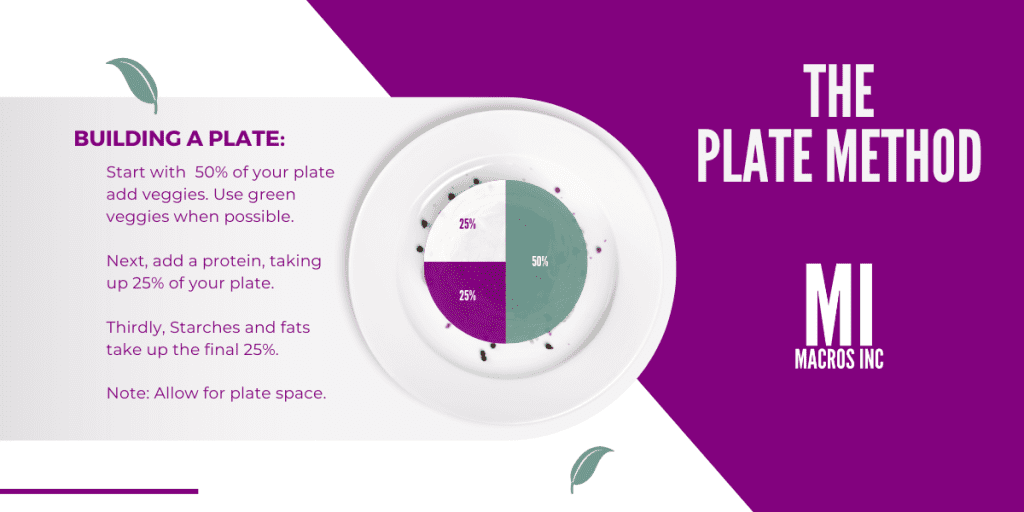
Most people land within ten percent of their calorie and macro targets just by following this, without weighing a single ingredient. It’s flexible enough to work with whatever’s in the fridge and structured enough that you’re not guessing every meal.
If you want recipes that already follow these proportions and have full macro breakdowns ready to go, the recipe library below is built around exactly this kind of cooking.
Want Structure Without a Plan?
Our macro-friendly recipe library has plate-method meals from across every cuisine, with calorie and macro breakdowns on each one so you can swap freely.
How to Transition Off a Plan You’re On
If you’re currently on a meal plan and it’s working, don’t stop tomorrow. The transition matters more than people realize. Step it down rather than cliff-edging it:
- Week 1: Swap one meal. Pick the easiest meal of the day, usually breakfast, and replace it with something you build yourself using the plate method. Keep everything else on the plan.
- Week 2-3: Swap a second meal. Once breakfast feels automatic, move to lunch. Now you’re choosing two-thirds of your food.
- Week 4+: Full self-direction. By now you’ve got data on what works for you, what fills you up, and what fits your day. The plan becomes a reference rather than a script.
If you want extra scaffolding during the transition, our guides on meal prep for weight loss and meal planning on a budget walk through how to combine some prep with the flexibility you’re trying to build. That midpoint, planning some of your meals while staying flexible on the rest, is where most people end up long term.
Once the basics click, you’ll also find you can tune into your body’s hunger and fullness signals more accurately, because you’re no longer mentally outsourcing every food decision.
Meal plans aren’t the enemy. They’re a tool. The mistake is treating them as a permanent solution when they’re meant to be temporary scaffolding. Use them for what they’re good at, then build the skills that mean you won’t need one next year.
If you’d rather have a coach guide you through the skill-building part rather than figuring it out alone, that’s exactly what Macros Inc coaching is built around. We don’t hand you a 6-week plan and disappear. Coaches teach you the skills, adjust your numbers as you go, and stay with you long enough that the changes actually stick.
No gimmicks. No restrictions.
Start your journey with expert coaching, personalized nutrition, and real results, absolutely free for two weeks.