
Intermediate 3-Day Full Body Strength Program
A 3-day barbell strength program built around the squat, bench press, deadlift, and overhead press. Heavy loading on the primary lifts, with volume and accessory work chosen to support them.
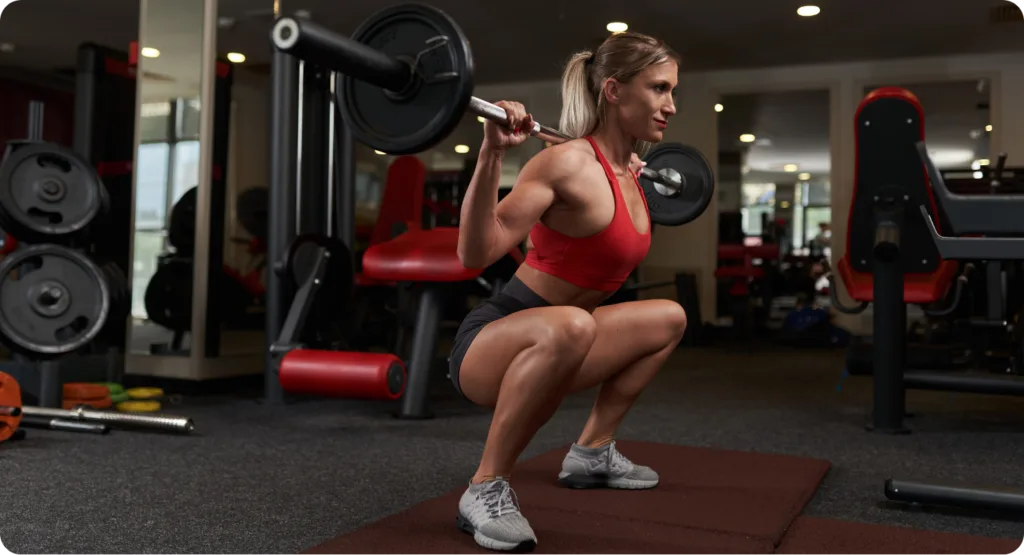
Program Overview
This program is built around one objective: getting stronger on the main barbell lifts. Each session is built around the primary barbell lifts, with accessory work chosen to support them rather than compete for recovery. Session A is your heavy strength day, anchored by the squat and bench press at low rep ranges. Session B is deadlift-led, with overhead pressing and pulling work. Session C is a volume day, using the same movements at a higher rep range to build the work capacity and muscle that translates into long-term strength. The squat and bench press are each trained twice per week. The deadlift is trained once. This is deliberate. Heavy deadlifts require significant recovery and are trained once per week in this program to allow full effort each session.
Rep ranges sit lower (3 to 8 rather than 8 to 15), rest periods are longer, and the primary goal is load progression rather than volume accumulation. Muscle will be built, but it is a byproduct of getting stronger, not the primary aim.
Who Is This For?
This program suits intermediate lifters who want to build real strength on the main barbell lifts and are comfortable training at genuine intensity with low rep ranges. This plan is right for you if:
- You have at least 6 months of consistent, structured training behind you
- You can squat, deadlift, bench press, and overhead press with solid technique
- You want to focus on building strength rather than primarily chasing muscle size
- You can commit to three sessions per week with full effort on each
- You are comfortable training at high intensity on the main barbell lifts
If hypertrophy is your main goal, our intermediate programs include a dedicated hypertrophy program with higher rep ranges and more volume per muscle group.
Weekly Schedule
Phase 1: Linear Progression (Weeks 1-4)
Three sessions per week with distinct loading profiles. Session A is heavy strength at low reps. Session B pairs the deadlift with pressing and pulling accessories. Session C uses moderate reps across compound lifts for strength volume. Rest days between every session.
Start lighter than you think you need to. Week 1 should feel manageable. The weights accumulate quickly on linear progression and you will be working genuinely hard by Week 3 or 4. Starting too heavy leaves no room to progress and is the most common mistake in strength programs.
Your primary strength movement. Bar on upper traps, feet shoulder-width. Descend to at least parallel with a controlled pace and drive back up through the floor. Every rep should look identical.
Shoulder blades retracted and depressed, feet planted, grip slightly wider than shoulder width. Lower the bar to your mid-chest with control, then drive hard off the bottom to lockout.
Hinge to roughly 45 degrees. Pull the bar to your lower chest leading with your elbows, hold for one second, lower under control. Reduced to 3 sets on Session A to keep this heavy day manageable.
Light dumbbells, slight elbow bend. Raise both arms to shoulder height and lower with control. Direct side delt work keeps the shoulders balanced across a program with significant pressing volume.
Kneel at a high cable with the rope attachment. Flex your spine and crunch your rib cage toward your pelvis. Core strength is directly transferable to every main lift in this program.
Bar across your upper back in a staggered stance. Lower straight down until your back knee nearly touches the floor, then drive through the front heel. Complete all reps on one leg before switching.
Bar over mid-foot, hip-width stance. Set your back, push the floor away, and extend hips and knees together to stand. Lower with control. The deadlift is trained once per week and should be treated as the most important session of the week.
Seated with back support, dumbbells at shoulder height. Press both overhead to full extension, lower with control.
Grip the bar just outside shoulder width with palms facing away. Pull the bar down to your upper chest by driving your elbows down and back. Return with control.
Elbow braced against your inner thigh, curl through a full range of motion. Direct bicep isolation that sits cleanly at the end of a deadlift-focused session without adding fatigue to the pulling muscles used on the main lifts.
Stand at a cable station with the rope attachment. Push the weight down by extending your elbows, splitting the rope at the bottom. Keep your upper arms pinned to your sides throughout.
Stand with feet hip width apart, holding a barbell or dumbbells in front of your thighs. Push your hips back with a soft knee bend, lowering the weight along your legs until you feel a deep hamstring stretch. Drive your hips forward to return.
Bench at 30 degrees, grip slightly wider than shoulder width. Use approximately 75 to 80 percent of your Session A bench press weight. A different pressing angle from the flat bench develops upper chest strength and adds variety to the pressing stimulus.
Sit upright at the cable station. Pull the handle to your lower chest, squeeze your shoulder blades together for a full second, then lower slowly. Use a weight that matches the relative effort of your squat and bench on this day. challenging but not maximal.
Rear foot on a bench, dumbbells at your sides. Lower your back knee toward the floor and push back up through your front heel. Unilateral lower body work catches imbalances and develops leg strength that carries over to the squat.
Set the cable at shoulder height. Pull diagonally across your body from high to low, rotating through your torso. Rotational core strength that complements the anti-flexion cable crunches from Session A and is well suited to a strength program where core stability is trained to support heavy barbell work.
Phase 2: Intensity and Volume Split (Weeks 5-8)
Phase 2 drops the rep ranges and pushes the intensity higher. Session A compounds move to 3-4 reps. The deadlift drops to 2-3 reps. Session C adds a fifth set on the three primary lifts. Accessory work stays the same. The sessions get heavier, not longer.
Session A: use a weight that is genuinely challenging for the prescribed reps with solid form. Aim to beat your Phase 1 weights. Session C: use approximately 80 percent of your Session A weight for the higher rep work. This separation between an intensity day and a volume day is what drives progress at intermediate level.
Your primary strength movement. Bar on upper traps, feet shoulder-width. Descend to at least parallel with a controlled pace and drive back up through the floor. Every rep should look identical.
Shoulder blades retracted and depressed, feet planted, grip slightly wider than shoulder width. Lower the bar to your mid-chest with control, then drive hard off the bottom to lockout.
Hinge to roughly 45 degrees. Pull the bar to your lower chest leading with your elbows, hold for one second, lower under control. Reduced to 3 sets on Session A to keep this heavy day manageable.
Light dumbbells, slight elbow bend. Raise both arms to shoulder height and lower with control. Direct side delt work keeps the shoulders balanced across a program with significant pressing volume.
Kneel at a high cable with the rope attachment. Flex your spine and crunch your rib cage toward your pelvis. Core strength is directly transferable to every main lift in this program.
Same exercise from Phase 1. Heavier bar, same form standards.
Lower reps, heavier bar. Every rep should be a near-maximal effort with perfect form.
Lower reps, heavier dumbbells. Strict form, no leaning back.
One extra set, lower reps, heavier cable.
Same volume, heavier dumbbell.
Same volume, heavier cable.
One extra set, lower reps, heavier bar.
One extra set, lower reps, heavier bar.
One extra set, lower reps, heavier cable.
Rear foot on a bench, dumbbells at your sides. Lower your back knee toward the floor and push back up through your front heel. Unilateral lower body work catches imbalances and develops leg strength that carries over to the squat.
Set the cable at shoulder height. Pull diagonally across your body from high to low, rotating through your torso. Rotational core strength that complements the anti-flexion cable crunches from Session A and is well suited to a strength program where core stability is trained to support heavy barbell work.
Intermediate 3-Day Full Body Strength Program PDF
A barbell strength program for intermediate lifters focused on the squat, bench, deadlift, and overhead press.
This is a 3-day full body program you run for 8 weeks, with Session A as heavy squat and bench work, Session B built around a once-weekly deadlift plus pressing and pulling, and Session C as a higher-rep volume day on the same lifts. Phase 1 runs linear progression at 4-8 reps depending on the lift. Phase 2 drops the rep ranges lower, cuts the deadlift to 2-3 reps, and adds a fifth set to Session C's three primary lifts.
- One Heavy Deadlift Session A Week Training it just once lets you push genuine maximum effort without wrecking recovery for the rest of the week.
- An Intensity Day And A Volume Day Session A stays heavy while Session C runs the same lifts at roughly 75-80% of that load for more reps, so strength and work capacity build side by side.
- Lower Reps And A Fifth Set In Phase 2 The squat and bench drop to 3-4 reps, the deadlift to 2-3, and Session C adds a fifth set on its main lifts to keep driving load upward.
Get Your 3-Day Strength Program
Includes both training phases, the weekly schedule, and exercise cues for all three sessions. Download instantly after you submit the form.
Unsubscribe any time.
Nutrition Guidance
Strength training demands more from your nutrition than most people expect. Recovering from three sessions of heavy barbell work per week requires adequate calories and protein, and your performance in the gym will reflect your nutrition directly. Understanding how much you should be eating is the starting point. Our guide to total daily energy expenditure explains exactly how to calculate your calorie needs and why strength training changes the equation.
Nutrition for Strength
- Protein: 1.6 to 2.2g per kg of bodyweight daily. Protein supports recovery between sessions and the muscle retention that underpins long-term strength. Our high protein recipes make hitting your daily target more practical on a strength program.
- Calories: Eat at maintenance or a small surplus of 200 to 300 calories if building strength and muscle simultaneously is the goal. Use our macro calculator to find your baseline.
- Carbohydrates: Heavy compound lifting runs on glycogen. Do not undereat carbohydrates while running this program. Insufficient carbs will hurt your session performance before anything else.
- Recovery nutrition: A meal with protein and carbohydrates within two hours after each session supports recovery. The total daily intake matters most, but post-training nutrition helps.
Strength performance in the gym is closely tied to your energy intake. If your lifts are stalling and your technique is sound, the first thing to check is whether you are eating enough. Undereating is more common than overeating in intermediate strength athletes.