
5-Day Push Pull Legs
A 5-day Push Pull Legs split built for intermediate lifters who want to train with high frequency and enough volume to drive serious muscle and strength gains.
Program Overview
Push Pull Legs is one of the most proven training splits for intermediate lifters. This 5-day version runs two push sessions, two pull sessions, and one leg session per week. The A sessions are strength-focused with heavier loading and lower rep ranges.
The B sessions are hypertrophy-focused using different exercises at a higher rep range to accumulate volume on the same muscle groups from a different angle. Chest, back, and shoulders are each trained twice per week.
Legs are trained once per week on Wednesday, which keeps recovery manageable within a 5-day schedule but creates more upper-body emphasis than a 6-day PPL. Over 8 weeks the loading and volume both increase progressively across two phases.
This program assumes solid technique on the main barbell lifts and at least 6 months of consistent, structured training. If you are coming from a 3 or 4-day program and want to increase training frequency, this is a natural step up. Note that legs are trained once per week, so this program has an upper-body emphasis compared with a 6-day PPL or upper lower split.
Who Is This For?
This program is for intermediate lifters who are ready to train 5 days per week and want a structured, high-frequency approach to building muscle and strength. This plan is right for you if:
- You have at least 6 months of consistent, structured training behind you
- You can perform barbell squats, deadlifts, bench press, and rows with solid technique
- You can commit to five training sessions per week
- You want to train push, pull, and leg patterns with genuine intensity
- You are ready to manage your recovery carefully across a higher training volume
If you are currently training 3 or 4 days per week, our intermediate programs include a 4-day option that is a better starting point before moving to 5 days.
Weekly Schedule
Phase 1: Establish (Weeks 1-4)
The first four weeks are about finding working weights across all five sessions and building consistency. Do not max out in Week 1. Start slightly conservatively and add weight each week you hit your prescribed reps.
Strength days (A sessions): add 2.5kg to upper body lifts and 5kg to lower body lifts each week you complete all prescribed reps cleanly. Hypertrophy days (B sessions): when you reach the top of the rep range across all sets, increase the weight next session.
Your primary horizontal press. Shoulder blades retracted and depressed, feet planted, bar to mid-chest. Drive hard off the bottom and lock out fully at the top.
Bench at 30 degrees. Press dumbbells from chest height to full extension. The incline angle targets the upper chest while the dumbbells allow a slightly greater range of motion than the barbell.
Bar at shoulder height, press straight overhead while tucking your chin. Brace your glutes and core throughout. Lock out fully before lowering.
Light dumbbells, slight elbow bend. Raise both arms out to shoulder height, brief pause, lower with control. Appears on both push days for consistent side delt volume across the week.
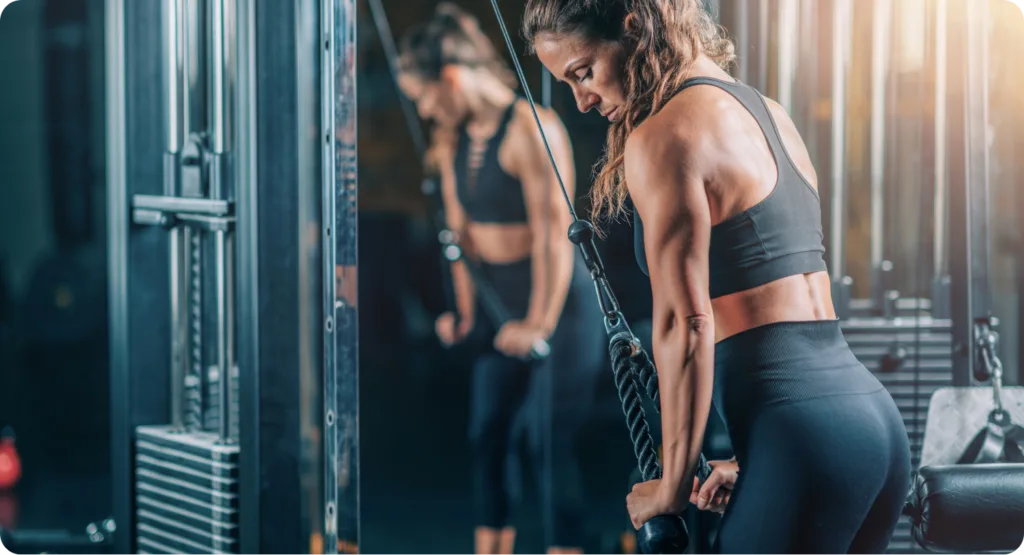
High cable with rope attachment. Elbows pinned to your sides, push to full extension and spread the rope ends apart at the bottom.
Hinge to roughly 45 degrees, bar at arm's length. Pull to your lower chest leading with your elbows, squeeze at the top, lower under control. Your primary horizontal pull movement.
Grip slightly wider than shoulder width. Pull to your upper chest driving your elbows down and back. Control the return to full arm extension.
Hold a resistance band at shoulder height with arms extended. Pull the band apart by driving your hands out to the sides until fully extended, then return with control. Rear delt and upper back work that supports shoulder health across a program with substantial pressing volume on both push days.
Standing, barbell at arm's length with palms facing up. Curl up to your shoulders without swinging your body, then lower slowly. The barbell allows heavier loading than dumbbells for strength development.
Palms facing inward throughout. Curl one dumbbell to your shoulder, lower slowly, and alternate. Targets the brachialis for arm thickness alongside the bicep.
Your primary lower body strength movement. Bar on upper traps, feet shoulder-width. Descend to at least parallel and drive back up through the floor. Legs are trained once per week in this program so this session needs to count.
Hold the bar at hip height. Push your hips back with a soft knee bend, lowering the bar along your shins until you feel a strong hamstring stretch, then drive your hips forward to return. After squats, the RDL adds hamstring and glute volume without the full-body demand of a conventional deadlift.
Rear foot on a bench, dumbbells at your sides. Lower your back knee toward the floor and push back up through your front heel. Excellent unilateral quad and glute development.
Upper back against a bench, barbell across your hips. Drive your hips up to full extension and squeeze your glutes hard for two seconds at the top. After squats and deadlifts, this isolates the glutes without additional spinal loading.
Balls of your feet on an elevated surface. Lower your heels all the way down for a full stretch, drive up onto your toes as high as possible, and pause briefly at the top.
Kneel at a high cable with the rope attachment. Flex your spine and crunch your rib cage toward your pelvis. The movement comes from your abs contracting, not your hips flexing.
Bench at 30 degrees, grip slightly wider than shoulder width. Lower the bar to your upper chest and press back up. Higher rep range than Push A flat bench to accumulate chest volume from a different angle.
Set cables at chest height or slightly above. Bring both handles together in front of your chest in a wide arc, squeezing the chest at the peak of the contraction. Lower with control.
Sit or stand with dumbbells at shoulder height. Press both overhead to full extension, then lower with control. Provides shoulder hypertrophy volume at a higher rep range than the barbell press on Push A.
Same movement as Push A. Appearing on both push days gives the side delts consistent volume across the week, which is what builds shoulder width over time.
High cable with rope attachment. Elbows pinned to your sides, push to full extension and spread the rope ends apart at the bottom. Provides direct triceps work on Push B without adding another compound pressing movement.
Overhand grip, hands slightly wider than shoulder width. Pull until your chin clears the bar, then lower slowly and with full control. The pull-up leads Pull B as the primary vertical pull at a hypertrophy rep range.
Sit upright at the cable station. Pull the handle to your lower chest leading with your elbows, squeeze your shoulder blades together for a full second, then lower slowly.
One hand and knee on a bench, row the dumbbell to your hip leading with your elbow. Allows a full range of motion and slightly more loading per side than a bilateral row.
Hinge forward with light dumbbells hanging below your chest. Raise both arms out to the sides until parallel to the floor, squeezing the rear delts at the top.
Sit back on an incline bench set to roughly 60 degrees, arms hanging straight down. Curl both dumbbells simultaneously. The incline position places the bicep in a stretched starting position that produces a different stimulus to a standing curl.
Phase 2: Add Volume and Push the Load (Weeks 5-8)
Phase 2 drops the rep range further on the strength days and adds one set to all main exercises. By now your working weights should be meaningfully heavier than Week 1. The program structure stays identical.
Continue adding load on strength days when you hit all prescribed reps. On hypertrophy days, each main exercise gains one set. The goal is to finish Phase 2 noticeably stronger and with more muscle than when you started.
One extra set at a lower rep range. By Phase 2 your working weight should be meaningfully heavier than Week 1. Keep your technique locked in as the load increases.
One extra set with heavier dumbbells. Upper chest volume accumulates across Phase 2 with the combination of this and Push B incline barbell.
One extra set at a slightly lower rep range. The overhead press is the slowest progressing lift. Keep adding small increments consistently rather than forcing big jumps.
One extra set. Side delts respond well to volume. Four sets across two push days each week is an effective stimulus for shoulder width over 8 weeks.
One extra set. Your triceps do a significant amount of work on both push days. Direct triceps work at this volume adds meaningful size over the course of Phase 2.
One extra set at a lower rep range. Keep your hinge position honest as the weight increases. Your lower back should be working isometrically, not jerking to help the bar up.
One extra set. If you are consistently hitting 10 reps across all sets, consider switching to weighted pull-ups here in Phase 2.
Hold a resistance band at shoulder height with arms extended. Pull the band apart by driving your hands out to the sides until fully extended, then return with control. Rear delt and upper back work that supports shoulder health across a program with substantial pressing volume on both push days.
One extra set with slightly heavier loading. By Phase 2 you should be curling meaningfully more than in Week 1.
One extra set. Hammer curls and standard barbell curls across Pull A and Pull B give complete bicep development across the week.
One extra set at a lower rep range. Legs are trained once per week, so this session carries all your weekly lower body volume. Do not leave anything in reserve on the squat.
One extra set with heavier loading. The RDL is the primary hamstring developer on legs day. Load it seriously and slow the lowering phase to 3 to 4 seconds.
One extra set with heavier loading. At intermediate level the Bulgarian split squat can be loaded significantly. Add a pause at the bottom of each rep for an additional challenge.
One extra set with more weight. Hold the top for two full seconds. Given that legs is trained once per week, every set of hip thrusts matters.
Same sets, slightly heavier loading or a longer pause at the bottom. Calves trained once per week require full range of motion and meaningful load to respond.
One extra set. Direct ab work at the end of leg day builds the core strength that supports every heavy compound lift in this program.
One extra set with heavier loading. By Phase 2 your incline press should be loaded meaningfully. Combined with Push A incline dumbbell, upper chest volume across the week is substantial.
One extra set. Cable flyes provide a constant load through the full range of motion, which is particularly effective for chest isolation.
One extra set with heavier dumbbells. Your second shoulder press session of the week. By Phase 2 the accumulated shoulder volume across both push days becomes meaningful.
One extra set matching Push A lateral raises. Side delts are getting consistent volume twice per week which is the highly effective way to develop shoulder width.
One extra set. Your second direct triceps session of the week. Spread the rope ends apart fully at the bottom of each rep for maximum contraction.
One extra set. If you are hitting 10 reps across all sets comfortably, add a weight belt. The pull-up should be progressed just like any other compound movement.
One extra set with more weight. The cable row is one of the highly effective mid-back builders. Load it seriously and pause at full contraction on every rep.
One extra set with heavier loading. The single-arm row allows each side to work independently, which catches any imbalance that develops under bilateral loading.
One extra set. The rear delts and upper back receive significant indirect work from all the rowing on Pull B. Direct rear delt work here reinforces shoulder health across a high pressing week.
Sit back on an incline bench set to roughly 60 degrees, arms hanging straight down. Curl both dumbbells simultaneously. The incline position places the bicep in a stretched starting position that produces a different stimulus to a standing curl.
5-Day Push Pull Legs PDF
A high-frequency push, pull, legs split for intermediate lifters ready to train five days a week.
This is a 5-day gym program you run for 8 weeks, with two push and two pull sessions plus one leg day. A sessions run heavy at 4-6 reps and B sessions run higher reps on different exercises for the same muscles. Phase 2 drops the rep range further on A sessions and adds a set to every main exercise across the week.
- Chest, Back, and Shoulders Trained Twice a Week Legs stay at once a week so upper body gets the bulk of the frequency.
- Strength Days and Hypertrophy Days Split the Work A sessions build the load, B sessions pile on volume from a different angle.
- Every Main Lift Gains a Set in Phase 2 Rep ranges tighten as the load climbs across all five sessions.
Get Your 5-Day Push Pull Legs Plan
Includes both training phases, the weekly schedule, and exercise cues for all five sessions. Download instantly after you submit the form.
Unsubscribe any time.
Nutrition Guidance
Five training sessions per week with heavy compound work across all of them creates a real recovery demand. Your nutrition either supports that recovery or undermines it. Five sessions per week also means significantly more calories burned from training. Many intermediate lifters running high-frequency programs underestimate how much they need to eat. Read our guide on whether to eat back exercise calories for a clear breakdown of how to approach your calorie target on training versus rest days.
Nutrition Priorities
- Protein: 1.6 to 2.2g per kg of bodyweight daily. At 5 sessions per week, sitting toward the higher end of this range supports recovery across consecutive training days. Our high protein recipe collection can help you keep your intake consistent across five training days.
- Calories: A surplus of 200 to 300 calories above maintenance if muscle gain is the goal. Use our macro calculator to find your number and adjust based on how your weight and performance are trending.
- Carbohydrates: Do not undereat carbohydrates on a 5-day program. Heavy compound sessions run on glycogen. Insufficient carbohydrate intake will hurt your performance, your recovery, and your progress.
- Rest day nutrition: On your two rest days, keep protein the same but reduce carbohydrates slightly. You are not fuelling heavy training sessions on those days.
Five training days per week leaves less room for inconsistency in your nutrition. Our guide on the 80/20 approach to dieting covers how to stay on track across a high-frequency training week without making every meal a stressful decision.