Arnold Split Workout Plan
The classic three-day bodybuilding split made famous by Arnold Schwarzenegger, pairing chest with back, shoulders with arms, and a dedicated leg day to build size all over.
Program Overview
The Arnold split is a three-day training week that pairs opposing and complementary muscle groups: chest and back on the first day, shoulders and arms on the second, and legs on the third. It is one of the most popular splits ever for building muscle, because it trains each muscle group hard once a week with plenty of volume, then gives it a full week to recover before the next session. This version runs each movement with a form video so you can see exactly how it is done, and it works for anyone past the true beginner stage who wants a proven structure for adding size.
Lifters with a few months of training behind them who want a classic, higher-volume bodybuilding split. If you are brand new, start with a full-body or beginner plan first.
Who Is This For?
This plan suits you if:
- You have at least a few months of consistent training
- You can train three days a week with access to a full gym
- Your main goal is building muscle size
- You enjoy training one or two muscle groups hard per session
Newer lifters will progress faster on a full-body plan first. Browse our other muscle building programs to find the right fit.
Weekly Schedule
Phase 1: Build the Volume (Weeks 1-4)
Run each of the three sessions once per week. Focus on controlled reps and a full range of motion, leaving one or two reps in reserve on your working sets. Rest as prescribed, longer on the big compounds, shorter on the isolation work.
Pick weights you can control for every rep with 1 to 2 in reserve. Add a little whenever a movement feels comfortable across all sets.
Lie on a flat bench, grip the barbell slightly wider than shoulder width, and unrack it with arms extended.
Set the bench to 30-45 degrees.
Hinge at the hips with a dumbbell in each hand.
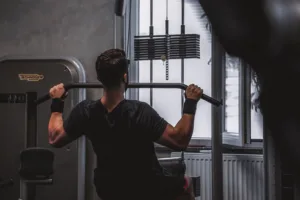
Sit at a lat pulldown station, grip the wide bar with an overhand grip slightly wider than shoulder width.
Lie on a bench with dumbbells above your chest, palms facing each other.
Sit at a cable row station with feet on the platforms and knees slightly bent.
Sit or stand holding dumbbells at shoulder height with palms facing forward.
Stand with dumbbells at your sides.
Stand with a dumbbell in each hand, arms hanging at your sides with palms forward.
Stand facing a high cable with a rope attachment.
Stand holding a dumbbell in each hand at your sides with palms facing your body.
Face away from a low cable, grip the handle with one hand behind your head.
Place the barbell on your upper traps, squat down until thighs are at least parallel.
Hold the barbell at hip height with an overhand grip, feet hip-width apart.
Sit with your upper back against a bench, roll a padded barbell over your hips, and drive up until your torso is parallel to the floor.
Stand a couple of feet in front of a bench and place one foot behind you on the bench.
Stand on a raised surface with the balls of your feet on the edge and heels hanging off. Work to a strict tempo rather than bouncing.
A brisk walk on your rest days to aid recovery and keep you active.
Light stretching and mobility for any areas that felt tight in your last session.
Phase 2: Add Intensity (Weeks 5-8)
Same three sessions, now pushing your working sets closer to failure and adding weight or reps wherever you can. This is where the size gains accelerate, so chase progression on every lift.
Aim to beat your previous week on at least one set of each exercise, whether that is more weight, an extra rep, or a cleaner, more controlled tempo.
Lie on a flat bench, grip the barbell slightly wider than shoulder width, and unrack it with arms extended.
Set the bench to 30-45 degrees.
Hinge at the hips with a dumbbell in each hand.
Sit at a lat pulldown station, grip the wide bar with an overhand grip slightly wider than shoulder width.
Lie on a bench with dumbbells above your chest, palms facing each other.
Sit at a cable row station with feet on the platforms and knees slightly bent.
Sit or stand holding dumbbells at shoulder height with palms facing forward.
Stand with dumbbells at your sides.
Stand with a dumbbell in each hand, arms hanging at your sides with palms forward.
Stand facing a high cable with a rope attachment.
Stand holding a dumbbell in each hand at your sides with palms facing your body.
Face away from a low cable, grip the handle with one hand behind your head.
Place the barbell on your upper traps, squat down until thighs are at least parallel.
Hold the barbell at hip height with an overhand grip, feet hip-width apart.
Sit with your upper back against a bench, roll a padded barbell over your hips, and drive up until your torso is parallel to the floor.
Stand a couple of feet in front of a bench and place one foot behind you on the bench.
Stand on a raised surface with the balls of your feet on the edge and heels hanging off. Work to a strict tempo rather than bouncing.
A brisk walk on your rest days to aid recovery and keep you active.
Light stretching and mobility for any areas that felt tight in your last session.
Arnold Split Workout Plan PDF
The classic three-day bodybuilding split, chest with back, shoulders with arms, and a dedicated leg day, for intermediate lifters chasing size.
This is a 3-day split you run for 8 weeks with full gym access, pairing chest and back on day one, shoulders and arms on day two, and legs on day three. Each session runs 5 to 6 exercises for 18 to 20 sets, with every muscle group trained hard once a week and given a full week to recover. Phase 1 (weeks 1-4) keeps one or two reps in reserve while you settle the loads. Phase 2 (weeks 5-8) runs the same three sessions closer to failure, with the goal of beating the previous week on at least one set of every exercise.
- Opposing Muscles In The Same Session Pairing chest with back means one muscle rests while the other works, so you can keep the intensity high without long gaps between sets.
- One Hard Session Per Muscle Per Week Every muscle group gets a full session of volume, then a week to grow from it. Simple, proven, and easy to recover from.
- A Progression Target For Every Lift Beat last week on at least one set, whether that is more weight, an extra rep, or a cleaner tempo. The PDF gives you the log to track it.
Get Your Arnold Split Plan
Includes both training phases, the weekly schedule, and exercise cues for all three sessions. Download instantly after you submit the form.
Unsubscribe any time.
Nutrition Guidance
Building muscle needs enough fuel and protein behind your training. Our macro calculator sets your calories and protein targets, and our recipes make hitting them easier. If you are choosing between programs, our guide on choosing the right plan for your goals is worth a read.
The Basics
- Calories: Eat in a slight surplus of 250 to 500 calories per day to build muscle while minimizing fat gain. Our macro calculator sets your starting point.
- Protein: 1.6 to 2.2g per kg of bodyweight daily to drive recovery and muscle growth. Browse our recipes for ideas.
- Hydration: Drink water consistently, especially on training days.
- Sleep: Seven to nine hours per night. Muscle is built during recovery, not during the session.
Use the macro calculator to set your calories and protein for your goal, then track your bodyweight as a weekly average and adjust in small increments based on the trend.