Dumbbell Leg Workout
A dumbbell-only leg session that trains quads, hamstrings, glutes, and calves with nothing but a pair of dumbbells, proving you do not need a squat rack to build strong legs.
Program Overview
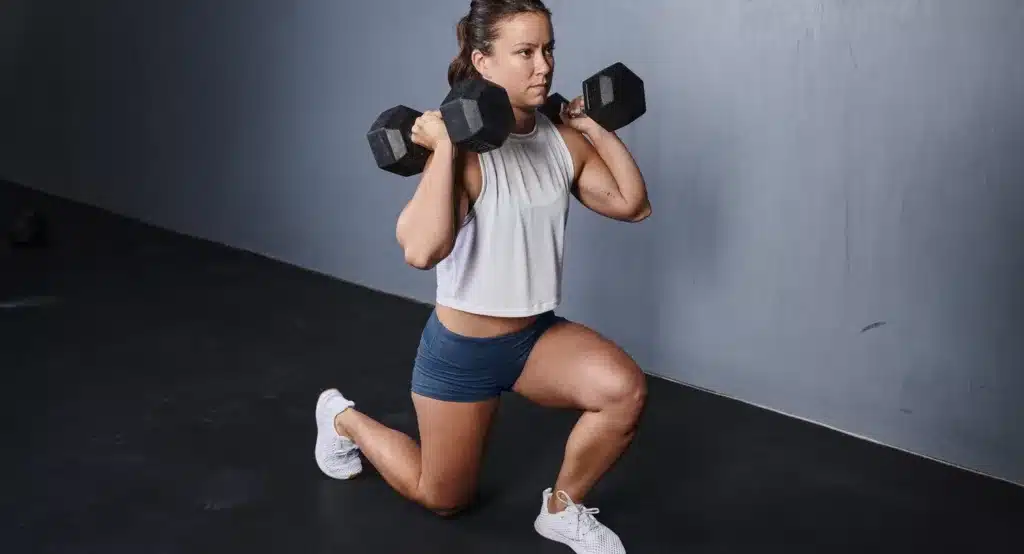
This dumbbell leg workout trains your entire lower body without a barbell or a squat rack, making it perfect for a home gym or anyone who prefers dumbbells. It covers the squat pattern with goblet squats, the hinge pattern with dumbbell deadlifts, unilateral work through lunges and split squats, plus direct glute and calf training. Because you are not limited by what you can hold on your back, dumbbell leg training tends to be easier on the lower back while still challenging your legs hard. Every exercise includes a form video.
Anyone who wants to train legs with dumbbells, at home or in the gym. Ideal if you do not have a squat rack.
Who Is This For?
This workout suits you if:
- You want stronger, more developed legs
- You have a pair of dumbbells and a bench
- You train at home or do not have a squat rack
- You want lower-body training that is easier on your back
Pair this with upper-body training for a balanced week. Browse our dumbbell programs for complete plans.
Weekly Schedule
Phase 1: Build the Base (Weeks 1-4)
Run the session twice a week with at least two days between. Start with the goblet squats and dumbbell deadlifts while you are fresh, then move through the unilateral work. Control every rep through a full range.
Use weights you control for all reps with one or two in reserve. Add load whenever a movement feels comfortable across all sets.
Cup the top of a dumbbell with both hands at chest height.
Stand with dumbbells at your sides.
Hold a dumbbell in each hand at your sides.
Stand a couple of feet in front of a bench and place one foot behind you on the bench.
Sit with upper back on a bench, a dumbbell resting on your hips.
Stand on a raised surface with the balls of your feet on the edge and heels hanging off.
A brisk walk on your rest days to aid recovery and keep you active.
Light stretching and mobility for any areas that felt tight in your last session.
Phase 2: Add Intensity (Weeks 5-8)
Same session, now pushing closer to failure and adding weight or reps wherever you can. With dumbbells, higher reps are often the most practical way to keep progressing on legs.
Beat your last week on at least one set of each exercise, whether that is more weight, an extra rep, or a cleaner tempo.
Cup the top of a dumbbell with both hands at chest height.
Stand with dumbbells at your sides.
Hold a dumbbell in each hand at your sides.
Stand a couple of feet in front of a bench and place one foot behind you on the bench.
Sit with upper back on a bench, a dumbbell resting on your hips.
Stand on a raised surface with the balls of your feet on the edge and heels hanging off.
A brisk walk on your rest days to aid recovery and keep you active.
Light stretching and mobility for any areas that felt tight in your last session.
Dumbbell Leg Workout PDF
A dumbbell-only leg session for quads, hamstrings, glutes, and calves, proof you do not need a squat rack to build strong legs.
This is a single session you run twice a week for 8 weeks with just dumbbells, with at least two days between. It runs 6 exercises for 20 sets: goblet squats and dumbbell deadlifts while you are fresh, then lunges and Bulgarian split squats for the unilateral work, finishing with hip thrusts and calves. Phase 1 (weeks 1-4) keeps one or two reps in reserve. Phase 2 (weeks 5-8) pushes closer to failure, and with dumbbells that usually means higher reps or single leg work rather than heavier weight, because the next pair up is often too big a jump.
- Squat And Hinge Both Covered Goblet squats for the quads, dumbbell deadlifts for the hamstrings and glutes. The two patterns that matter most, without a barbell.
- Single Leg Work Doubles The Demand Lunges and Bulgarian split squats put the whole load through one leg, which is how you make a modest dumbbell genuinely hard.
- Progression When Weight Is Capped The PDF explains how to keep progressing with reps, tempo, and unilateral variations once your heaviest dumbbells stop being enough.
Get Your Dumbbell Leg Workout
Includes both training phases, the weekly schedule, and exercise cues for the full session. Download instantly after you submit the form.
Unsubscribe any time.
Nutrition Guidance
Building muscle needs enough fuel and protein behind your training. Our macro calculator sets your calories and protein targets, and our recipes make hitting them easier. If you are choosing between programs, our guide on choosing the right plan for your goals is worth a read.
The Basics
- Calories: Eat in a slight surplus of 250 to 500 calories per day to build muscle while minimizing fat gain. Our macro calculator sets your starting point.
- Protein: 1.6 to 2.2g per kg of bodyweight daily to drive recovery and muscle growth. Browse our recipes for ideas.
- Hydration: Drink water consistently, especially on training days.
- Sleep: Seven to nine hours per night. Muscle is built during recovery, not during the session.
Use the macro calculator to set your calories and protein for your goal, then track your bodyweight as a weekly average and adjust in small increments based on the trend.