Machine Workout Plan
A complete four-day program built entirely on machines and cables, for anyone who wants real progress without a barbell anywhere near it.
Program Overview
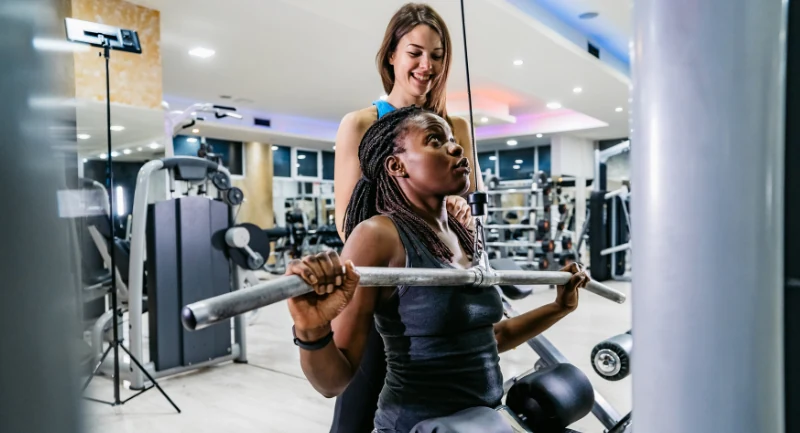
Machines have a reputation as the beginner's corner of the gym, and it is undeserved. For building muscle, the research comparing machines to free weights finds remarkably little difference: tension and effort are what grow a muscle, and a cable stack supplies both without asking you to balance anything. What machines genuinely give up is the coordination and whole-body stability that free weights teach, which is a real cost if you want to get strong at the barbell lifts and no cost at all if you want to build muscle without them. This program runs four days a week for eight weeks on cables, pin-loaded machines and assisted bodyweight stations. Every exercise includes a form video except one, noted in the plan.
New to the gym entirely? Our machine workout plan for beginners teaches the same equipment at a gentler pace. For a cable-led session rather than a full program, see our cable workout plan.
Who Is This For?
This plan suits you if:
- You prefer machines and cables, by choice or necessity
- You are returning from injury and want controlled ranges
- Your gym is busy and the free weight area is a queue
- You want muscle, not a bigger barbell total
Every plan at this level lives on our intermediate programs page.
Weekly Schedule
Phase 1: Learn the Stack (Weeks 1-4)
Four sessions split upper and lower, each covering a press, a pull and direct work in moderate rep ranges. Machines make it easy to add a plate and let the seat do the work, so the rule for this phase is that the range of motion sets the weight, never the other way around. The leg press has no library video yet, so follow its written cues closely.
Set the seat properly every time, even when the person before you left it close. Two minutes of setup is the difference between training a muscle and training a joint.
Standing between low cables, press the handles forward and together.
Pull the bar down to your upper chest by driving the elbows down and back.
With a soft elbow bend, bring the handles together in front of your chest.
Pull the handle to your midsection, keeping the torso upright.
Push a rope attachment down and split the ends apart at the bottom.
Curl a low pulley handle up with the elbows pinned to your sides.
Seated in the machine, lower the platform toward your chest and press it back out.
Facing away from a low pulley, hinge back and drive your hips forward against the cable.
With an ankle strap on a low pulley, drive the leg back against the cable. Work both sides.
Rise onto the balls of your feet and lower for a full stretch.
Kneeling at a high pulley, crunch down by flexing the spine, not the hips.
Use the counterweighted machine to perform pull ups with assistance.
From low pulleys, sweep the handles up and together in front of your chest.
Row a single handle to your side, allowing a longer range through the torso. Work both sides.
Hinged forward with cables crossed, open the arms wide against the resistance.
Facing away from the pulley, extend both arms overhead until the elbows lock.
Curl a rope attachment with a neutral grip, splitting the ends at the top.
Seated in the machine, lower the platform toward your chest and press it back out.
With an ankle strap, lift the leg out to the side against the cable. Work both sides.
On all fours or standing, drive the heel up and back against the cable. Work both sides.
Rise onto the balls of your feet and lower for a full stretch.
Rotate and pull the cable diagonally across your body from high to low. Work both sides.
Twenty to thirty minutes of easy walking, outdoors if you can manage it.
Five to ten minutes on hips, ankles, and the upper back.
Phase 2: Push the Tension (Weeks 5-8)
Loads climb and the final set of each isolation movement goes to failure, which is where machines earn their keep: failing on a cable stack is safe in a way that failing under a loaded bar is not. The assisted dip station joins the pressing work, with its assistance reduced a plate at a time exactly the way the pull up machine progresses.
Take only the last set of each isolation exercise to failure. Machines make that safe, so use the advantage rather than grinding every set into the floor.
Standing between low cables, press the handles forward and together.
Pull the bar down to your upper chest by driving the elbows down and back.
Use the counterweighted machine to perform dips with assistance.
Pull the handle to your midsection, keeping the torso upright.
Push a V-bar attachment down to full lockout with the elbows fixed.
Curl a low pulley handle up with the elbows pinned to your sides.
Seated in the machine, lower the platform toward your chest and press it back out.
Facing away from a low pulley, hinge back and drive your hips forward against the cable.
With an ankle strap on a low pulley, drive the leg back against the cable. Work both sides.
Rise onto the balls of your feet and lower for a full stretch.
Kneeling at a high pulley, crunch down by flexing the spine, not the hips.
Use the counterweighted machine to perform pull ups with assistance.
With a soft elbow bend, bring the handles together in front of your chest.
Row a single handle to your side, allowing a longer range through the torso. Work both sides.
Hinged forward with cables crossed, open the arms wide against the resistance.
With the cables crossed, push down and out so each arm works across the body.
Curl a rope attachment with a neutral grip, splitting the ends at the top.
Seated in the machine, lower the platform toward your chest and press it back out.
With an ankle strap, lift the leg out to the side against the cable. Work both sides.
On all fours or standing, drive the heel up and back against the cable. Work both sides.
Rise onto the balls of your feet and lower for a full stretch.
Rotate and pull the cable diagonally across your body from high to low. Work both sides.
An easy walk to move blood through the muscles you trained without adding fatigue.
Gentle mobility for whichever joints felt stiff getting into position last session.
Machine Workout Plan PDF
Four days a week on cables and machines, with no barbell required and no apology needed.
This is a 4-day upper/lower plan you run for 8 weeks on machines, cables and assisted bodyweight stations, 18 to 22 working sets a session. Phase 1 (weeks 1-4) covers a press, a pull and direct work on every day in moderate rep ranges, with range of motion setting the weight. Phase 2 (weeks 5-8) raises the loads, takes the final set of each isolation movement to failure, and brings in the assisted dip station with a plate-by-plate progression.
- Machines Build Muscle The research comparing machines to free weights for hypertrophy finds very little between them. What you give up is coordination, not growth.
- Failure Without A Spotter A cable stack is the safest place in the gym to take a set to failure, and Phase 2 is built to use that advantage deliberately.
- Legs Without A Squat Rack Leg presses, pull throughs, cable hip extensions and abduction work cover the lower body properly, so leg day is not the gap in the plan.
Get Your Machine Plan
Includes both training phases, the weekly schedule, setup notes, and exercise cues for all four sessions. Download instantly after you submit the form.
Unsubscribe any time.
Nutrition Guidance
Machine training is resistance training, and it recovers on the same groceries as anything with a barbell in it. Our macro calculator sets your targets and our recipes make them repeatable. For more depth, read building muscle while minimizing fat gain and how to tell if your training is working.
What Actually Matters Here
- Protein: 1.6 to 2.2g per kg daily. Muscle does not care whether the tension came from a pin stack or a plate.
- Calories: Small surplus to build, moderate deficit to lean out. The structure handles both without changing.
- Track the stack: Machine weights are not comparable between gyms or even between machines, so log the pin number and the machine, not just the number.
Judge the block by whether the pin moved down the stack over eight weeks. That is progressive overload in exactly the sense that matters.