
8-Week Full Body Strength Program
Three full-body sessions per week built around the squat, bench, deadlift, and overhead press. Low reps, heavy loads, long rests, and a linear progression designed to add real weight to the bar across 8 weeks.
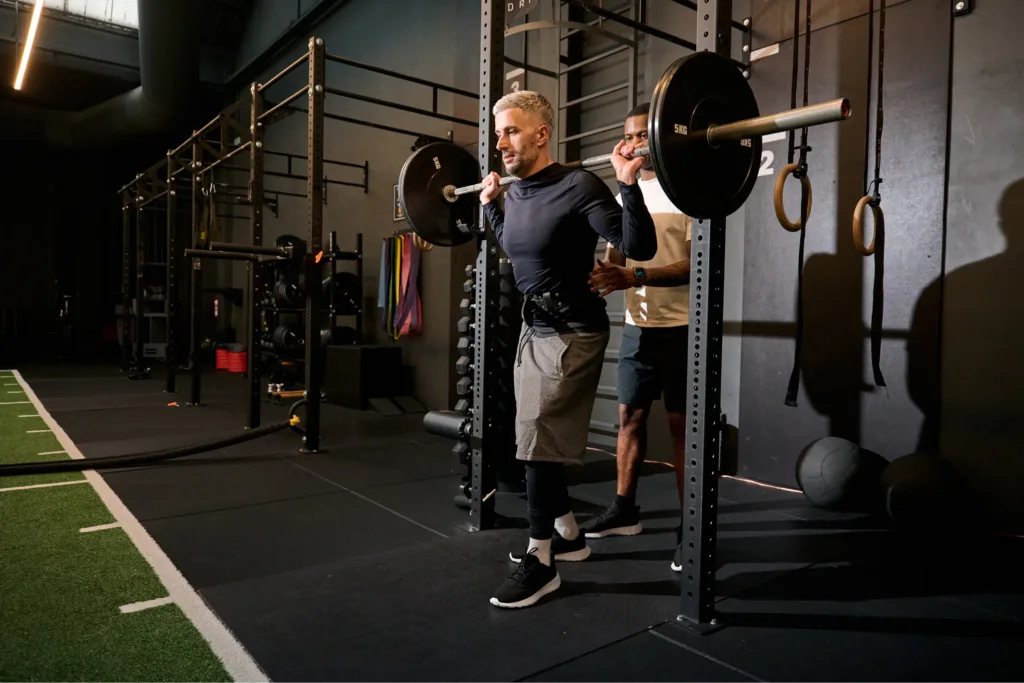
Program Overview
This is a strength program. The goal is not to chase a pump or maximise volume; it is to add weight to the bar on the squat, bench press, deadlift, and overhead press over 8 weeks. Everything in the plan serves that goal: low rep ranges, heavy loads, long rest periods, and a simple progression you can track session to session.
The structure is three full-body sessions per week, each built around one or two of the main barbell lifts. Because the big lifts are the priority, each session leads with a heavy compound at low reps, then adds a small amount of accessory work to support it. You train each main lift roughly twice per week.
Each session takes 60 to 75 minutes, and a lot of that is rest. Getting strong on heavy compounds requires full recovery between sets. Do not rush your rest periods; the long rests are what let you lift heavy enough to get stronger.
This program will make you noticeably stronger and will build some muscle along the way, but it prioritises strength. If your main goal is maximising muscle size, a higher-volume hypertrophy plan is a better fit. Choose this when you want to add real weight to your main lifts and build a foundation of strength you can carry into any future program.
Who Is This For?
This program is for intermediate lifters who want to get measurably stronger on the main barbell lifts.
This plan is right for you if:
- You have at least 6 months of consistent barbell training
- You are comfortable and confident with the squat, bench, deadlift, and overhead press
- You can train three days per week for 8 weeks
- You want to add weight to the bar, not just chase a pump
- You are willing to take long rest periods and train heavy
This program assumes you already know how to squat, bench, deadlift, and press with solid technique. If you are still learning the movements, start with our beginner programs to groove the patterns at lighter loads first. Heavy singles and triples are only safe once your form is dependable.
Weekly Schedule
Phase 1: Build the Base (Weeks 1-4)
Three sessions per week, each led by a main lift for sets of 5. This rep range builds strength while still being forgiving enough to accumulate practice on the lifts. Rest 3 to 5 minutes between heavy compound sets and 90 seconds on accessories. Add a small amount of weight each week as long as all sets are completed.
Start each main lift with a weight you can handle for 3 sets of 5 with 2 to 3 reps in reserve. That means the last rep of each set should feel controlled, not maximal. Add 2.5kg to upper-body lifts and 5kg to lower-body lifts each week whenever you complete all prescribed sets and reps. The slow, steady loading is what drives strength; do not jump ahead.
Bar on your upper back, feet shoulder width. Brace hard, squat to at least parallel, drive up through your mid-foot. The main lift of the session.
Flat bench, grip slightly wider than shoulder width. Lower to your chest under control, press to lockout with leg drive and a tight upper back.
Hinge at the hips with a flat back. Row the bar to your lower chest, squeeze, lower with control. Builds the back strength that supports your other lifts.
Forearms on the floor, body in a straight line. Brace your abs and glutes, hold.
Bar over your mid-foot, hinge and grip just outside your knees. Brace, drive the floor away, and stand tall with the bar close to your body.
Barbell at shoulder height, feet hip width. Brace, press overhead to lockout, keeping the bar path close to your face.
Grip slightly wider than shoulder width, pull to your upper chest driving your elbows down and back.
Hang from a bar, raise your knees or straight legs toward your chest, lower with control.
Second heavy bench session of the week. Same setup: tight upper back, leg drive, controlled descent, press to lockout.
Second squat session of the week, slightly lighter than Full Body A if needed. Full depth, tight brace.
Feet hip width, bar in front of your thighs. Push your hips back, lower to a deep hamstring stretch, drive hips forward to return.
Barbell at arm's length, curl up without swinging, lower with control.
Low-intensity walking on non-training days supports recovery, digestion, and daily energy expenditure without adding fatigue to your working muscles.
Light stretching and mobility for the hips, thoracic spine, and shoulders. Ten focused minutes keeps the tight spots from heavy training in check.
Phase 2: Intensify the Load (Weeks 5-8)
Phase 2 drops the main lifts to sets of 3 so you can handle heavier weight, while keeping the accessory work in place to support recovery and technique. The rest periods stay long. This is where the linear progression pushes toward the heaviest loads of the block.
The switch to triples lets you add meaningful weight to the bar. Start Phase 2 roughly where your fives left off and keep adding 2.5kg upper and 5kg lower each week you complete all sets. As the weights climb, your rest periods matter more; take the full 4 to 5 minutes on your top sets. If a lift stalls two weeks in a row, drop it by 10% and build back up. One small reset beats grinding failed reps.
Sets of 3, heavier weight, one extra set. Full depth, maximal brace.
Sets of 3, heavier weight, one extra set.
Slightly lower reps, heavier weight.
Longer holds. Body braced throughout.
Sets of 3, heavier weight. Reset your brace before every rep.
Sets of 3, heavier weight, one extra set.
Lower reps, heavier weight.
Add weight between your feet if bodyweight is easy.
Second heavy bench session, sets of 3, heavier weight.
Second squat session, sets of 3. Run lighter than Full Body A if recovery is tight.
Lower reps, heavier weight. Bar stays close.
Lower reps, heavier weight. Strict form.
Low-intensity walking on non-training days supports recovery, digestion, and daily energy expenditure without adding fatigue to your working muscles.
Light stretching and mobility for the hips, thoracic spine, and shoulders. Ten focused minutes keeps the tight spots from heavy training in check.
8-Week Full Body Strength Program PDF
Three full body sessions built around the squat, bench, deadlift, and overhead press, with a linear progression designed to add real weight to the bar.
This is a 3-day full body strength plan you run for 8 weeks with a barbell and rack. Each session is led by a main lift, squat, deadlift, or bench, followed by three supporting movements, 4 exercises for 12 sets, with 3 to 5 minutes rest between heavy sets. Phase 1 (weeks 1-4) runs the main lifts for sets of 5, forgiving enough to accumulate practice. Phase 2 (weeks 5-8) drops them to triples so you can handle heavier weight, adding 2.5kg to upper body lifts and 5kg to lower body lifts each week the reps are completed.
- Fives, Then Triples Sets of 5 build strength while you practice the lifts. Sets of 3 in Phase 2 let you put meaningful weight on the bar once the technique is grooved.
- Long Rests On Purpose Three to five minutes between heavy sets is not wasted time. It is what lets you hit every prescribed rep at a weight that actually builds strength.
- A Loading Rule You Never Have To Think About Complete the reps, add the increment. Miss them, repeat the weight. The PDF gives you the log to run it for eight weeks.
Get Your 8-Week Strength Program
Includes both training phases, the weekly schedule, and exercise cues for all three sessions. Download instantly after you submit the form.
Unsubscribe any time.
Nutrition Guidance
Getting stronger is easiest when you are eating enough to recover from heavy training. You do not need an aggressive surplus for strength, but training at maintenance or a slight surplus will let you add weight to the bar faster than a deficit will.
Our macro calculator sets your targets, and adequate protein and calories are what let your nervous system and muscles recover between heavy sessions.
The Basics
- Calories: Eat at maintenance or in a slight surplus of up to 200 calories per day. Strength progresses fastest with full recovery, which a deficit compromises. Our macro calculator sets your starting point.
- Protein: 1.6 to 2.2g per kg of bodyweight daily. Protein supports the muscle and connective tissue that heavy lifting stresses. Browse our high protein recipes for ideas.
- Carbohydrates: Keep carbs high enough to fuel heavy sessions. Low-carb dieting and heavy strength work do not mix well; your top sets will suffer.
- Sleep: Seven to nine hours per night. Heavy training taxes your nervous system, and sleep is where it recovers. Under-sleep and your strength will stall.
Strength gains come from recovering fully between heavy sessions, not from training more. Take your rest days seriously, eat enough to support the workload, and prioritise sleep. If your lifts stall despite good programming, look at your recovery before you look at your training.