4-Day Upper Lower Split For Beginners
A 4-day program that trains your upper and lower body on separate days. More volume per session than full body training, with built-in recovery between each session type.
Program Overview
The upper lower split is one of the highly effective training structures for anyone past their very first weeks in the gym. By dedicating each session to either upper or lower body, you can give each muscle group more focused attention while still training every muscle twice per week. This program runs four days per week across two upper sessions and two lower sessions. Each pair of sessions uses different exercises and rep ranges so the training stimulus varies while the recovery is managed. Over 8 weeks the volume and loading increase progressively across two phases.
Training each muscle group twice per week produces significantly better results than once per week for most people. The upper lower split achieves this while keeping each session focused and manageable. It is one of the most efficient stepping stones between full body beginner training and more advanced splits.
Who Is This For?
This program works best for anyone who has completed 6 to 12 weeks of beginner training and is ready to add a fourth training day. This plan is right for you if:
- You have completed a full body beginner program and want to progress
- You can commit to four training sessions per week
- You want more volume per muscle group than a 3-day full body program provides
- You have access to a full gym with a barbell, dumbbells, and cable machines
- You want a clear structure that trains upper and lower body equally
If you are still on 3 days per week, check out our other beginner programs first before stepping up to 4 days.
Weekly Schedule
Phase 1: Build the Base (Weeks 1-4)
The first four weeks establish working weights across four sessions. Upper A and Lower A are strength-focused with heavier loading. Upper B and Lower B use different exercises at moderate reps. Each session is designed to be completed in 45 to 50 minutes.
Session A is your strength day. Lower reps, heavier weights, longer rest. Session B is your volume day. Higher reps, moderate weights, shorter rest. Both are important. Neither should be skipped.
Lie flat on a bench, grip slightly wider than shoulder width. Pinch your shoulder blades together, lower the bar to your mid-chest, then press to lockout.
Place one hand and the same-side knee on a bench. Row the dumbbell to your hip with the other hand, squeezing your back at the top. Lower slowly and repeat, then switch sides.
Sit or stand with dumbbells at shoulder height, palms forward. Press both overhead to full extension, then lower with control back to shoulder height.
Grip the bar slightly wider than shoulder width. Pull it down to your upper chest, driving your elbows toward your hips. Control the return to full extension.
Hold light dumbbells at your sides with a slight elbow bend. Raise both arms out to shoulder height, pause briefly, then lower with control.
Stand tall with dumbbells at your sides, palms forward. Curl one up to your shoulder without swinging, then lower slowly and repeat on the other side.
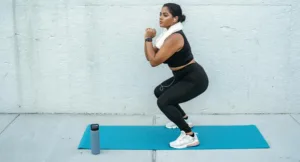
Hold dumbbells at shoulder height with elbows up. Squat down keeping your torso as upright as possible, then drive through your heels to stand back up.
Upper back against a bench, barbell across your hips. Drive your hips up until your body forms a straight line from shoulders to knees. Squeeze hard at the top, then lower slowly.
Hold dumbbells in front of your thighs with a soft knee bend. Push your hips back and lower the dumbbells along your legs until you feel a strong hamstring stretch. Drive your hips forward to return. The video demonstrates the barbell version to show the movement pattern, but use dumbbells as described.
Hold a dumbbell at your chest in the goblet position. Stagger your stance with one foot slightly behind, heel raised. Most of your weight goes through the front leg. Squat down and drive back up through the front heel. Complete all reps before switching sides.
Stand with the balls of your feet on an elevated surface. Lower your heels as far as possible, then rise up onto your toes as high as you can. Pause briefly at the top.
On all fours, extend your right arm and left leg simultaneously until both are parallel to the floor. Hold two seconds, return, and repeat on the other side.
Hold dumbbells at shoulder height. Squat down, then drive up explosively and press the dumbbells overhead in one fluid motion. Lower the dumbbells back to your shoulders as you descend into the next squat.
Set a bench to around 30 degrees. Press dumbbells from chest height straight up, targeting the upper chest. Lower with full control.
Sit upright at a cable row station. Pull the handle to your lower chest leading with your elbows, squeezing your shoulder blades together at the end of each rep.
Use a counterweight machine or resistance band for assistance. Grip the bar with palms facing you and pull yourself up until your chin clears the bar. Lower slowly.
Hinge at the hips with a flat back, dumbbells hanging below you. Raise both dumbbells out to the sides by squeezing your shoulder blades together. Lower with control.
Stand at a high cable with a rope attachment. Elbows pinned to your sides, push the rope down to full extension and spread the ends apart at the bottom.
Hold a dumbbell against your chest. Hinge at the hips, pushing them back while keeping your back flat. Lower until you feel a hamstring stretch, then stand tall by driving your hips forward.
Hold a dumbbell at your chest in the goblet position. Stagger your stance with one foot slightly behind, heel raised. Most of your weight goes through the front leg. Squat down and drive back up through the front heel. Complete all reps before switching sides.
Stand a stride length in front of a bench. Place the top of your rear foot on the bench behind you and hold dumbbells at your sides. Lower straight down until your back knee nearly touches the floor, then drive through your front heel to return.
Lie on your back, soles of your feet together, knees dropped out to the sides. Drive your hips up by squeezing your glutes hard. Lower and repeat.
Lie on your back with knees bent. Curl your upper body off the floor through your abs, pause at the top, lower with control.
Phase 2: Add Load and Volume (Weeks 5-8)
Phase 2 adds one set to the primary lifts and drops rep ranges to push heavier loads. The session structure stays identical so you can compare directly to Phase 1. Upper B introduces dumbbell thrusters as a full body opener.
Hit all reps on all sets with good form? Add weight next session. Upper body lifts: add 2.5kg. Lower body lifts: add 5kg. Missed reps two sessions in a row? Drop back 10% and rebuild. Progress on an upper lower split is measured in weeks, not individual sessions.
Heavier loading at a lower rep range. Every technical detail matters more as the weight increases.
One extra set, lower reps, heavier dumbbell.
One extra set, lower reps, heavier dumbbells.
One extra set, lower reps, heavier cable.
Same sets and reps as Phase 1. Focus on heavier dumbbells with strict form.
Slightly higher reps than Phase 1 with heavier dumbbells.
One extra set, lower reps, heavier dumbbells.
Lower reps, heavier bar. Keep the two-second hold at the top.
One extra set, lower reps, heavier dumbbells. The video demonstrates the barbell version to show the movement pattern, but use dumbbells as described.
Lower reps, heavier dumbbell. Focus on driving through the front heel.
One extra set. Two seconds up, two seconds down.
Higher reps with a two-second hold at full extension.
Lower reps, heavier dumbbells. Use the leg drive to power the press.
One extra set, lower reps, heavier dumbbells.
One extra set, lower reps, heavier cable.
One extra set. Reduce the assistance weight as you get stronger.
Same sets, slightly heavier dumbbells.
Same sets and reps, heavier cable.
One extra set, lower reps, heavier dumbbell.
One extra set, lower reps, heavier dumbbell.
One extra set, lower reps, heavier dumbbells.
One extra set. Should burn significantly by rep 15.
Same volume with a two-second hold at the top.
4-Day Upper Lower Split For Beginners PDF
The step up from full body training, without jumping to an advanced split.
Four sessions a week, two upper and two lower, each one running 45 to 50 minutes. The A sessions go heavy at low reps. The B sessions use different exercises at higher reps. Every muscle gets trained twice a week with a rest day protecting the second half.
- More Focus Per Session Splitting upper and lower means each muscle group gets real attention instead of two exercises squeezed into a full body workout.
- Two Session Types, Different Jobs Heavy and low rep on the A days, higher rep with different exercises on the B days. Together they cover more than repeating the same session would.
- Loading Rules You Can Follow How much to add and when, plus how to reset after missing reps two sessions running.
Download the 8-Week Upper Lower Split
All four sessions across both phases, plus the progression rules. Yours to download right after you submit.
Unsubscribe any time.
Nutrition Guidance
Four training sessions per week creates a meaningful recovery demand. Getting your nutrition right is what allows your body to respond to that stimulus and actually build strength and muscle. Understanding how much you should be eating is the starting point. Our guide on what TDEE is and how to calculate it covers everything you need to know.
The Basics
- Protein: 1.6 to 2.2g per kg of bodyweight daily. This is the most important dietary variable for anyone doing four sessions per week. If you find it hard to hit your protein target, our high protein recipes are a good place to start.
- Calories: Eat at maintenance or a small surplus of 200 to 300 calories to support muscle building. Use our free macro calculator to find your number.
- Recovery nutrition: Try to have a meal with protein and carbohydrates within two hours of each session. Exact timing matters far less than hitting your daily totals.
- Sleep: Seven to nine hours per night. Muscle and strength are built during recovery, not during the session itself.
Read our complete guide on bulking and cutting to understand how to set your calories depending on your goal. Both are achievable on this program with the right approach.