Dumbbell-Only Workout Program for Beginners
A complete 8-week strength program using nothing but dumbbells. Train at home, in a hotel gym, or at any basic gym with a dumbbell rack.
Program Overview
Dumbbells are one of the most versatile and underrated pieces of gym equipment. With a decent range of dumbbells and this program, you can build genuine muscle, develop real strength, and establish all the movement patterns that carry over to barbell training later. This 8-week program runs three days per week on a rotating full body structure. Each session hits your legs, chest, back, shoulders, and arms. The two phases progressively increase volume and intensity so you keep adapting across the full 8 weeks.
Every exercise in this program uses dumbbells only. You need access to a range of dumbbell weights, a flat bench (or the floor for pressing), and ideally an adjustable bench for incline work. That is it.
Who Is This For?
This program is ideal for anyone who prefers dumbbells over barbells, trains at home, or wants to build a solid foundation before moving to barbell work. This plan is right for you if:
- You train at home or in a gym without a full barbell setup
- You are new to structured strength training
- You want to build muscle and strength with simple, proven exercises
- You can commit to three sessions per week
- You prefer a program where every movement can be done independently without a spotter
If you have access to a full gym with a barbell rack and want to start loading heavier, our beginner programs include barbell-based options that build on the same principles.
Weekly Schedule
Phase 1: Build the Foundation (Weeks 1-4)
The focus in the first four weeks is learning each movement well and finding working weights you can progress from. Do not rush to go heavy. Perfect form now means faster progress later.
Choose a weight you could do for 15 reps but stop at the prescribed number. It should feel like work but never a grind. When you can complete all sets and reps with clean form, move up to the next dumbbell size next session.
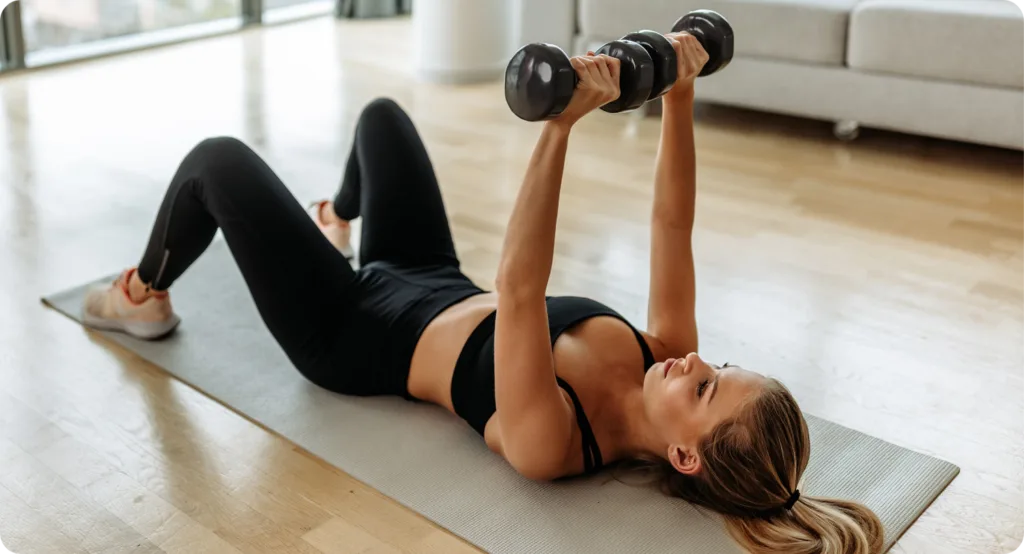
Lie flat on a bench or the floor, dumbbells at chest level with palms forward. Press both dumbbells up until your arms are extended, then lower under control. If you do not have a bench, floor press works just as well.
Place one hand and the same-side knee on a bench for support. Hold a dumbbell in the other hand and row it up to your hip, squeezing your back at the top. Lower slowly and repeat.
Stand tall with dumbbells at your sides, palms facing forward. Curl one up to your shoulder without swinging your body, then lower slowly and repeat on the other side.
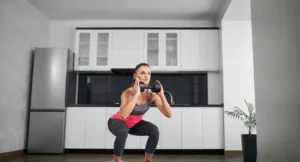
Hold dumbbells at your sides, feet shoulder width apart. Sit your hips back and down, keeping your chest up and weight through your heels. Squat until your thighs are parallel to the floor, then drive back up.
Hold dumbbells at your sides. Step forward into a lunge, lowering your back knee toward the floor. Drive through the front heel to return. Complete all reps on one leg before switching.
Sit with your upper back against a bench and a dumbbell across your hips. Drive your hips up until your body is straight from shoulders to knees. Squeeze at the top, then lower slowly.
Hold dumbbells in front of your thighs. Push your hips straight back with a soft knee bend, lowering the dumbbells along your legs until you feel a deep hamstring stretch. Drive hips forward to stand. The video demonstrates the barbell version to show the movement pattern, but use dumbbells as described.
Hold dumbbells at your sides. Step forward into a lunge, lowering your back knee toward the floor. Drive through the front heel to return. Complete all reps on one leg before switching.
Lie flat on a bench or the floor, dumbbells at chest level. Press up to full extension, lower under control. If you do not have a bench, a floor press is a direct substitute.
Hinge forward at the hips with a dumbbell in each hand. Row both up to your lower chest at the same time, squeezing your shoulder blades together at the top.
Hold light dumbbells at your sides with a slight elbow bend. Raise both arms out to shoulder height, pause briefly, then lower with control.
On all fours, extend your right arm and left leg simultaneously until both are parallel to the floor. Hold for two seconds, return, and repeat on the other side.
Stand with a wide stance, toes pointed outward. Hold one dumbbell vertically in front of you with both hands. Squat down by pushing your knees out over your toes, keeping your torso upright. Drive through your heels to stand.
Lie on your back with knees bent, feet flat on the floor, and a dumbbell across your hips. Drive your hips up until your body forms a straight line from shoulders to knees. Hold for two seconds at the top, then lower with control.
Hinge forward at the hips with a dumbbell in each hand. Row both up to your lower chest leading with your elbows, squeezing your shoulder blades together at the top.
Sit or stand with dumbbells at shoulder height, palms forward. Press both overhead to full extension, then lower with control.
Hold one dumbbell with both hands overhead, arms fully extended. Lower it behind your head by bending at the elbows, then extend back to the start.
Stand tall. Step one foot behind and across your body as if curtsying, lowering your back knee toward the floor. Drive through the front heel to return. Complete all reps on one side before switching.
Phase 2: Add Load and Volume (Weeks 5-8)
Phase 2 keeps the same exercises and session structure. The key change is heavier dumbbells with all reps capped at 12. If you were working at 10-12 in Phase 1, aim for the same reps with a heavier dumbbell. Focus on controlled reps with genuine effort on every set.
Complete all sets and reps with good form? Move up to the next dumbbell size next session. If the next size is a big jump, do an extra set at the current weight instead before making the jump.
Heavier load, same form standards. Lie flat on a bench or the floor, dumbbells at chest level with palms forward. Press both dumbbells up until your arms are extended, then lower under control. If you do not have a bench, floor press works just as well.
Heavier load, same form standards. Place one hand and the same-side knee on a bench for support. Hold a dumbbell in the other hand and row it up to your hip, squeezing your back at the top. Lower slowly and repeat.
Heavier load, same form standards. Stand tall with dumbbells at your sides, palms facing forward. Curl one up to your shoulder without swinging your body, then lower slowly and repeat on the other side.
Heavier load, same form standards. Hold dumbbells at your sides, feet shoulder width apart. Sit your hips back and down, keeping your chest up and weight through your heels. Squat until your thighs are parallel to the floor, then drive back up.
Hold dumbbells at your sides. Step forward into a lunge, lowering your back knee toward the floor. Drive through the front heel to return. Complete all reps on one leg before switching.
Heavier load, same form standards. Sit with your upper back against a bench and a dumbbell across your hips. Drive your hips up until your body is straight from shoulders to knees. Squeeze at the top, then lower slowly.
Heavier load, same form standards. Hold dumbbells in front of your thighs. Push your hips straight back with a soft knee bend, lowering the dumbbells along your legs until you feel a deep hamstring stretch. Drive hips forward to stand. The video demonstrates the barbell version to show the movement pattern, but use dumbbells as described.
Heavier load, same form standards. Hold dumbbells at your sides. Step forward into a lunge, lowering your back knee toward the floor. Drive through the front heel to return. Complete all reps on one leg before switching.
Heavier load, same form standards. Lie flat on a bench or the floor, dumbbells at chest level. Press up to full extension, lower under control. If you do not have a bench, a floor press is a direct substitute.
Heavier load, same form standards. Hinge forward at the hips with a dumbbell in each hand. Row both up to your lower chest at the same time, squeezing your shoulder blades together at the top.
Heavier load, same form standards. Hold light dumbbells at your sides with a slight elbow bend. Raise both arms out to shoulder height, pause briefly, then lower with control.
Heavier load, same form standards. On all fours, extend your right arm and left leg simultaneously until both are parallel to the floor. Hold for two seconds, return, and repeat on the other side.
Heavier load, same form standards. Stand with a wide stance, toes pointed outward. Hold one dumbbell vertically in front of you with both hands. Squat down by pushing your knees out over your toes, keeping your torso upright. Drive through your heels to stand.
Heavier load, same form standards. Lie on your back with knees bent, feet flat on the floor, and a dumbbell across your hips. Drive your hips up until your body forms a straight line from shoulders to knees. Hold for two seconds at the top, then lower with control.
Heavier load, same form standards. Hinge forward at the hips with a dumbbell in each hand. Row both up to your lower chest leading with your elbows, squeezing your shoulder blades together at the top.
Heavier load, same form standards. Sit or stand with dumbbells at shoulder height, palms forward. Press both overhead to full extension, then lower with control.
Heavier load, same form standards. Hold one dumbbell with both hands overhead, arms fully extended. Lower it behind your head by bending at the elbows, then extend back to the start.
Heavier load, same form standards. Stand tall. Step one foot behind and across your body as if curtsying, lowering your back knee toward the floor. Drive through the front heel to return. Complete all reps on one side before switching.
Dumbbell-Only Workout Program for Beginners PDF
Eight weeks of real strength training with nothing but a set of dumbbells.
Three full body sessions a week, rotating through Workouts A, B, and C. Every movement can be done at home, in a hotel gym, or anywhere with a dumbbell rack. No barbell, no spotter, no machines. Just the patterns that build strength and carry over to barbell work later.
- Train Anywhere With a Bench and Dumbbells No bench, no problem. Every pressing movement has a floor-based substitute that works just as well.
- Full Body Three Times a Week Each session covers legs, chest, back, shoulders, and arms, so nothing gets skipped when life gets in the way.
- Know When to Go Heavier Clear rules for picking your starting weight, when to move up, and what to do when the next dumbbell size is too big a jump.
Download the 8-Week Dumbbell Program
All three workouts across both phases, plus the progression rules. Yours to download right after you submit.
Unsubscribe any time.
Nutrition Guidance
Training with dumbbells does not make nutrition any less important. Building muscle and losing fat both require getting your calories and protein right, regardless of what equipment you use. For a clear breakdown of how to calculate what you should be eating, read our Ultimate Guide to Counting Macros.
The Basics
- Protein: Aim for 1.6 to 2.2g per kg of bodyweight daily. This is the most important dietary variable for anyone doing resistance training. Browse our macro-friendly recipes for simple meals that keep your protein on track.
- Calories: A small surplus of 200 to 300 calories above maintenance supports muscle building. If fat loss is the primary goal, eat in a small deficit while keeping protein high. Use our free macro calculator to find your number.
- Sleep: Muscle is built during recovery, not during the workout itself. Aiming for seven to nine hours of sleep per night will meaningfully improve your recovery and results.
- Consistency: Eight weeks of decent nutrition beats two weeks of perfect nutrition followed by six weeks of chaos every time.
You can build muscle and lose fat simultaneously as a beginner, but it requires getting your protein high enough. Read our guide on how to run a mini cut without losing strength or muscle.