Calisthenics Workout Plan
Eight weeks of bodyweight skill and strength: push-ups, dips, pull-up progressions, and single leg work, built on the oldest equipment there is.
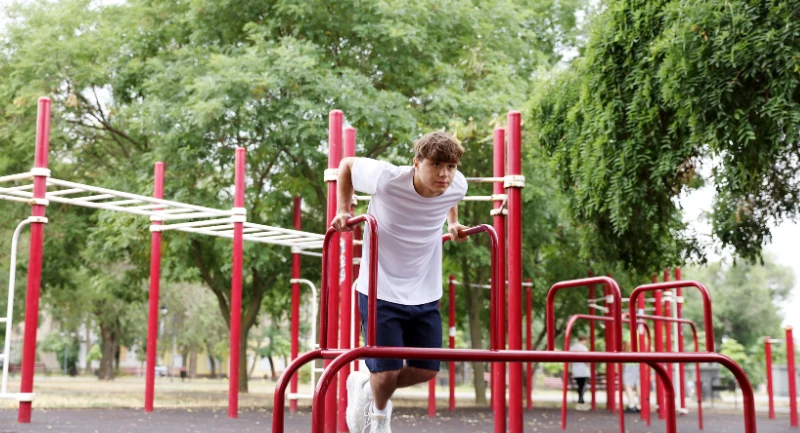
Program Overview
Calisthenics is strength training where the barbell is you, and progression means unlocking harder movements rather than adding plates. This plan is the beginner's on-ramp: three sessions a week for eight weeks, split by skill family. Push days build from push-ups toward dips, pull days from assisted chins toward the full pull-up, and the legs day trades load for range and single leg control. Two honest notes: you will need something to hang from and dip on, and two foundational movements here, the push-up and plank, do not yet have library videos, so their written cues are unusually detailed. Everything else includes a form video.
For bodyweight training without the skill ladder, our bodyweight workout plan for beginners is the simpler road. Chasing the pull-up specifically? Our 8-week pull-up program is that journey in isolation.
Who Is This For?
This plan suits you if:
- You want strength you can train anywhere with a bar and parallel bars
- Skills motivate you more than dumbbells do
- You are starting out or returning after time away
- You like the idea of your bodyweight becoming lighter every week
Every equipment-free plan lives on our home workouts page.
Weekly Schedule
Phase 1: Foundations of Each Family (Weeks 1-4)
Push days start with push-ups at whatever incline makes eight clean reps possible, then bench dips build the pressing-down strength full dips will demand. Pull days lean on the assisted machines. Leg day is range and control: box squats for depth, single leg bridges, and cossack squats for the sideways mobility bars never give you.
Progress by lowering the incline, slowing the tempo, or adding a rep. In calisthenics your body is the barbell; leverage is how you load it.
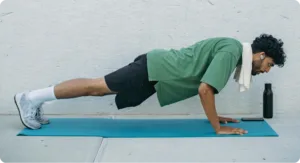
Hands under shoulders, lower your chest to the floor and press back up in one rigid line.
Hands on a bench behind you, lower your hips and press back up.
Press two dumbbells from shoulder height to lockout overhead.
Hold a straight line from head to heels on forearms and toes.
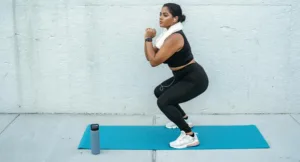
Squat back to a box, tap lightly, and stand back up.
Upper back on a bench, drive the hips up to a full squeeze.
Step wide and squat over one leg while the other stays straight, then shift across. Work both sides.
Lying on your back, alternate small kicks with straight legs and your lower back pressed down.
On all fours, extend the opposite arm and leg while keeping the torso still. Alternate sides.
Underhand grip on the assisted machine, pull your chin over the bar.
Pull the bar down to your upper chest by driving the elbows down and back.
With one knee and hand on a bench, row the dumbbell to your hip. Work both sides.
Hold a band at shoulder height and pull it apart until your arms are wide.
Twenty to thirty minutes of easy walking, outdoors if you can manage it.
Five to ten minutes on hips, ankles, and the upper back.
Phase 2: Unlock the Bars (Weeks 5-8)
The assisted dip machine bridges bench dips to the real thing, chest dips arrive for those ready, and pull days add genuine attempts. Legs pick up jump squats in small crisp doses. By week eight the plan's graduates are doing floor push-ups, assisted or full dips, and hanging from the bar with intent, which is the entire point of an on-ramp.
Every skill has a next rung and the PDF names them all. The rung you can do for eight clean reps is the one you train; the one above it is the one you visit.
Hands under shoulders, lower your chest to the floor and press back up in one rigid line.
Use the counterweighted machine to perform dips with assistance.
On parallel bars, lean forward and lower until the shoulders reach elbow depth, then press up.
Hold a straight line from head to heels on forearms and toes.
Squat back to a box, tap lightly, and stand back up.
With your feet on a bench, bridge your hips up and squeeze the glutes.
Step wide and squat over one leg while the other stays straight, then shift across. Work both sides.
Squat down and jump explosively, landing softly back into the squat.
On all fours, extend the opposite arm and leg while keeping the torso still. Alternate sides.
Hang from the bar with an overhand grip and pull your chin above the bar.
Underhand grip on the assisted machine, pull your chin over the bar.
Pull the bar down to your upper chest by driving the elbows down and back.
Hinged at the hips, open the arms wide and squeeze the shoulder blades together.
An easy walk to move blood through the muscles you trained without adding fatigue.
Gentle mobility for whichever joints felt stiff getting into position last session.
Calisthenics Workout Plan PDF
Eight weeks from incline push-ups and assisted chins to the bars, one rung at a time.
This is a 3-day plan you run for 8 weeks, split by skill family: push days building from incline push-ups toward dips, pull days from assisted chins toward the pull-up, and a legs day of box squats, single leg bridges, and cossack squats trading load for range and control. Phase 1 (weeks 1-4) sets the foundations at honest rep quality. Phase 2 (weeks 5-8) unlocks the bars via the assisted dip machine and fresh pull-up attempts, with every skill's progression ladder written rung by rung.
- Skill Ladders, Not Weight Plates Every movement lists its easier and harder rung, so progression is always one clean adjustment away in either direction.
- The Bars As A Destination Dips and pull-ups are the graduation exercises, and both have machine-assisted bridges built into the plan so the gap is never a leap.
- Honest About Two Gaps The push-up and plank lack library videos for now, so their written cues run longer and more detailed than anywhere else on the site.
Get Your Calisthenics Plan
Includes both training phases, every progression ladder, and exercise cues for all three sessions. Download instantly after you submit the form.
Unsubscribe any time.
Nutrition Guidance
In calisthenics your bodyweight is both the barbell and the resistance curve, which makes nutrition part of the training. Our macro calculator sets it and our recipes keep it simple. For more depth, read whether home workouts really work and why you are always hungry on a diet.
What Actually Matters Here
- Protein: 1.6 to 2.2g per kg daily. Bodyweight strength is still strength training, and the muscle underneath the skills is built the ordinary way.
- Calories: Excess weight makes every rep heavier here more directly than anywhere in fitness. A gentle deficit, where honest, is a strength program in disguise.
- Patience over restriction: crash-cutting to chase easier pull-ups costs the muscle doing the pulling. Half a percent a week, and let the skills meet you halfway.
A kilo lost and a rung climbed compound each other on every movement in this plan. Both are worth roughly one week of consistency each.