Push Pull Workout Plan
A four-day push/pull split that trains the whole body twice a week in two movement patterns, with legs built into both days instead of squeezed into one.
Program Overview
The push/pull split divides training by movement rather than muscle: pushing days cover chest, shoulders, triceps, and the quads that push you away from the floor; pulling days cover back, biceps, and the hamstrings and glutes that pull your hips through. The result is the whole body trained twice a week across four sessions, with legs woven into every day instead of crammed into one session everyone dreads. It sits neatly between an upper/lower split and a full push/pull/legs week, and for four available days it is hard to beat. Every exercise includes a form video.
With five or six days available, our 5-day push pull legs program gives legs their own day back. If you prefer the classic four-day structure, our 4-day upper lower split divides by half instead of by pattern.
Who Is This For?
This plan suits you if:
- You have four training days and want everything hit twice
- You like leg work spread through the week rather than concentrated
- You know the main barbell and dumbbell movements
- You want a split that scales from cutting to bulking without restructuring
Every split at this level lives on our intermediate programs page.
Weekly Schedule
Phase 1: Establish the Pattern (Weeks 1-4)
Four sessions, each opening with its heaviest compound while you are fresh: the bench and overhead press lead the push days, the deadlift and row lead the pulls, with the squat pattern opening the lower half of each push day. One or two reps in reserve everywhere while the loads settle.
Push days live on the press and squat patterns, pull days on the hinge and row. If an exercise does not fit one of those, it does not belong in this program.
Lower the bar to your mid chest with control and press it back to lockout.
Place the barbell on your upper traps, squat down until thighs are at least parallel, then drive up.
Press two dumbbells from shoulder height to lockout overhead.
Raise the dumbbells out to your sides to shoulder height with a soft elbow bend.
Push a rope attachment down and split the ends apart at the bottom.
Set your hips, brace, and lift the bar from the floor by driving your legs and standing tall.
Hinge forward and row the bar to your lower ribs, then lower under control.
Pull the bar down to your upper chest by driving the elbows down and back.
Hinged forward, raise the dumbbells out to your sides with a soft elbow bend.
Curl one dumbbell at a time, alternating arms with elbows pinned.
Press the bar from your front delts to lockout overhead without leaning back.
With your rear foot elevated on a bench, lower into a split squat and drive up. Work both sides.
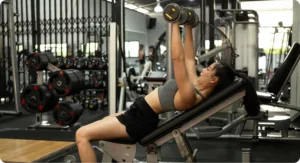
Press dumbbells from an inclined bench, lowering to upper chest level.
With a soft elbow bend, bring the handles together in front of your chest.
Hold one dumbbell with both hands overhead and lower it behind your head.
Hold the barbell at hip height, push your hips back and lower until you feel a hamstring stretch.
Pull the handle to your midsection, keeping the torso upright.
Use the counterweighted machine to perform pull ups with assistance.
Sit with your upper back on a bench and a bar across your hips, then drive your hips up.
Curl with a neutral, palms-facing grip, alternating arms.
A brisk walk on your rest days to aid recovery and keep you active.
Light stretching and mobility for anything that felt tight in your last session.
Phase 2: Load the Openers (Weeks 5-8)
The opening lift of every session drops into heavier rep ranges and gains a set, while everything behind it holds. Because each pattern appears twice a week, a stalled lift gets its second weekly exposure at the Phase 1 loads rather than repeating the heavy attempt, which keeps progress moving on four sessions a week.
Two exposures per pattern per week is the split's advantage. Push the first one, bank the second one, and the weekly total keeps climbing.
Lower the bar to your mid chest with control and press it back to lockout.
Place the barbell on your upper traps, squat down until thighs are at least parallel, then drive up.
Press two dumbbells from shoulder height to lockout overhead.
Raise the dumbbells out to your sides to shoulder height with a soft elbow bend.
Push a rope attachment down and split the ends apart at the bottom.
Set your hips, brace, and lift the bar from the floor by driving your legs and standing tall.
Row explosively from a dead stop on the floor with your torso parallel to the ground.
Pull the bar down to your upper chest by driving the elbows down and back.
Hinged forward with cables crossed, open the arms wide against the resistance.
Curl the bar to shoulder height with elbows pinned, then lower slowly.
Press the bar from your front delts to lockout overhead without leaning back.
Elevate the front foot on a plate and lower into a split squat for extra range. Work both sides.
Press dumbbells from an inclined bench, lowering to upper chest level.
With a soft elbow bend, bring the handles together in front of your chest.
Lying on a bench, lower the EZ bar toward your forehead by bending at the elbows only.
Hold the barbell at hip height, push your hips back and lower until you feel a hamstring stretch.
Row a single handle to your side, allowing a longer range through the torso. Work both sides.
Hang from the bar with an overhand grip and pull your chin above the bar.
Sit with your upper back on a bench and a bar across your hips, then drive your hips up.
Curl with a neutral, palms-facing grip, alternating arms.
Twenty to thirty minutes of easy walking, outdoors if you can manage it.
Five to ten minutes on hips, ankles, and the upper back.
Push Pull Workout Plan PDF
Four days, two movement patterns, the whole body trained twice a week with legs built into every session.
This is a 4-day push/pull split you run for 8 weeks with full gym access. Push days cover chest, shoulders, triceps, and quads; pull days cover back, biceps, hamstrings, and glutes; each session opens with its heaviest compound, 16 to 18 sets in under an hour. Phase 1 (weeks 1-4) establishes the loads at one or two reps in reserve. Phase 2 (weeks 5-8) drops the opening lifts to heavy fives and sixes with an extra set, using the split's second weekly exposure of each pattern to keep progress moving when a heavy day stalls.
- Everything Twice A Week Both push days and both pull days cover their patterns fully, so every muscle gets two growth stimuli per week on four sessions.
- Legs In Every Day Squats live on push days, hinges and hip thrusts on pull days. No dreaded leg day, and no legs left behind either.
- A Stall-Proof Structure The PDF's rule for plateaus: push the first weekly exposure, bank the second at last month's loads. Four days a week keeps moving where three-day programs stick.
Get Your Push Pull Plan
Includes both training phases, the weekly schedule, and exercise cues for all four sessions. Download instantly after you submit the form.
Unsubscribe any time.
Nutrition Guidance
Four compound-led sessions a week is a real workload, and the food behind it decides whether the second weekly exposure of each lift progresses or just survives. Our macro calculator sets your targets and our recipes make them repeatable. For more depth, read building muscle while minimizing fat gain and how to tell if your training is working.
What Actually Matters Here
- Calories: A small surplus for building, a moderate deficit for cutting. The split itself does not change; only the progression expectations do.
- Protein: 1.6 to 2.2g per kg daily across the whole week, including the three rest days, because that is when the growing happens.
- Back-to-back days: Push into pull on consecutive days works because the muscles barely overlap, but the fueling has to carry both. Eat properly between Monday and Tuesday, not just after.
Judge the block by the openers. If all four opening lifts climbed over eight weeks, everything behind them grew too.