8-Week Complete Beginner’s Workout Plan
Your 8-week roadmap to building a strong fitness foundation. No experience necessary, just consistency and a willingness to show up.
Program Overview
This 8-week program uses a full-body training split performed 3 days per week. Each session targets all major muscle groups using fundamental compound movements, divided into two 4-week phases with progressive overload built in. By the end of 8 weeks you'll have developed proper movement patterns, built a meaningful base of strength, and established the training consistency that makes everything else possible.
Progressive overload is the foundation of this program. Each week, aim to add a small amount of weight or an extra rep to your working sets. Consistency beats intensity, showing up 3x per week matters more than any single workout. This is what separates a structured plan from random workouts.
Who Is This For?
This program is designed for true beginners, people who are either brand new to strength training or returning after an extended break. You don't need any prior gym experience. This plan is right for you if:
- You've never followed a structured workout program before
- You want to learn proper form on fundamental lifts
- You have access to a basic gym (dumbbells, barbells, cables)
- You can commit to 3 training sessions per week
- You want a clear, progressive plan rather than random workouts
If you train at home, our beginner programs include options that cover the same progression principles with minimal equipment.
Weekly Schedule
Phase 1: Foundation (Weeks 1–4)
The first four weeks use dumbbells, cables, and machines to teach the fundamental movement patterns. Five exercises per session, 3 sets each, completed in around 40 minutes. The focus is controlled reps with good form, not heavy weight.
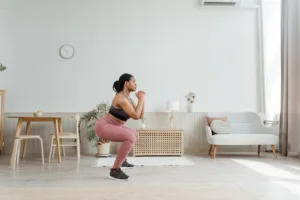
Hold a dumbbell vertically at your chest. Squat to full depth keeping your torso upright, elbows tracking between your knees. Drive through your heels to stand.
Lie flat on a bench, dumbbells at chest level with palms forward. Press both dumbbells up until arms are extended, then lower under control.
Sit upright at a cable row station. Pull the handle toward your torso, leading with your elbows, and squeeze your shoulder blades together at the end.
Sit on a bench with back support, one dumbbell at shoulder height. Press overhead to full extension, lower with control. Complete all reps on one side before switching.
Forearms on the floor, body in a straight line from head to heels. Squeeze your glutes and brace your core. Hold the position without letting your hips sag or pike.
Hold dumbbells in front of your thighs with a soft knee bend. Push your hips back and lower the dumbbells along your legs until you feel a strong hamstring stretch. Drive your hips forward to return. The video demonstrates the barbell version to show the movement pattern, but use dumbbells as described.
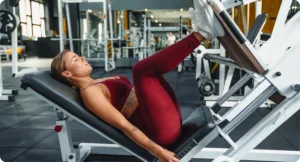
Sit in the leg press machine with your feet shoulder width apart on the platform. Lower the platform by bending your knees until they reach roughly 90 degrees, then drive through your heels to extend.
Grip the bar slightly wider than shoulder width. Pull it down to your upper chest, focusing on driving your elbows down and back. Squeeze your back at the bottom.
Stand with dumbbells at your sides, palms forward. Curl both up without swinging, lower slowly.
Lie on your back, arms extended toward the ceiling, knees bent at 90 degrees. Slowly extend one arm overhead and the opposite leg toward the floor. Return and switch sides.
Hold dumbbells at your sides. Step forward into a lunge, lowering your back knee toward the floor. Drive through the front heel to return. Complete all reps on one leg before switching.
Bench at around 30 degrees. Dumbbells at shoulder level, press up to full extension, lower with control to a deep stretch.
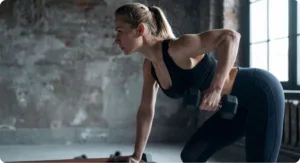
Place one hand and the same-side knee on a bench. Row the dumbbell to your hip with the other hand, squeezing your back at the top. Lower slowly and repeat, then switch sides.
Stand at a cable station with a rope or straight bar attachment. Push the weight down by extending your elbows, keeping your upper arms pinned to your sides. Return with control.
Hold heavy dumbbells at your sides. Walk with a tall posture, shoulders back, core braced. Cover the distance without letting the dumbbells pull you forward or to the side.
Phase 2: Progression (Weeks 5–8)
Phase 2 introduces barbell work on the A and B sessions for heavier loading. The goblet squat becomes a barbell back squat. The dumbbell bench press becomes a barbell bench press. The dumbbell RDL becomes a barbell Romanian deadlift. Workout C stays dumbbell-based. Sets increase to 4 on the primary barbell lifts.
If you hit the top of the rep range on all sets, increase the weight by the smallest increment available next session. If you cannot complete the minimum reps, stay at the current weight.
New for Phase 2. Bar on your upper back, feet shoulder width. Brace your core, squat until your hip crease drops below your knee. Drive through your mid-foot to stand.
New for Phase 2. Lie on a bench, grip the bar slightly wider than shoulder width. Lower to your chest under control, pause briefly, then press back up.
Hinge at the hips with a flat back, barbell hanging at arm's length. Row the bar to your lower chest, squeeze your back, then lower with control.
Same exercise from Phase 1, lower reps, heavier dumbbell.
Replaces the plank from Phase 1. More dynamic core challenge.
New for Phase 2. Same movement pattern as the dumbbell version but with a barbell for heavier loading. Grip the bar just outside your thighs, push hips back, lower along your legs until you feel a deep hamstring stretch.
Grip the bar with palms facing you, shoulder width apart. Pull yourself up until your chin clears the bar, lower with control. Use the assisted machine or a resistance band if you cannot complete full reps.
Heavier cable, lower reps than Phase 1. One-second squeeze at peak contraction.
Stand with dumbbells at your sides, palms facing your body. Curl one up without rotating your wrist, lower slowly, repeat on the other side.
Stand side-on to a cable machine with the handle at chest height. Hold the handle at your chest, then press it straight out in front of you. Resist the cable trying to rotate your torso. Return to your chest and repeat.
Same exercise from Phase 1 with a heavier dumbbell and longer rest.
Same as Phase 1, heavier dumbbells.
Same exercise from Phase 1, heavier dumbbell.
Hold light dumbbells at your sides. Raise both arms out to shoulder height, pause briefly, lower with control.
Ten metres further than Phase 1. Heavier dumbbells if possible.
8-Week Complete Beginner's Workout Plan PDF
A full body gym program for true beginners who want to learn the fundamental lifts and build a base of strength.
This is a 3-day full body split you run for 8 weeks using dumbbells, cables, and machines. Phase 1 (weeks 1-4) runs 5 exercises per session at 3 sets each, roughly 40 minutes a workout, built around dumbbell versions of the main lifts. Phase 2 (weeks 5-8) swaps the goblet squat, dumbbell bench press, and dumbbell RDL for their barbell counterparts on Workouts A and B, and bumps those lifts to 4 sets, while Workout C stays dumbbell-based throughout.
- Five Exercises A Session, Nothing Wasted Every session covers a full body pattern in about 40 minutes, so the time commitment stays realistic from week one.
- Dumbbells First, Then The Barbell Learning the movement pattern on dumbbells before adding a barbell in Phase 2 builds real technique before the loading gets serious.
- A Simple Rule For Adding Weight Hit the top of your rep range on every set and you add weight next session, so progress never depends on guesswork.
Get Your Beginner Workout Plan
Includes both training phases, the weekly schedule, and exercise cues for all three sessions. Download instantly after you submit the form.
Unsubscribe any time.
Nutrition Guidance
Training is the stimulus, nutrition is what fuels the results. You don't need to overhaul your diet overnight, but a few basics will significantly amplify your progress. For a clear explanation of how to set your calories and protein, read our guide on counting macros.
The Non-Negotiables
- Protein: Aim for 1.6–2.2g per kg of body weight daily. This supports muscle repair and growth. Not sure what to eat? Browse our macro-friendly recipes for easy high-protein meal ideas.
- Calories: Eat at maintenance or a slight surplus if building muscle is your primary goal. A slight deficit if fat loss is the priority. Our macro calculator can help you find your starting point.
- Hydration: Minimum 2–3 litres of water daily. More on training days.
- Consistency: Hitting your targets most days matters more than perfection on any single day.
Consistency beats perfection. Read our guide on staying motivated to work out for practical strategies that go beyond willpower.