
Free Macro Calculator
Get accurate daily calorie and macro targets in seconds. Enter your details, choose a goal, and see exactly how much protein, carbs, and fat to eat to lose fat, build muscle, or maintain your weight. It runs on the same evidence-based formula our coaches use with clients every day.
What you’ll get
Free Macro Calculator
Used by millions, our calculator gives you the most accurate calorie and macro targets for your goals. Enter your details below to lose fat, build muscle, or maintain progress.
Your Results
Fill in your details and hit calculate to see your personalized macros
Your Daily Targets
Fat LossGet Your Macros Reviewed by a Pro
Join our free Facebook community and get personalized feedback from certified coaches.
Join Our CommunityHow to use your macro calculator results
Your results are only as accurate as the details you enter. Follow these steps to get a precise starting point, then put your numbers to work.
- Pick your goal: fat loss, maintenance, or muscle gain. This sets whether the calculator builds a deficit, holds you at maintenance, or adds a surplus.
- Confirm your sex and whether you lift. If you do resistance training, your protein target goes up to help build and protect muscle.
- Use accurate stats. A recent weigh-in matters; rounded or old numbers throw your target off before you start.
- Be honest about activity. Most people are sedentary even on their feet all day. Pick Active only for physical jobs like construction.
- Follow your numbers for two to three weeks, watch your weight trend, then adjust. Consistency beats perfection.
A coach can fine-tune these around how your body actually responds. See how our coaching works.
How your macros are calculated
Most calculators hide their working. Ours does not. Below is the exact method behind your result, so you can see where every number comes from, starting with your Basal Metabolic Rate (the calories your body burns at rest), estimated with the revised Harris-Benedict equation.
Your BMR is multiplied by an activity factor to find your total daily calories, then adjusted for your goal. Protein is set from your height and whether you train, since that is a reliable guide to the lean mass you are carrying, and carbs and fat fill the rest around your preference.
Over millions of calculator runs and thousands of free macro checks inside our Facebook community, our coaches have refined these starting numbers to fit how real people actually respond. It is the same approach our certified coaches use with every client, then dial in further from there.
Men:
BMR = 88.36 + (13.40 × weight kg) + (4.80 × height cm) − (5.68 × age)
Women:
BMR = 447.59 + (9.25 × weight kg) + (3.10 × height cm) − (4.33 × age)
TDEE = BMR × activity factor, then adjusted for your goal. Your macros are calculated from this total.
Step 1: Your activity factor (TDEE)
Your BMR is multiplied by an activity factor to estimate your total daily energy expenditure. We cap our multipliers lower than the textbook ceiling of around 1.9, because in over a decade of coaching we have found most people overestimate how active they are, which inflates the target and stalls fat loss before it starts. A desk job with regular gym sessions is still sedentary here, since your training is already counted in the multiplier.
| Activity level | Factor |
|---|---|
| Sedentary, no training | BMR × 1.3 |
| Sedentary, training 2 to 3× a week | BMR × 1.4 |
| Sedentary, training 4 to 6× a week | BMR × 1.5 |
| Active job, training 2 to 6× a week | BMR × 1.6 |
Step 2: Adjusting calories for your goal
Your TDEE is the level that maintains your weight. The calculator then nudges it up or down for your goal. Notice how small the muscle-gain surpluses are. Generic calculators often add a flat 500 calories, which builds more fat than muscle. You can only build muscle so fast, so a modest surplus, smaller the more experienced you are, lets you grow lean.
| Goal | Adjustment | Result |
|---|---|---|
| Fat loss, mild | −10% | TDEE × 0.90 |
| Fat loss, moderate | −17% | TDEE × 0.83 |
| Fat loss, aggressive | −25% | TDEE × 0.75 |
| Maintenance | none | TDEE |
| Muscle gain, beginner | small surplus | TDEE + 175 kcal |
| Muscle gain, intermediate | small surplus | TDEE + 120 kcal |
| Muscle gain, advanced | small surplus | TDEE + 75 kcal |
Step 3: Protein first, then carbs and fat
Protein is set first, because it matters most for holding muscle while dieting and building it while growing. Rather than basing it on bodyweight, which can mislead if you carry excess fat, we base it on your height, a steadier proxy for lean mass, then adjust for sex and training.
| Profile | Protein |
|---|---|
| Male, lifts weights | 1.0 g × height in cm |
| Male, no resistance training | 0.8 g × height in cm |
| Female, lifts weights | 0.8 g × height in cm |
| Female, no resistance training | 0.65 g × height in cm |
Once protein is locked in, your remaining calories split between fat and carbs according to the carb preference you choose. This has no effect on fat loss, since it is purely about which way of eating you find easier to sustain, so pick whichever suits your appetite.
A worked example
Those three macros add back up to roughly 2,260 calories, the fat-loss target.
Your goal decides what happens next. The calculator nudges your calories up or down from maintenance, then balances your macros around it. Here is how that plays out for each goal.
Macros for weight loss
Calories are set below maintenance with protein kept high to protect muscle, so the weight you lose is fat. You choose how aggressive the deficit is: mild at 10% is easiest to live with, moderate at 17% is our default for most people, and aggressive at 25% is faster but demands near-perfect tracking. Here is the simple way to lose weight with macros without cutting out the foods you enjoy.
Macros for muscle gain
A small calorie surplus is added, sized to your training experience, larger for beginners and smaller for experienced lifters, so you grow with minimal fat gain. Protein is set high to supply the building blocks for new muscle. Pair your numbers with our free muscle gain workouts and see how to bulk without getting fat.
Macros for maintenance
Calories are set at your maintenance level. This is the smartest place to start if you are new to tracking, letting you learn your numbers and get consistent before pushing on, and it is the key to keeping the weight off for good once you reach your goal.
What are macros?
Macros, short for macronutrients, are the three nutrients your body needs in large amounts: protein, carbohydrates, and fat. Every food is a mix of these, and each does a different job. Eating to hit a target for all three, rather than just counting calories, is the idea behind the macro diet, and it is what the calculator sets up for you.
Protein
The building block for muscle, and the macro that matters most when you are losing fat. It keeps you full and protects lean mass in a deficit, which is why the calculator sets it first and pushes it higher if you train. If your target looks daunting, here are some easy ways to get more protein into your day.
Carbohydrates
Your body’s main fuel, especially for training and recovery. They are not the enemy, and you can run higher or lower carbs depending on what suits you, which is exactly what the carb preference option in the calculator sets. Here is how to work out the right amount for you.
Fat
Essential for hormones, brain health, and absorbing vitamins, so it is never something to cut out entirely. It is the most calorie-dense macro at nine calories per gram, so portions add up fast. There is a minimum you should not drop below, even when dieting.
Common macro questions
What is a good macro split?
There is no single best split, despite popular rules like 40/40/20 (carbs/protein/fat). What actually matters is hitting enough protein and landing on your calorie target; the balance of carbs and fat around that is mostly preference. The calculator sets your protein from your height and training, then lets you choose a higher or lower carb split for the rest, because the split you can stick to is the one that works.
How many calories are in each macro?
Protein and carbohydrates each provide 4 calories per gram, while fat provides 9 calories per gram. That is why fat portions add up so quickly, and why the calculator works in grams rather than percentages, since grams are what you actually track day to day.
What is the difference between macros and calories?
A calorie measures the energy in food, while macros are the three nutrients that energy comes from: protein, carbs, and fat. They are two views of the same thing. Your macros add up to your calorie total, so tracking macros tells you both how much you are eating and what it is made of, which calories alone cannot.
Why track macros instead of just counting calories?
Counting calories tells you how much you are eating, but not whether you are eating enough protein to hold onto muscle or fuel your training. Tracking macros gives you that control over the quality of your intake, not just the quantity, which is why it tends to produce better body-composition results than watching calories alone.
Do you have to lift weights to track macros?
No. The calculator works whether or not you train. If you do resistance training it raises your protein target to help build and protect muscle, but you still get accurate calorie and macro targets if you do not lift. Pairing your macros with our free workout plans will help you get the most from them.
How to track macros once you have them
Having your targets is step one. Tracking is how you actually hit them. It feels fiddly at first but becomes second nature within a week or two.

Get your targets
Use the calculator above to get your daily protein, carb, and fat numbers.

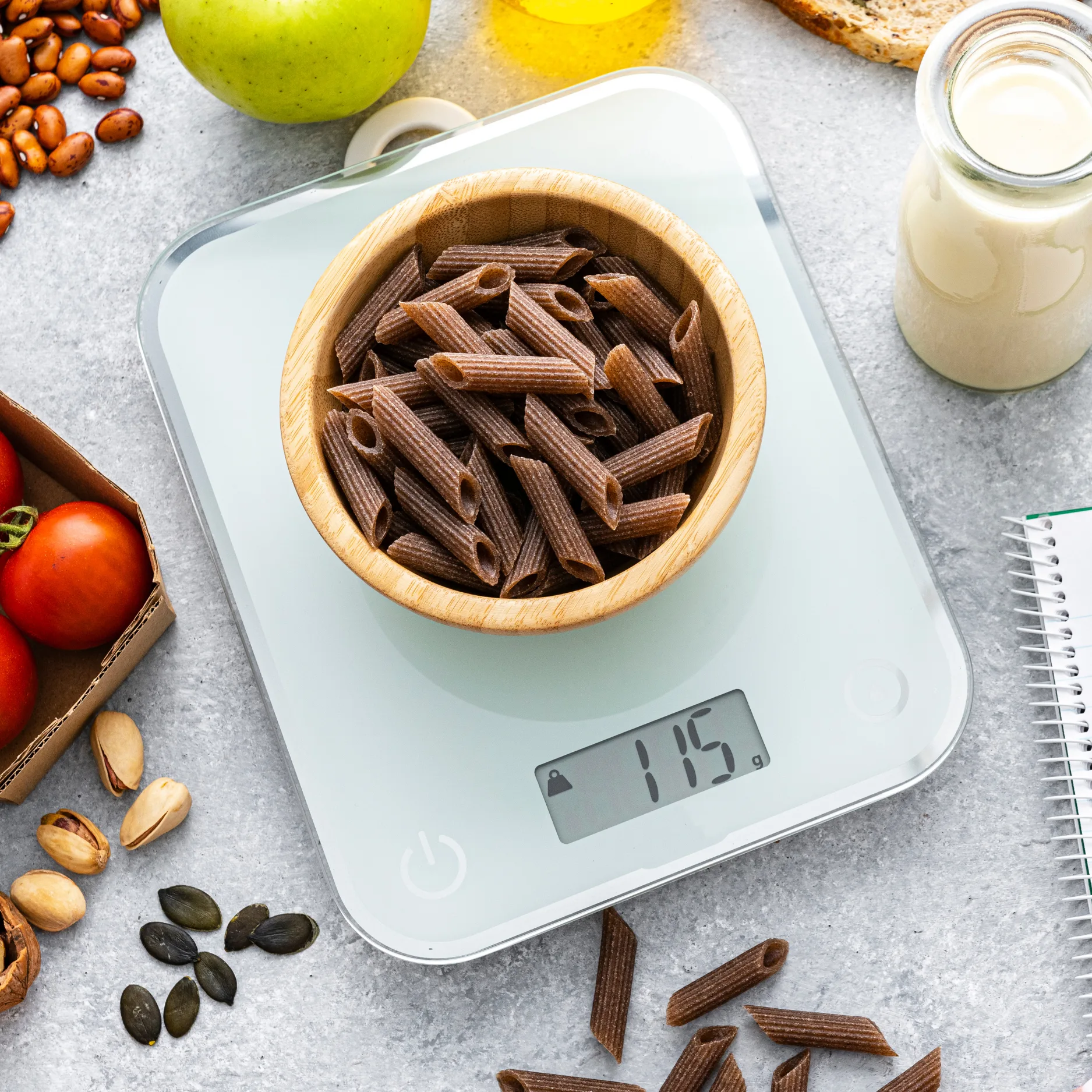
Weigh your portions
Weigh food in grams where you can. It’s far more accurate than eyeballing.
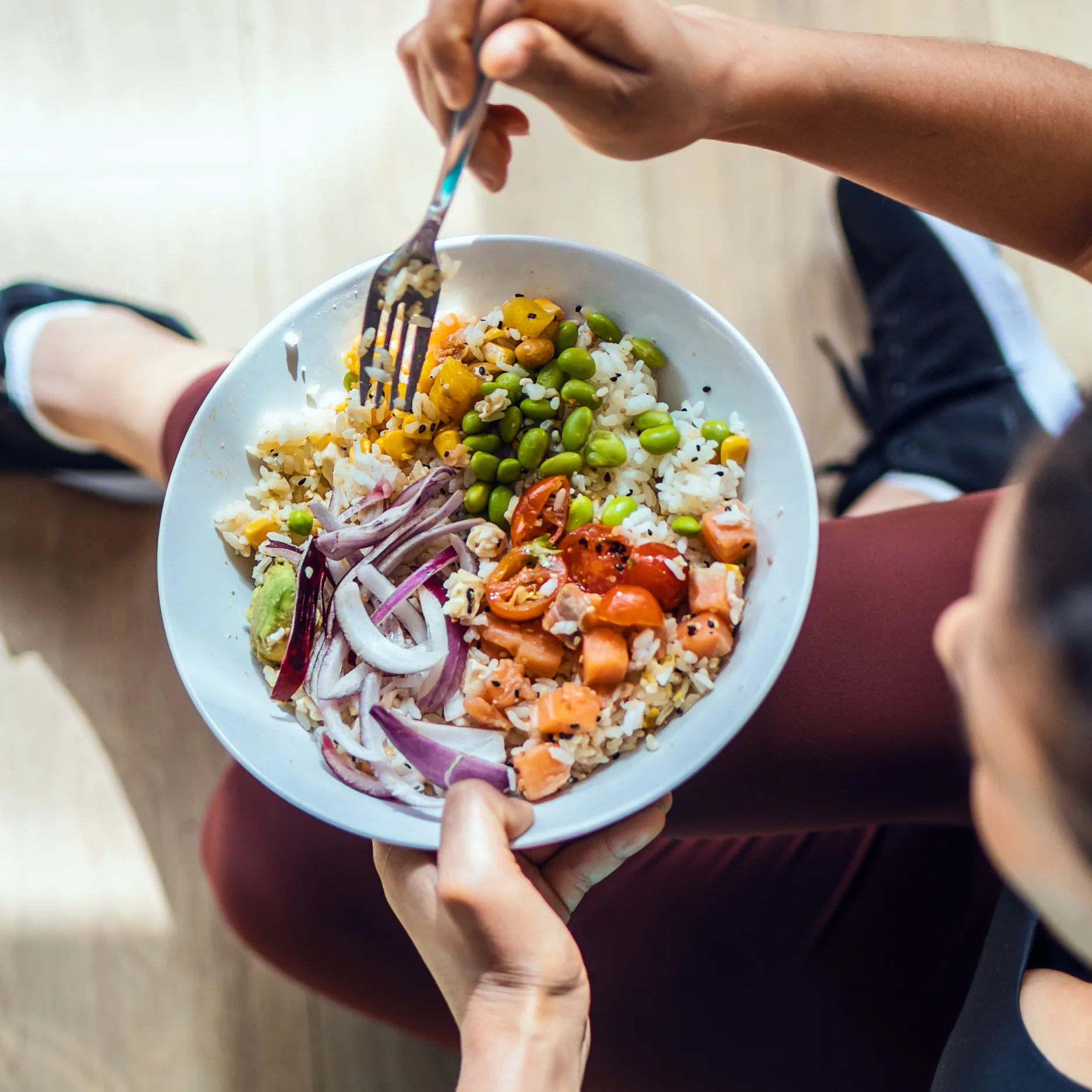
Hit your numbers
Aim to land close to each target by the end of the day. Close is good enough.
You don’t need to be perfect, you need to be consistent. Most people land within a small range of their targets and see steady progress. For the full method, read our guide to flexible dieting or the ultimate guide to counting macros.
Why tracking macros works for fat loss
It is not about willpower or cutting out the foods you love. Three simple principles make it sustainable.
Flexible dieting
A macro-based approach balances protein, carbs, and fat rather than banning foods. Because overall balance is what matters, you can fit pizza, cake, or ice cream into your day and still lose fat.
Guide to flexible dieting →The 80/20 rule
Aim for roughly 80% of your diet from whole, minimally processed foods, with the remaining 20% from things you simply enjoy. Stocking up on high-protein recipes makes that balance easy day to day.
The 80/20 nutrition rule →Health, not perfection
Clean eating alone does not make you healthy, and a cookie does not undo your progress. Maintaining a healthy weight while enjoying the occasional treat supports energy, mood, and longevity.
Ultimate guide to counting macros →Put your macros into action
Your numbers are the plan. Macro-friendly recipes make them easy to hit, and the right training program helps you reach your goal faster. Both are free.

Recipes to hit your macros
Hundreds of high-protein, macro-friendly meals built to fit your targets, every one with the macros worked out for you.
Browse all recipes →
Workouts for your goal
Structured, free training programs for every level and goal, the resistance training that turns your macros into real results.
Browse all workouts →Real results from real members

“This coaching program has literally changed my life. I’ve lost over 160 lbs working with my coach, but the weight loss is only part of it. I learned how to truly love myself again, to cut through the BS all over the internet, and to focus on small sustainable changes. I have rediscovered my love of running, lifting, and moving my body.”

“Working with my coach has been one of the best investments I’ve made in my health journey. He doesn’t just provide meal plans or macro numbers, he teaches discipline, accountability, and sustainable habits that create lasting results. Losing over 30 pounds has been transformational.”

“I slowly changed my mindset around food and started to see things as nutrient dense vs protein vs treats. I learned it’s ok to have a small treat daily and eat food I enjoy. It never turned into boiled chicken and veggies for every meal. Progress over perfection will get you there in the long run!”
Macro calculator FAQs
Is this macro calculator free?
How accurate is a macro calculator?
What macros should I eat to lose weight?
How do I track my macros once I have them?
Does the macro calculator work for women?
How often should I recalculate my macros?
Want your macros dialed in for you?
Your calculator results are a strong starting point. A certified Macros Inc coach takes it from there, reviewing how your body responds and adjusting your plan so the numbers turn into real, lasting results.
- Custom macros matched to your goal and lifestyle
- Weekly check-ins and daily messaging with your coach
- Adjustments as your body and goals change