
Advanced 6-Day Powerbuilding Program
Strength and size in the same week. Heavy compound work on A sessions, hypertrophy-focused volume on B sessions, six days per week for experienced lifters ready to push both.
Program Overview
This program is built for lifters who have outgrown simple linear progression and need a more structured approach to continue making strength and muscle gains simultaneously. The format is a 6-day Push Pull Legs split. A sessions are strength-focused, using the primary barbell lifts at low rep ranges with RPE-based loading. B sessions are hypertrophy-focused, using different exercises and angles at higher rep ranges to accumulate volume on the same muscle groups. Each muscle group is trained twice per week. Phase 1 is an accumulation block: higher volume at moderate intensity, building work capacity and establishing technique at sub-maximal loads. Phase 2 is an intensification block: reduced total sets on the strength lifts but heavier loading, pushing closer to maximal effort. This is a common and often effective structure at advanced level, though not the only valid approach. The six sessions can be arranged across any six days of the week. The default is Monday through Saturday with Sunday as the full rest day, but any configuration works as long as you keep one full rest day between the end of one cycle and the start of the next.
This program uses RPE (Rate of Perceived Exertion) targets rather than fixed weekly weight increases. RPE 7 means 3 reps in reserve. RPE 8 means 2 reps in reserve. RPE 9 means 1 rep in reserve. Phase 1 targets RPE 7 to 8. Phase 2 targets RPE 8 to 9. This approach accounts for day-to-day variation in readiness far better than rigid percentage-based loading.
Who Is This For?
This program is for experienced lifters who have been training consistently for at least 2 years, have strong technique on all the main barbell lifts, and understand how to manage their recovery across a high-frequency training week. This plan is right for you if:
- You have been training consistently for 2 or more years with structured programming
- You can squat, deadlift, bench press, row, and overhead press with technically proficient form under fatigue
- Simple linear progression no longer produces consistent weekly strength gains
- You understand RPE-based training and can accurately assess your own proximity to failure
- You can manage recovery across 6 training sessions per week through nutrition, sleep, and lifestyle
If weekly linear progression still produces consistent gains, you are not yet at advanced level. Browse our intermediate programs for the appropriate step before this one.
Weekly Schedule
Phase 1: Accumulation (Weeks 1-4)
Phase 1 builds work capacity at moderate intensity. Strength sessions target RPE 7 to 8 , genuinely hard sets with 2 to 3 reps left in reserve. This is not easy work. But it is controlled enough to sustain across 4 consecutive weeks and 6 sessions per week. Do not exceed RPE 8 in Phase 1, even if you feel capable of more.
Advanced lifters often want to push immediately to maximum intensity. This is a mistake in a block periodisation model. Phase 1 at RPE 7 to 8 builds the volume tolerance and technical consistency that allows Phase 2 to be genuinely productive. Skipping this by going too heavy too soon typically results in stalling by Week 6 or 7.
Use a competition-style paused bench press technique: lower the bar under control, pause for a full second at the chest with the bar stationary, then drive hard to lockout. The pause eliminates momentum, increases pectoral demand, and builds the bottom-end strength that transfers to maximal pressing.
Press from shoulder height straight overhead, tucking your chin as the bar passes your face. Full lockout on every rep. At advanced level, the overhead press should be loaded as a primary strength movement, not treated as shoulder accessory work.
Bench at 30 degrees. Lower the dumbbells to a full chest stretch and press back up. Hypertrophy-range accessory work after the heavy barbell pressing develops the upper chest at a rep range the strength work cannot fully address.
Light dumbbells, slight elbow bend. Raise both arms to shoulder height, pause briefly, lower with control. Direct side delt work appears on both push sessions for consistent volume across the week.
High cable with rope attachment. Elbows pinned to your sides, push to full extension and spread the rope ends apart at the bottom. Direct triceps isolation rounds out the push session.
Hinge to roughly 45 degrees. Pull the bar to your lower chest leading with your elbows, hold the contraction for one second, lower under control. Matches the bench press in strength priority. At advanced level, the row should be loaded as seriously as the bench.
Palms facing you, hands shoulder-width. Pull until your chin clears the bar, lower slowly over 3 to 4 seconds. Add weight with a belt when you consistently hit 6 reps across all sets with strict form. The chin-up is a strength movement here, not an accessory.
Hinge forward with light dumbbells. Raise both arms out to the sides until parallel to the floor. Rear delt health work is non-negotiable in a program with this much pressing volume.
Standing barbell curl at a strength-adjacent rep range. At advanced level, bicep direct work at heavier loads produces better arm strength and size than exclusively high-rep isolation training.
Palms facing inward throughout. Curl one dumbbell to your shoulder, lower slowly, alternate. Targets the brachialis for arm thickness alongside the bicep work from barbell curls.
Your primary lower body strength movement. Descend with a controlled pace to at least parallel, brace throughout, and drive back up with maximal intent. At advanced level, treat every squat set as a technical practice as much as a strength effort.
Bar over mid-foot, hip-width stance. Set your back, push the floor away, extend hips and knees together. Lower with control. The deadlift is the secondary lift on this session , the squat has already created significant systemic fatigue. Keep these at the lower end of the RPE target, not the upper.
Rear foot on a bench, dumbbells at your sides. Lower your back knee toward the floor and drive back up through your front heel. At advanced level, the Bulgarian split squat is loaded at a strength-adjacent rep range rather than purely for hypertrophy.
Balls of your feet on an elevated surface. Full stretch at the bottom, pause for one second, drive all the way up and pause at the top. A lower rep range than typical calf work allows heavier loading for strength and hypertrophy simultaneously. This can also be performed on a leg press machine if loading is easier that way.
Kneel at a high cable with the rope attachment. Flex your spine and crunch your rib cage toward your pelvis. Core strength directly supports the squat and deadlift. Do not treat this as a cool-down.
Bench at 30 degrees. A different pressing angle from Push A flat bench, at a hypertrophy rep range. Controlled 3-second lowering phase on every rep. Push B is where you build the muscle that supports Push A strength.
Grip the bar at shoulder width. Lower to your lower chest, press back up to lockout. The narrower grip shifts more load onto the triceps.
Set cables at chest height. Bring both handles together in a wide arc, squeezing at the peak of the contraction. The loaded stretch at the bottom provides a hypertrophy stimulus that pressing movements cannot fully replicate.
Second lateral raise session of the week. Six sets of lateral raises per week across both push sessions is an effective stimulus for shoulder width. Advanced lifters benefit from this level of direct delt volume.
Hold one dumbbell overhead with both hands and lower it behind your head by bending at the elbows. The overhead position gives the long head of the triceps a full loaded stretch that close grip bench cannot fully replicate.
Overhand grip, hands slightly wider than shoulder width. Pull until your chin clears the bar, lower slowly over 3 to 4 seconds. Complements the chin-up on Pull A with a different grip and a hypertrophy-range target.
Sit upright at the cable station. Pull the handle to your lower chest, pause for one second at full contraction, then lower slowly. Horizontal pull volume at a hypertrophy rep range to complement the heavy barbell rows on Pull A.
One hand and knee on a bench. Row the dumbbell to your hip leading with your elbow. At advanced level, the unilateral row provides independent loading for each side and a greater range of motion than bilateral rowing.
Hinge forward with light dumbbells. Raise both arms out to the sides until parallel to the floor. Second rear delt session of the week. Six sets of rear delt work per week is appropriate at this volume of pressing.
Curl one dumbbell to your shoulder with full supination at the top, lower slowly, and alternate. Your second direct bicep session of the week alongside Pull A barbell curls.
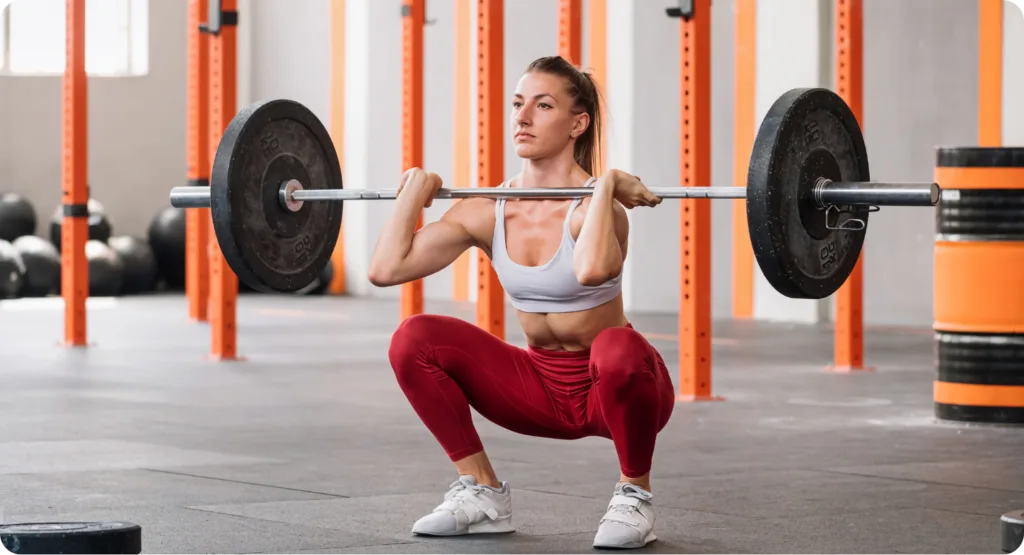
Bar racked across the front of your shoulders, elbows high. Descend to full depth with an upright torso, then drive back up. The front squat provides serious quad loading with less spinal compression than a back squat, making it the appropriate hypertrophy lower day anchor for advanced lifters.
Upper back against a bench, barbell across your hips. Drive your hips up to full extension and squeeze your glutes for two seconds at the top. The hip thrust provides direct glute isolation that the squat and deadlift cannot fully replicate.
Push your hips back and lower the bar along your shins until you feel a strong hamstring stretch, then drive back up. Trained on Legs B at a hypertrophy rep range to develop hamstring size while the conventional deadlift on Legs A builds hamstring strength.
Hold dumbbells at your sides and step forward into a lunge. Lower your back knee to the floor, pause briefly, then push back to standing. Provides unilateral quad and glute volume with minimal spinal loading at the end of a heavy lower body week.
Your second calf session of the week. Same full range of motion from complete stretch to full contraction. Twice-weekly calf training across both leg sessions is the most reliable driver of calf development. This can also be performed on a leg press machine if loading is easier that way.
Phase 2: Intensification (Weeks 5-8)
Phase 2 is the intensification block. Strength sessions drop to lower rep ranges and push closer to RPE 8 to 9. Some strength exercises reduce total sets to allow heavier loading per set. Hypertrophy sessions gain one set on the primary exercises. Total weekly volume is slightly lower on strength work than Phase 1, but intensity is significantly higher.
Fatigue accumulates considerably in Phase 2. If your performance on the A sessions is declining rather than improving by Week 7, take a lighter week immediately: reduce all A session weights by 15 to 20 percent and keep the sets and reps the same. This is not failure. It is intelligent periodisation.
Fewer sets, lower rep range, heavier loading. Continue the paused technique from Phase 1. Phase 2 bench should feel like a genuine test of your current maximum strength capacity at RPE 8 to 9.
Same sets, lower rep range, heavier loading. The overhead press at RPE 8 to 9 in Phase 2 is one of the highly effective shoulder strength builders in this program.
One extra set with heavier dumbbells. Upper chest accessory volume increases in Phase 2 to support the heavier flat bench work.
One extra set. Eight sets of lateral raises per week across both push sessions in Phase 2 is a serious stimulus for side delt development.
Same sets, slightly more weight. Triceps isolation work maintains at the same volume while the heavy pressing provides the primary triceps stimulus in Phase 2.
Fewer sets, lower rep range, heavier loading. Phase 2 rows at RPE 8 to 9 are demanding after the previous day's push work. Manage your lower back carefully given the heavy Legs A that follows the next day.
Same sets, lower rep range, more weight on the belt. Phase 2 weighted chin-ups at 3 to 5 reps are one of the highly effective upper back strength exercises available.
One extra set. Rear delt health work becomes more important in Phase 2 as pressing loads increase. Do not reduce this to save time.
Same sets, heavier loading. By Phase 2 your barbell curl should be noticeably stronger than Week 1.
One extra set with slightly heavier dumbbells. Complete bicep development across the week using both curl variations on both pull sessions.
Fewer sets, lower rep range, heavier loading. Phase 2 squats at RPE 8 to 9 are the most demanding sets of the week. Technical excellence under this level of load is what separates advanced from intermediate.
Same sets, lower rep range, heavier loading. Heavy singles and doubles after Phase 2 squats is genuinely demanding. Take every second of rest you need. Quality of these sets matters far more than adding more.
One extra set with heavier loading. At Phase 2 loads, the Bulgarian split squat becomes a genuine strength exercise. Add a pause at the bottom to eliminate bounce.
Same sets, heavier loading. Load calf raises progressively throughout Phase 2. This can also be performed on a leg press machine if loading is easier that way.
One extra set. Core strength is increasingly important as Phase 2 loads on the squat and deadlift push toward maximum effort.
One extra set with heavier loading. By Phase 2 your incline press should be loaded meaningfully. Combined with Push A incline dumbbell, upper chest volume across the week is substantial.
Grip the bar at shoulder width. Lower to your lower chest, press back up to lockout. The narrower grip shifts more load onto the triceps.
One extra set. Cable flys provide a loaded stretch in the lengthened position that pressing movements cannot replicate.
One extra set. Eight sets of lateral raises per week across both push sessions in Phase 2 is an effective and appropriate stimulus for side delt development at advanced level.
One extra set. The overhead stretch position gives the long head of the triceps a loaded stretch that complements the close grip pressing work.
One extra set. If consistently hitting 10 reps, add a weight belt. Five sets of pull-ups at this rep range is substantial lat and upper back volume.
One extra set with more weight. Five sets of cable rows with a two-second pause at contraction is a substantial mid-back stimulus.
One extra set with heavier loading. The single-arm row catches imbalances that bilateral rowing cannot address.
Same sets. Rear delt health work across both pull sessions throughout Phase 2 is essential with this volume of pressing.
One extra set. Your second direct bicep session of the week. Using both curl variations across the two pull days gives complete bicep development.
One extra set with heavier loading. The front squat demands technical precision that becomes genuinely challenging at Phase 2 weights. Prioritise an upright torso and full depth on every rep. If wrist or shoulder flexibility limits the clean grip, use a crossed-arm grip with your arms folded over the bar.
One extra set with more weight. Hold the top for two full seconds on every rep. At Phase 2 loads, the hip thrust should be producing a genuine glute stimulus.
Same sets, heavier loading. Slow the lowering phase to 3 to 4 seconds throughout Phase 2.
One extra set with heavier dumbbells. A one-second pause at the bottom of each lunge eliminates bounce and increases the stimulus.
Same sets, heavier loading. By Phase 2, twice-weekly calf training should be producing visible results if full range of motion has been used consistently. This can also be performed on a leg press machine if loading is easier that way.
Advanced 6-Day Powerbuilding Program PDF
A push, pull, legs powerbuilding split for advanced lifters who want strength and size in the same week.
This is a 6-day gym program you run for 8 weeks, with A sessions built on heavy barbell strength work and B sessions using different exercises for hypertrophy volume on the same muscles. Phase 1 (weeks 1-4) trains at RPE 7-8 to build volume tolerance and technique. Phase 2 (weeks 5-8) cuts total sets on the strength lifts while pushing loads to RPE 8-9, and adds a set to the hypertrophy lifts.
- Every Muscle Group Trained Twice A Week A and B sessions load the same muscles from different rep ranges and angles.
- RPE Replaces Fixed Weight Jumps Loading is set by effort, not a rigid weekly percentage increase.
- Fewer Sets, Heavier Loads In Phase 2 Strength lifts trade volume for intensity as the block progresses.
Get Your 6-Day Powerbuilding Program
Includes both training phases, the weekly schedule, and exercise cues for all six sessions. Download instantly after you submit the form.
Unsubscribe any time.
Nutrition Guidance
Advanced powerbuilding at 6 sessions per week demands a level of nutritional precision that lower-frequency programs do not. Calorie and protein targets are not guidelines here , they are variables that directly determine whether the training stimulus produces an adaptation. For lifters aiming to build strength and muscle simultaneously, our guide on how to bulk effectively covers how to set calories, manage rate of gain, and avoid the most common mistakes when eating to support strength training.
Nutrition for Advanced Powerbuilding
- Protein: 1.8 to 2.2g per kg of bodyweight daily. At advanced level with six sessions per week, protein at the higher end of this range supports recovery and adaptation more reliably. Browse our high protein recipes for meals that support this kind of training volume.
- Calories: A surplus of 200 to 300 calories above maintenance supports strength and muscle gains without excessive fat accumulation. Our free macro calculator helps you set your calorie and protein targets.
- Carbohydrates: Six sessions of compound barbell work per week demands significant glycogen. Do not undereat carbohydrates. Distributing carbohydrate intake around your training sessions supports both performance and recovery.
- Sleep: Seven to nine hours per night. At this training frequency and intensity, sleep is the most impactful recovery variable available. Poor sleep will undermine the program faster than any dietary imperfection.
Advanced lifters make slower absolute progress than beginners and intermediates. A good week is not always measurable in kilograms. Track your performance data, bodyweight trend, and how you feel across sessions. Our guide on how to weigh yourself effectively covers how to use bodyweight as a feedback tool without over-interpreting short-term fluctuations.


