
Advanced 5-Day Muscle Building Program
Five days, five different sessions, maximum muscle. Push, pull, legs, upper, and lower body across a week designed for advanced lifters who need serious volume to keep growing.
Program Overview
This program is designed for advanced lifters whose primary goal is muscle growth and for whom intermediate-level volume and exercise selection no longer produces consistent progress. The structure runs five days per week across two distinct session types. Monday is a dedicated push session. Tuesday is a dedicated pull session. Wednesday is a full lower body session. Thursday is an upper body session hitting different angles than Monday and Tuesday. Friday is a posterior chain-focused lower session. Chest is trained twice per week at different angles. Back is trained twice per week with different exercise selection. Shoulders are trained on both upper days. Hamstrings are trained across both lower days with both hip-extension and knee-flexion patterns. The total weekly volume per muscle group is considerably higher than an intermediate program. The five sessions can be arranged across any five consecutive days that fit your schedule. Monday through Friday is the default, but Push, Pull, Legs, Rest, Upper, Lower, Rest works just as well. The key constraint is placing the rest day between Legs and Upper to allow lower body recovery.
The main differences from an intermediate program are total weekly volume, exercise variety, and the intensity techniques introduced in Phase 2. Phase 1 establishes the volume and working weights. Phase 2 uses rest-pause sets and myo-rep clusters on selected exercises to push past straightforward progressive overload. These are not required in Phase 1.
Who Is This For?
This program is for experienced lifters who have been training consistently for 2 or more years, have strong technique across all major movement patterns, and need more volume and complexity than standard intermediate programs provide. This plan is right for you if:
- You have been training consistently for 2 or more years with structured programming
- Standard intermediate volume programs have stopped producing consistent muscle growth
- You are comfortable with a wide range of exercises and equipment
- You can commit to five training sessions per week and manage the recovery demand
- Building muscle is your primary training goal rather than maximal strength or performance
If building maximal strength is the priority rather than muscle size, browse our advanced programs for options with a heavier strength focus.
Weekly Schedule
Phase 1: Volume Accumulation (Weeks 1-4)
Phase 1 builds work capacity and establishes working weights across all five sessions. The volume is high from Week 1. Find weights where the last two reps of each set are genuinely hard but technically sound. Resist the urge to add intensity techniques yet. They are introduced in Phase 2.
Add weight to compound exercises when you complete all prescribed reps across all sets with good form. For isolation exercises, increase weight when the top of the rep range feels controlled across all sets. Do not add sets in Phase 1. The volume is already substantial.nnFor the first one to two weeks, start with intentionally submaximal weights, roughly 3-4 reps in reserve rather than 1-2. This gives your body time to adapt to the higher volume before you push the intensity. By Week 3, you should be working closer to your true working weights.
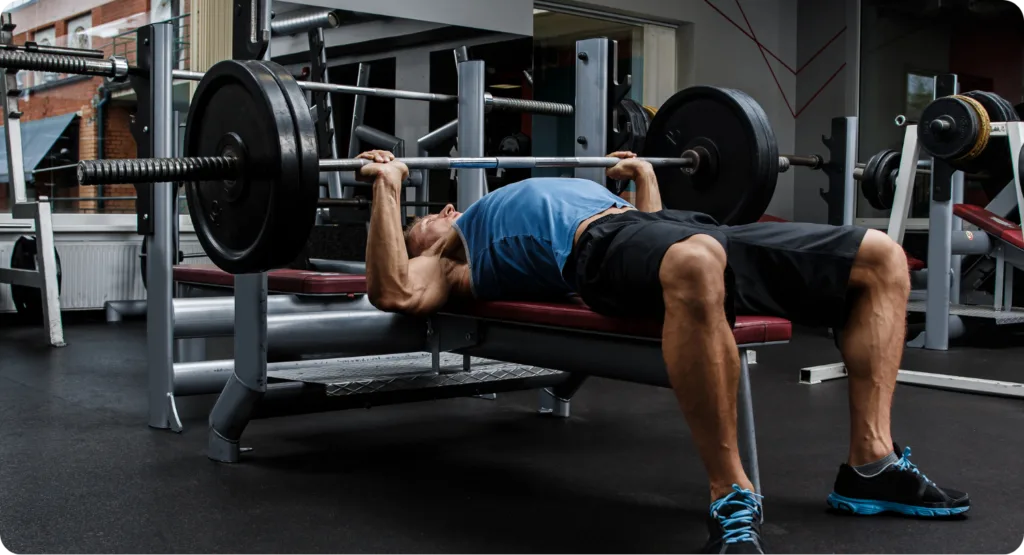
Your primary horizontal press. Shoulder blades retracted and depressed, feet planted, bar to mid-chest. Lower with control and drive back up. Four sets at 6 to 8 reps provide both hypertrophy stimulus and some strength carryover.
Bench at 30 degrees. A different angle to the flat bench, targeting the upper chest. A controlled 2 to 3 second lowering phase on every rep.
Set cables at chest height. Bring both handles together in a wide arc and squeeze at the peak. The loaded stretch at the bottom provides a hypertrophy stimulus that pressing cannot fully replicate.
Press from shoulder height straight overhead. Full lockout on every rep. At advanced level, the overhead press should be loaded as a primary shoulder development exercise, not an afterthought.
Light to moderate dumbbells, slight elbow bend. Raise both arms to shoulder height and lower with control. Four sets on Push plus three sets on Upper Thursday gives consistent side delt volume across the week.
High cable with rope attachment. Elbows pinned to your sides, push to full extension and spread the rope ends apart. Three sets provide meaningful direct triceps volume alongside the compound pressing.
Hold one dumbbell overhead with both hands and lower it behind your head by bending at the elbows. The overhead position gives the long head a full loaded stretch that pushdowns alone cannot provide.
Overhand grip, hands slightly wider than shoulder width. Pull until your chin clears the bar, lower under control. At advanced level, add weight with a belt when you consistently hit 8 reps across all sets. Treat this as a primary strength movement.
Hinge to roughly 45 degrees. Pull the bar to your lower chest leading with your elbows, hold for one second at full contraction, lower under control. The primary horizontal strength pull of the week.
Set an incline bench to 45 to 60 degrees. Lie chest-down with dumbbells hanging at arm's length. Row both dumbbells to your sides leading with your elbows. The chest support removes lower back involvement entirely, allowing full focus on the back.
Stand at a high cable with a straight bar or rope. Arms slightly bent, pull the bar down to your thighs in a wide arc by driving your elbows toward your hips. Isolates the lats without bicep involvement.
Hinge forward with light dumbbells. Raise both arms out to the sides until parallel to the floor. Four sets of rear delt work on the pull session balanced against the push pressing volume across the week.
Standing barbell curl. At advanced level, direct bicep work at heavier loads in the 8 to 10 rep range produces better arm development than exclusively chasing pump with high rep isolation work.
Palms facing inward throughout. Curl one dumbbell to your shoulder, lower slowly, and alternate. Targets the brachialis for arm thickness alongside the bicep work from barbell curls.
Your primary quad strength movement. Bar on upper traps, feet shoulder-width. Descend to at least parallel and drive back up. Five sets at 6 to 8 reps provides substantial quad volume with some strength carryover.
Feet shoulder-width on the platform with toes slightly out. Lower until your thighs are at least parallel to the platform, then drive back up. The hack squat isolates the quads more directly than a barbell squat with less spinal loading.
Rear foot on a bench, dumbbells at your sides. Lower your back knee toward the floor and drive back up through your front heel. Unilateral loading catches imbalances and adds quad and glute volume with independent loading per side.
Upper back against a bench, barbell across your hips. Drive your hips to full extension and squeeze your glutes hard for two seconds. The hip thrust is the primary glute isolation exercise and appears on both lower sessions.
Lie face down on the leg curl machine. Curl your heels toward your glutes under control, pause briefly at full contraction, then lower slowly. Knee-flexion hamstring work complements the hip-extension patterns in both lower sessions.
Balls of your feet on an elevated surface. Full stretch at the bottom, pause for one second, drive all the way up and pause at the top. First of two weekly calf sessions.
Bench at 30 degrees. Lower the dumbbells to a full chest stretch at the bottom, then press back up. Thursday incline DB press complements Monday flat and incline barbell work by using dumbbells for a greater range of motion.
Sit upright at the cable station. Pull the handle to your lower chest, pause for one second at full contraction, then lower slowly. Horizontal pull volume on Upper Thursday complements the pull-up and barbell row work from Pull Tuesday.
Grip slightly wider than shoulder width. Pull to your upper chest driving your elbows down and back. Control the return to full arm extension. Vertical pull volume at a hypertrophy rep range to complement the weighted pull-ups on Pull Tuesday.
Sit or stand with dumbbells at shoulder height. Press both overhead and lower with control. Second shoulder press session of the week alongside Monday overhead barbell press.
Set a cable at head height with a rope attachment. Pull the rope toward your forehead, spreading the ends apart as you pull and keeping your elbows high. Essential rear delt and external rotator work to balance the high pressing volume across the week.
Same movement as Monday. Appearing on both upper days gives the side delts seven sets of direct work per week, which is appropriate volume for advanced shoulder development.
Curl one dumbbell to your shoulder, lower slowly, and alternate. Second direct bicep session of the week alongside Pull Tuesday barbell curls.
Push your hips back and lower the bar along your shins until you feel a strong hamstring stretch, then drive your hips forward to return. The primary hamstring developer of the week. Lower over 3 to 4 seconds.
Feet shoulder-width on the platform. Lower the platform toward your chest until your thighs are at least parallel to the footplate, then drive back up without locking out fully at the top. Provides significant quad and glute volume after the RDL with minimal spinal loading.
Upper back against a bench, barbell across your hips. Drive your hips to full extension and squeeze your glutes hard for two seconds. Second hip thrust session of the week alongside Legs Wednesday.
Hold dumbbells at your sides and step forward into a lunge. Lower your back knee toward the floor, pause briefly, then push back to standing. Adds quad and glute volume on the posterior chain day without repeating the hinge pattern.
Seated leg curl machine. Curl your heels toward the seat under control, pause briefly at full contraction, then lower slowly. The seated position puts the hamstring under a greater stretch than the lying version, increasing the stimulus at the lengthened position.
Your second calf session of the week. Same full range of motion from complete stretch to full contraction. Pause for one second at the bottom to eliminate bounce.
Kneel at a high cable with the rope attachment. Flex your spine and crunch your rib cage toward your pelvis. Core work at the end of the week's final session.
Phase 2: Intensification and Advanced Techniques (Weeks 5-8)
Phase 2 adds one set to selected primary compound exercises and introduces advanced intensity techniques on selected isolation exercises. These techniques push past straightforward progressive overload and are appropriate for advanced lifters who have built the volume tolerance in Phase 1.
Two techniques are introduced in Phase 2. Rest-pause: complete your working set, rest for 10 to 15 seconds, then perform as many additional reps as possible. Myo-reps: perform a set, rest 3 to 5 breaths, perform 5 more reps, repeat 2 to 3 times. These are indicated in the relevant exercise descriptions.
Same sets, heavier loading than Phase 1. By now your working weight should be meaningfully higher than Week 1.
One extra set with heavier loading. Upper chest volume increases meaningfully in Phase 2.
One extra set. Consider a myo-rep approach on your final set: complete 12 to 15 reps, rest 4 breaths, perform 5 more reps, rest again, 5 more. This extends the effective volume of the set without needing heavier weight.
One extra set with heavier loading. Shoulder pressing strength at Phase 2 weights should be noticeably higher than Week 1.
One extra set. On your final two sets, try a rest-pause: complete your reps, rest 10 seconds, perform as many additional reps as possible. Side delts respond particularly well to this approach.
One extra set with slightly more weight. Triceps isolation volume increases in Phase 2 alongside the heavier pressing work.
Same sets, slightly heavier dumbbell. The overhead stretch position hits the long head of the triceps in a way pushdowns cannot.
One extra set with more weight on the belt. Five sets of weighted pull-ups in Phase 2 is substantial lat and upper back volume. Add weight with a belt when you consistently hit 8 reps across all sets.
One extra set with heavier loading. Pull until your elbows reach or slightly pass your torso without losing torso position.
One extra set with heavier dumbbells. The chest support becomes especially valuable in Phase 2 when cumulative lower back fatigue from heavy rows and upcoming leg work makes momentum-free rowing more important.
Same sets, slightly more weight. The straight arm pulldown isolates the lat without bicep involvement, making it a useful complement to the pull-up and row patterns.
Same sets, consistent weight or slightly heavier. Rear delt health work is non-negotiable in Phase 2 as pressing loads increase.
Same sets, heavier loading. By Phase 2 your barbell curl should be noticeably stronger than Week 1.
Same sets, slightly heavier dumbbells. Consider myo-reps on your final set for additional stimulus without extending session length.
Same sets, heavier loading. By Phase 2 your squat should be meaningfully heavier than Week 1. Technical excellence under this load is what matters most.
One extra set with heavier loading. The hack squat accumulates meaningful quad volume after barbell squats without additional spinal loading.
One extra set with heavier loading. Add a pause at the bottom of each rep in Phase 2 to eliminate bounce and increase the training effect.
One extra set with more weight. Hold the top for two full seconds on every rep. Five sets of hip thrusts twice per week in Phase 2 is serious glute work.
Same sets, heavier loading. Consider myo-reps on your final set: complete your reps, rest 3 to 4 breaths, perform 5 more, rest again, 5 more. This extends the effective hamstring stimulus.
Same sets, heavier loading. Try single-leg calf raises in Phase 2 for a significant difficulty increase without needing additional weight.
One extra set with heavier dumbbells. Upper chest volume on Thursday complements the incline barbell work from Monday.
One extra set with more weight. Five sets of cable rows with a two-second pause at contraction is substantial mid-back volume.
One extra set. If you are consistently hitting 12 reps, increase the weight rather than the sets.
One extra set with heavier dumbbells. Your second shoulder press session of the week. By Phase 2 the accumulated shoulder volume across both upper days is substantial.
Same sets. Consider myo-reps on your final set: complete 15 reps, rest 3 to 4 breaths, perform 5 more reps, repeat once or twice. Rear delt and external rotator health remains non-negotiable in Phase 2.
One extra set. Nine weekly sets of lateral raises across both upper days in Phase 2 is a meaningful side delt stimulus for advanced development.
Same sets, slightly heavier dumbbells. Using both curl variations across the two pull sessions gives complete bicep development.
One extra set with heavier loading. Slow the lowering phase to 3 to 4 seconds throughout Phase 2. The loaded stretch at the bottom is a major part of what makes this exercise effective for hamstring development.
One extra set with heavier loading. Consider a rest-pause on your final set for additional quad and glute stimulus without extending the session significantly.
Same sets, more weight. Your second hip thrust session of the week. Maintain the two-second squeeze at the top on every rep.
Same sets, heavier dumbbells. A pause at the bottom of each lunge eliminates bounce and increases the stimulus.
One extra set. Consider myo-reps on your final set for extended hamstring stimulus. The seated position puts the hamstring under a greater stretch than the lying version.
Same sets, slightly heavier loading. By Phase 2, twice-weekly calf training should be producing visible results with consistent full range of motion.
Same sets, slightly more weight. Core strength closes out the week.
Advanced 5-Day Muscle Building Program PDF
A high-volume push, pull, legs, upper, lower split for advanced lifters who need serious volume to keep growing.
This is a 5-day gym-based program you run for 8 weeks, with chest, back, shoulders, and hamstrings each trained twice a week from different angles. Phase 1 (weeks 1-4) locks in working weights across all five sessions without adding sets. Phase 2 (weeks 5-8) adds a set to key compound lifts and introduces rest-pause sets and myo-rep clusters on select isolation exercises to push past straightforward progressive overload.
- Every Major Muscle Trained Twice A Week Chest, back, and shoulders each get worked across two sessions with different exercises and angles, and hamstrings get both hip-extension and knee-flexion work across the two lower days. That adds up to considerably more weekly volume per muscle group than an intermediate program.
- Rest-Pause And Myo-Reps In Phase 2 Once Phase 1 builds your volume tolerance, Phase 2 introduces rest-pause sets on lifts like the lateral raise and myo-rep clusters on exercises like the cable fly. Both extend a set's effective stimulus without needing heavier weight.
- Built On Compound Strength Work The week is anchored by heavy barbell squats, bench press, rows, and Romanian deadlifts at 5 to 8 reps, with isolation work layered on for volume. Weighted pull-ups get added once you can hit 8 clean reps across all sets.
Get Your Advanced 5-Day Muscle Program
Includes both training phases, the weekly schedule, and exercise cues for all five sessions. Download instantly after you submit the form.
Unsubscribe any time.
Nutrition Guidance
Advanced muscle building requires a level of nutritional commitment that most people underestimate. Consistently training at high volume five days per week without adequate calories and protein will produce diminishing returns regardless of how well the program is designed. For lifters in an active muscle building phase, our complete guide to bulking and cutting covers how to set your calories, manage rate of gain, and know when to shift phases.
Nutrition for Advanced Muscle Building
- Protein: 1.8 to 2.2g per kg of bodyweight daily. At advanced level with five demanding sessions per week, sitting toward the higher end of this range supports recovery and adaptation more reliably. Our high protein recipes make hitting that target across five training days more practical.
- Calories: A surplus of 200 to 300 calories above maintenance supports muscle building without excessive fat gain. Use our macro calculator to dial in your surplus.
- Carbohydrates: Five sessions of compound work per week demands significant glycogen. Distribute carbohydrate intake around your training sessions for best performance and recovery.
- Consistency over perfection: Eight weeks of consistent nutrition at maintenance or above will produce more results than oscillating between aggressive surplus and deficit. Sustained commitment is the variable that matters most at advanced level.
With five training days and two rest days per week, knowing how to adjust your calorie intake on rest days versus training days matters. Our guide on whether to eat back exercise calories covers how to think about this practically.