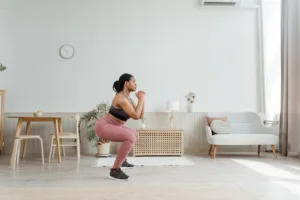
4-Day Dumbbell Home Split
Train like you have a gym, from your spare room. Upper/lower split, four sessions per week, adjustable dumbbells and a bench. Enough volume to build real muscle without a membership.

Program Overview
This is a proper training program that happens to live in your spare room. Four sessions per week, split across two upper body days and two lower body days, using dumbbells and a bench. No machines, no cables, no barbells needed. The upper/lower split means every muscle group gets trained twice per week. Upper A and Lower A use heavier loading at lower reps. Upper B and Lower B use different exercises at higher reps. Together they give you the frequency and variety that drives muscle growth even without a full gym.
The idea that you need a gym to build muscle is outdated. A pair of adjustable dumbbells that go heavy enough and a sturdy bench give you access to every movement pattern that matters. The limiting factor is effort and consistency, not equipment.
Who Is This For?
This program is for intermediate lifters who train at home and want more frequency than a 3-day plan provides. This plan is right for you if:
- You have at least 6 months of consistent training behind you
- You own adjustable dumbbells that go heavy enough to challenge you
- You have a sturdy bench, ideally adjustable for incline work
- You can commit to four sessions per week for 8 weeks
- You want to build muscle at home without compromise
If you have less than 6 months of training, start with our 3-day options. Check our other home programs for beginner-friendly plans that build the foundation first.
Weekly Schedule
Phase 1: Build the Base (Weeks 1-4)
The first four weeks establish your working weights across all four sessions. Upper A and Lower A are your heavier, strength-focused sessions. Upper B and Lower B use different exercises at slightly higher reps to develop the same muscles from a different angle.
Hit all reps on all sets with good form? Go up to the next dumbbell pair. If your dumbbells jump in large increments, add reps within the range first, then add tempo, then jump weight. Small dumbbell increments are worth investing in if you train at home seriously.
Lie flat on a bench, dumbbells at chest level. Press up to full extension, lower over two full seconds until you feel a deep stretch.
One hand on the bench, row the dumbbell to your hip with the other. Squeeze your back hard at the top, lower slowly.
Seated with back support, dumbbells at shoulder height. Press overhead to full extension, lower with control.
Hinge at the hips, both dumbbells hanging. Row to your lower ribs with a neutral grip. Squeeze your shoulder blades together.
Stand with dumbbells at your sides, palms facing your body. Curl one up without rotating your wrist, lower slowly, repeat on the other side.
Hold a heavy dumbbell vertically at your chest. Squat to full depth, drive through heels to stand. Three-second descent on every rep.
Hold dumbbells in front of your thighs. Push hips back, lower along your legs until you feel a deep hamstring stretch. Drive hips forward to return.
Rear foot on the bench behind you, dumbbells at your sides. Lower straight down until your back knee nearly touches the floor. Drive through the front heel.
Upper back on the bench, dumbbell across your hips. Drive hips up, hold for two seconds, lower with control.
Lie on your back with knees bent, feet flat on the floor. Curl your upper body off the floor by flexing through your abs, pause at the top, then lower with control. No equipment needed.
Bench at 30 degrees. Dumbbells at shoulder level, press up, lower to a deep stretch.
Lie flat, dumbbells above your chest, arms slightly bent. Lower out to the sides until you feel a stretch, bring back together.
Start with palms facing you at shoulder height. As you press up, rotate palms outward so they face forward at the top. Reverse on the way down.
Lie back on an incline bench, dumbbells hanging, palms forward. Curl up without moving your upper arms, lower slowly.
Seated or standing, one dumbbell held overhead with both hands. Lower behind your head, extend back up.
Hold dumbbells at shoulder height with elbows up. Squat down with an upright torso, drive through heels.
Hold a dumbbell against your chest. Hinge at the hips, pushing them back while keeping your back flat. Lower until you feel a hamstring stretch, then stand tall.
Hold dumbbells at your sides. Step forward, lower your back knee toward the floor. Drive through the front heel. All reps on one leg before switching.
Lie on the floor, feet elevated on the bench, dumbbell across hips. Drive hips up, hold for two seconds, lower slowly.
Lie on your back, hands under hips. Lift both legs and alternate kicking in small controlled movements.
Brisk walking on rest days. Four training sessions plus walking gives you daily structure.
Light stretching on hips, thoracic spine, and shoulders. Particularly useful on Wednesday between upper and lower sessions.
Phase 2: Push the Load (Weeks 5-8)
Phase 2 adds one set to the primary lift on each A session and drops the rep range slightly. All B session exercises keep the same sets and reps but should use heavier dumbbells. The split structure stays identical so you can compare directly to Phase 1.
If you have genuinely maxed out your dumbbell weight on a given exercise, use tempo as your next progression tool. A three-second descent on every rep of a maxed-out dumbbell is harder than a faster rep with a heavier dumbbell you do not own.
One extra set, lower reps, heavier dumbbells.
Same sets, lower reps, heavier dumbbell.
Same sets, lower reps, heavier dumbbells.
Same sets, lower reps, heavier dumbbells. One-second squeeze at peak contraction.
Same volume, heavier dumbbells. Three-second descent on every rep.
One extra set, lower reps, heavier dumbbell. Three-second descent stays.
Same sets, lower reps, heavier dumbbells.
Same volume, heavier dumbbells.
Same volume, heavier dumbbell. Two-second hold stays.
Lie on your back with knees bent, feet flat on the floor. Curl your upper body off the floor by flexing through your abs, pause at the top, then lower with control. No equipment needed.
Same volume, heavier dumbbells. Three-second descent.
Same volume, heavier dumbbells. Full stretch at the bottom.
Same volume, heavier dumbbells. Full rotation on every rep.
Same volume, heavier dumbbells. Full stretch at the bottom, strict form.
Same volume, heavier dumbbell. Full range overhead.
Same volume, heavier dumbbells. Keep elbows high.
Same volume, heavier dumbbell. Strict flat back on every rep.
Same volume, heavier dumbbells. One-second pause at the bottom.
Same volume, heavier dumbbell. Two-second hold at the top.
Same volume with a two-second pause between reps.
Same as Phase 1. Keep the habit.
Same as Phase 1. Targeted stretching.
4-Day Dumbbell Home Split PDF
An upper/lower dumbbell split for intermediate lifters who want to build muscle at home without a gym membership.
This is a 4-day upper/lower split you run for 8 weeks with just dumbbells and a bench. Upper A and Lower A use heavier loads at lower reps, while Upper B and Lower B hit the same muscles with different exercises at higher reps. Phase 2 adds an extra set to the main lift in each A session and drops the rep range slightly, while B sessions keep the same sets and reps but move to heavier dumbbells.
- Twice-Weekly Frequency Per Muscle Group Splitting upper and lower body across four sessions means every muscle group gets trained twice a week instead of once. The A and B sessions use different exercises so the same muscles get worked from a different angle.
- Clear Rule For When To Add Weight Hit all reps on all sets with good form and you move up to the next dumbbell pair. If your jumps are too big, you add reps first, then tempo, then weight, so progress doesn't stall between increments.
- Built-In Plan For When Dumbbells Run Out Once a lift is maxed out, a three-second descent on every rep makes a capped dumbbell harder than a faster rep with more weight you don't own. Later exercises also swap in single-leg or single-arm variations to double the demand per side.
Get Your 4-Day Dumbbell Home Split
Includes both training phases, the weekly schedule, and exercise cues for all four sessions. Download instantly after you submit the form.
Unsubscribe any time.
Nutrition Guidance
Four training sessions per week creates meaningful recovery demand. Getting your nutrition right is what allows your body to respond to the training and actually build muscle. Setting up a proper home gym does not have to be expensive or complicated. Our guide on building your home gym covers what equipment actually matters and what you can skip.
The Basics
- Protein: 1.6 to 2.2g per kg of bodyweight daily. This is the most important dietary variable for anyone training four days per week. Our high protein recipes can help you hit your daily target without overcomplicating meal prep.
- Calories: Eat at maintenance or a small surplus of 200 to 300 calories to support muscle building. Use our free macro calculator to find your number.
- Recovery nutrition: Try to have a meal with protein and carbohydrates within two hours of each session. Exact timing matters far less than hitting your daily totals.
- Sleep: Seven to nine hours per night. Muscle and strength are built during recovery, not during the session.
Building muscle requires a calorie surplus, enough protein, and progressive training. All three are achievable at home. Our guide on how to gain muscle covers the fundamentals that apply regardless of where you train.