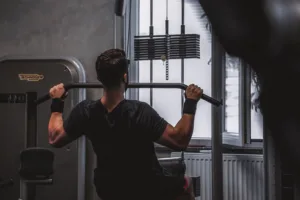
5/3/1 Workout Program
Jim Wendler's percentage-based method run properly for twelve weeks: four sessions a week, deliberately conservative jumps, and progress that is still there in a year.
Program Overview
Most strength programs fail because they ask you to add weight faster than you can actually get stronger. 5/3/1 solves that by starting too light on purpose. Every working weight comes from a training max set at ninety percent of your real max, and the jumps are tiny: 2.5kg a cycle on the presses, 5kg on squats and deadlifts. It feels slow for a month and then it quietly keeps working for years, which is why it is still the most widely run intermediate program two decades on. Each of the four sessions is built around one main lift with assistance work behind it, and the last set of every main lift is taken for as many quality reps as you have. Every exercise includes a form video.
If you have never run a structured barbell program, our beginner powerlifting program or 5x5 workout program will add weight faster at your stage. 5/3/1 earns its keep after those stop working.
Who Is This For?
This plan suits you if:
- Linear programs have stopped adding weight for you
- You have a rough one rep max, or a recent set you can convert to one
- You can train four days a week with a barbell and rack
- You can stand a slow start in exchange for a long runway
Compare the strength options on our intermediate programs page.
Weekly Schedule
Phase 1: Two Cycles, Conservative Loads (Weeks 1-6)
Each three-week cycle runs a week of fives, a week of threes, and a week that works up to a single, followed by a deload week. Percentages come off your training max, which is ninety percent of your true max, never the max itself. On the final set of each main lift, stop two reps short of grinding: those extra reps are the progress indicator the whole method rests on.
Training max equals 90 percent of your best honest single. If you do not know it, use a weight you can lift five times and treat that as your max. Starting light is the method, not a lack of ambition.
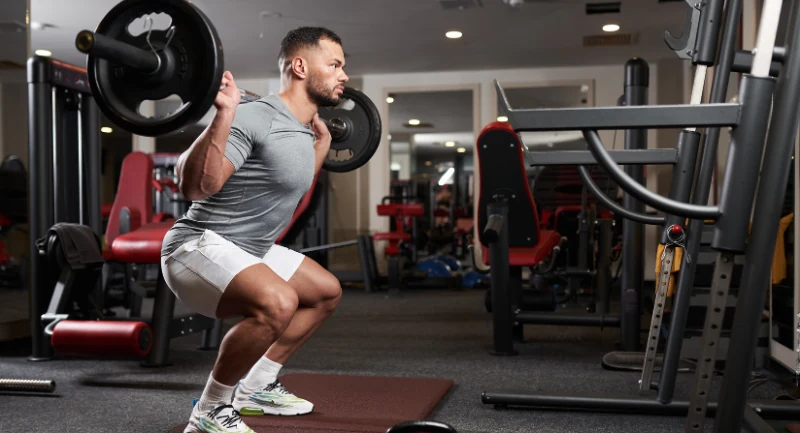
Place the barbell on your upper traps, squat down until thighs are at least parallel, then drive up.
Hold the barbell at hip height, push your hips back and lower until you feel a hamstring stretch.
With the bar on your back, step forward into a lunge and push back to standing. Alternate legs.
Kneeling at a high pulley, crunch down by flexing the spine, not the hips.
Rise onto the balls of your feet and lower for a full stretch.
Lower the bar to your mid chest with control and press it back to lockout.
Press dumbbells from an inclined bench, lowering to upper chest level.
Hinge forward and row the bar to your lower ribs, then lower under control.
Push a rope attachment down and split the ends apart at the bottom.
Pull the dumbbells toward your face with high elbows, squeezing the rear delts.
Set your hips, brace, and lift the bar from the floor by driving your legs and standing tall.
Stagger the feet with most weight on the front leg and hinge at the hip. Work both sides.
Underhand grip on the assisted machine, pull your chin over the bar.
Kneeling at a high pulley, crunch down by flexing the spine, not the hips.
Press the bar from your front delts to lockout overhead without leaning back.
Bench with hands roughly shoulder width, keeping the elbows tucked.
Pull the bar down to your upper chest by driving the elbows down and back.
Raise the dumbbells out to your sides to shoulder height with a soft elbow bend.
Curl the bar to shoulder height with the elbows pinned, then lower slowly.
Twenty to thirty minutes of easy walking, outdoors if you can manage it.
Five to ten minutes on hips, ankles, and the upper back.
Phase 2: Two More Cycles, Earned Weights (Weeks 7-12)
The training maxes go up by the standard increments and the main lifts move to triples, which is where the percentages start feeling honest. Assistance work rotates to variations that attack the positions most likely to be limiting you by now: deficit pulls for the floor, box squats for the hole, dips for lockout. If a final set drops below five reps twice in a row on any lift, reset that lift's training max by ten percent and carry on.
Add 2.5kg to the bench and press training maxes and 5kg to the squat and deadlift after each cycle. That is roughly 20kg a year on your pulls, every year, which beats any six-week transformation.
Place the barbell on your upper traps, squat down until thighs are at least parallel, then drive up.
Squat back to a box, pause briefly without relaxing, then drive up.
With the bar on your back, step forward into a lunge and push back to standing. Alternate legs.
Kneeling at a high pulley, crunch down by flexing the spine, not the hips.
Rise onto the balls of your feet and lower for a full stretch.
Lower the bar to your mid chest with control and press it back to lockout.
On parallel bars, lean forward and lower until the shoulders reach elbow depth, then press up.
Row explosively from a dead stop on the floor with your torso parallel to the ground.
With the cables crossed, push down and out so each arm works across the body.
Pull the dumbbells toward your face with high elbows, squeezing the rear delts.
Set your hips, brace, and lift the bar from the floor by driving your legs and standing tall.
Deadlift while standing on a low platform, increasing the range at the bottom.
With the bar on your back, hinge at the hips until your torso nears parallel, then stand.
Hang from the bar with an overhand grip and pull your chin above the bar.
Press the bar from your front delts to lockout overhead without leaning back.
Bench with hands roughly shoulder width, keeping the elbows tucked.
Row a single handle to your side, allowing a longer range through the torso. Work both sides.
Raise the dumbbells out to your sides to shoulder height with a soft elbow bend.
On an incline bench, curl with a neutral grip from a full hanging stretch.
An easy walk to move blood through the muscles you trained without adding fatigue.
Gentle mobility for whichever joints felt stiff getting into position last session.
5/3/1 Workout Program PDF
Four cycles of Wendler's method across twelve weeks, with the percentage tables and training max rules written out.
This is a 4-day barbell program you run for 12 weeks, one main lift per session: squat, bench, deadlift, overhead press. Every working weight comes off a training max set at 90 percent of your true max, with weeks of fives, threes and singles inside each three-week cycle. Phase 1 (weeks 1-6) runs two cycles with assistance work behind each main lift. Phase 2 (weeks 7-12) raises the training maxes by the standard increments and rotates assistance to deficit pulls, box squats and dips, with a clear reset rule for any lift that stalls twice.
- Starting Light Is The Method The training max is 90 percent of your real max, so week one feels easy. That gap is exactly what buys you months of progress instead of weeks.
- The Last Set Tells You Everything Every main lift finishes with as many quality reps as you have. Beating last cycle's number at the same weight is the measurement the whole program runs on.
- A Reset Rule, Written Down Two stalled sessions on a lift and its training max drops ten percent. The PDF spells out when to reset so a bad fortnight never becomes a bad quarter.
Get Your 5/3/1 Program
Includes both phases, the percentage tables, training max calculator, and exercise cues for all four sessions. Download instantly after you submit the form.
Unsubscribe any time.
Nutrition Guidance
Twelve weeks of barbell work runs on consistent food more than on any single good session. Our macro calculator sets your intake and our recipes make it repeatable. For more depth, read the complete guide to bulking and cutting and how to tell if your training is working.
What Actually Matters Here
- Calories: Maintenance or a small surplus. 5/3/1 tolerates a deficit better than most programs because the loads are submaximal, but the rep records stop climbing.
- Protein: 1.6 to 2.2g per kg daily. The assistance volume behind each main lift is where most of the muscle gets built.
- Before heavy days: Carbs one to two hours out. A top set of triples on an empty stomach reads as a bad week when it was only a bad breakfast.
Judge a cycle by whether the final-set rep counts beat last cycle's at the same percentage. That number is the program talking.