3-Day Beginner Glute Workout Plan
An 8-week beginner strength program with a lower body and glute emphasis. Build strength, develop muscle, and establish training habits that deliver results long term.
Program Overview
This program is built around the movements many women want to prioritize most: glutes, hamstrings, and lower body strength, with consistent upper body work woven in throughout, and it is structured around progressive overload so you get stronger every single week. You will train three days per week on a rotating full body structure. Each session takes 45 to 60 minutes. The two phases progressively increase volume and load across 8 weeks so your body keeps adapting throughout.
Lifting weights will not make you bulky. Building significant muscle mass requires years of dedicated training and a deliberate caloric surplus. What strength training will do is improve your body composition, increase your metabolism, strengthen your bones, and make everyday life feel easier. Do not be afraid of the weights.
Who Is This For?
This program is for women who are new to structured gym training, or who have dabbled but never followed a proper progressive program. This plan is right for you if:
- You are new to the gym or returning after a long break
- You want to build a stronger, more defined physique
- You have access to dumbbells, a barbell, cables, and a bench
- You can commit to three training sessions per week
- You want a program built on real strength training, not just cardio and bodyweight circuits
If you train at home or do not have access to a full gym, our beginner programs include a dumbbell-only option that covers the same principles with no barbell or cable machine required.
Weekly Schedule
Phase 1: Learn and Build (Weeks 1-4)
The first four weeks establish the movement patterns across three distinct sessions. Workout A leads with the hip thrust and builds around squatting and pressing. Workout B is hinge and pull focused. Workout C targets lower body from different angles with upper body balance work. All exercises sit at 3 sets with 90 seconds rest.
Pick a weight you could do for 15 reps but stop at the prescribed number. It should feel like genuine effort but never a struggle to maintain good form. When you complete all sets and reps cleanly, increase the weight next session.
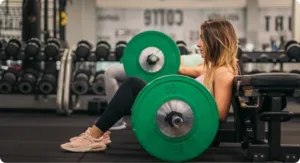
Sit with your upper back against a bench and a barbell across your hips. Drive your hips up until your body forms a straight line from shoulders to knees. Squeeze your glutes hard at the top, then lower slowly.
Hold a dumbbell vertically at your chest with both hands. Feet shoulder-width apart, toes slightly out. Sit down between your heels until your thighs reach parallel, then drive back up through your feet.
Lie flat on a bench with a dumbbell in each hand at chest height. Press both up to full extension, then lower with control until you feel a stretch across your chest.
Grip the bar slightly wider than shoulder width. Pull it down to your upper chest, driving your elbows toward your hips. Control the return to full extension.
Sit or stand with dumbbells at shoulder height, palms forward. Press both overhead to full extension, then lower with control.
Stand facing a low cable machine with an ankle strap attached. Kick one leg straight back by squeezing your glute, keeping your core braced and your back flat. Lower with control and repeat. Complete all reps on one side before switching.
Stand with feet hip width apart, holding a barbell or dumbbells in front of your thighs. Push your hips back with a soft knee bend, lowering the weight along your legs until you feel a deep stretch in your hamstrings. Drive your hips forward to return. The video shows the barbell version but this exercise can be performed with either a barbell or dumbbells.
Place your rear foot on a bench behind you and hold dumbbells at your sides. Lower your back knee toward the floor, then push through your front heel to return to the start.
Set a bench to around 30 degrees. Press dumbbells from chest height straight up. The incline targets your upper chest and front of your shoulders.
Sit upright at a cable row station. Pull the handle to your lower chest leading with your elbows, squeezing your shoulder blades together at the end of each rep. Lower slowly.
Start on all fours with your knees hovering an inch off the floor. Move forward by stepping your opposite hand and foot at the same time, keeping your back flat and your core braced throughout.
Bar across your upper back in a staggered stance. Lower straight down until your back knee nearly touches the floor, then drive through the front heel to return. Complete all reps on one leg before switching.
Hold dumbbells in front of your thighs and stagger your feet so one foot is slightly behind the other with just the toes resting on the floor. Hinge at the hips, loading the front leg. Return and repeat, then switch sides.
Place one hand and the same-side knee on a bench. Row the dumbbell in the other hand up to your hip, squeezing your back at the top. Lower slowly and repeat, then switch sides.
Stand facing a low cable machine with an ankle strap attached. Kick one leg straight back by squeezing your glute, keeping your core braced and your back flat. Lower with control and repeat.
Hold light dumbbells at your sides with a slight elbow bend. Raise both arms out to shoulder height, pause briefly, then lower with control.
Hinge forward with light dumbbells hanging below your chest. Raise both arms out to your sides until parallel to the floor, squeezing your rear delts at the top.
Phase 2: Load It Up (Weeks 5-8)
Phase 2 adds the barbell squat to Workout A, increases sets on the primary lifts, and introduces cable hip abduction work in Workout C. The exercises are familiar from Phase 1 with heavier loading and more volume on the movements that matter most.
Complete all sets and reps with good form? Add weight next session. On barbell hip thrusts, add 5kg at a time. On dumbbell exercises, move to the next size up. If the jump feels too large, add an extra set at your current weight first.
Bar on your upper back, feet shoulder width. Brace your core, squat until your hip crease drops below your knee. Drive through your mid-foot to stand. New to Phase 2 as a progression from the goblet squat.
Heavier load, one extra set. Keep the two-second hold at the top even as the weight climbs.
One extra set, heavier dumbbells.
One extra set, heavier cable.
Same sets, heavier dumbbells.
Same weight or slightly heavier, higher reps. The burn is the point.
One extra set, heavier load. The video shows the barbell version but this exercise can be performed with either a barbell or dumbbells.
One extra set, lower reps, heavier dumbbells.
Same sets, heavier dumbbells.
One extra set, heavier cable.
Same duration. Focus on smoother, more controlled movement than Phase 1.
One extra set, lower reps, heavier bar.
Same sets, rep range adjusted for heavier loading.
New exercise for Phase 2, replacing the single-arm row. Stand side-on to a low cable with an ankle strap. Lift your outside leg out to the side against the resistance, keeping your torso upright. Lower with control.
Heavier cable, moderate reps. Squeeze hard at full extension.
One extra set, same reps. Side delts grow through consistent volume.
One extra set, same reps.
3-Day Beginner Glute Workout Plan PDF
A beginner strength program with a lower body and glute emphasis for women new to structured gym training.
This is a 3-day gym plan you run for 8 weeks with dumbbells, a barbell, cables, and a bench, each session 45-60 minutes. Phase 2 adds the barbell squat to Workout A and adds sets to the primary lifts.
- Glutes Get Priority, Nothing Else Gets Skipped The hip thrust and hinge patterns anchor the week with upper body work built in.
- Barbell Squat Joins In Phase 2 The goblet squat progresses to a loaded barbell squat once the pattern is solid.
- A Simple Rule For Adding Weight Clean sets and reps mean more weight next session.
Get Your Beginner Glute Workout Plan
Includes both training phases, the weekly schedule, and exercise cues for all three sessions. Download instantly after you submit the form.
Unsubscribe any time.
Nutrition Guidance
Nutrition is where a large part of your results are made. Training three times a week creates the stimulus for change. What you eat determines whether your body has the materials to respond. For a full breakdown of how to set your calories and macros, read our Ultimate Guide to Counting Macros.
The Basics
- Protein: Aim for 1.6 to 2.2g per kg of bodyweight daily. Protein is the most important dietary variable for building muscle and supporting recovery. Our high protein recipe collection makes hitting your daily target simpler.
- Calories: Eat at maintenance or a small surplus if building muscle and strength is your main goal. Use our free macro calculator to find your number.
- Do not undereat: Many women inadvertently eat too little while training. This limits muscle growth, impairs recovery, and often leads to fatigue and poor progress.
- Consistency: Eight weeks of decent nutrition beats two weeks of perfect eating followed by six weeks of chaos every single time.
You can build muscle and lose fat simultaneously as a beginner, but getting your protein high enough is non-negotiable. Read our guide on how to run a mini cut without sacrificing strength.