Posture Workout Plan
Eight weeks of upper back and shoulder strength for people who sit all day, built on the honest premise that posture is endurance, not alignment.
Program Overview
Start with the part most posture content leaves out: the evidence that a particular spinal alignment causes back or neck pain is weak, and nobody is stuck in a shape because of a desk. What is true is that holding any position for nine hours is tiring, and the muscles that pull your shoulder blades back and down tire faster when they are weak. That is a strength and endurance problem, and it responds to training. This plan builds the upper back, rear delts and rotator cuff three times a week for eight weeks, with enough pressing and hinging to keep the body balanced. You will likely stand differently by the end, not because your alignment was corrected but because holding that position stopped being work. Every exercise includes a form video.
If you want upper back size rather than endurance, our lat and upper back workout goes heavier. For a full training week that includes this kind of work, our complete beginner's workout plan is the broader option.
Who Is This For?
This plan suits you if:
- You sit at a desk most of the day and feel it by the evening
- Your shoulders round forward and your upper back aches
- You want strength work rather than a stretching routine
- You have three half-hour slots a week
Every plan at this level lives on our beginner programs page.
Weekly Schedule
Phase 1: Wake Up the Upper Back (Weeks 1-4)
Two alternating sessions run A, B, A each week, each opening with light band and face pull work to switch on muscles that have spent years as spectators. Everything is deliberately light and strict: these are small muscles with poor mind-muscle connection, and heaving heavier weight simply hands the work back to the traps and biceps you are trying to stop over-using.
Pause for a full second at the end of every rep on the pulling work. If you cannot pause, the weight is doing the moving and the target muscles are not.
Hold a band at shoulder height and pull it apart until your arms are wide.
Pull the dumbbells toward your face with high elbows, squeezing the rear delts.
Pull the handle to your midsection, keeping the torso upright.
Hinged at the hips, open the arms wide and squeeze the shoulder blades together.
On all fours, extend the opposite arm and leg while keeping the torso still. Alternate sides.
Hold a straight line from head to heels on forearms and toes.
Hold a band at shoulder height and pull it apart until your arms are wide.
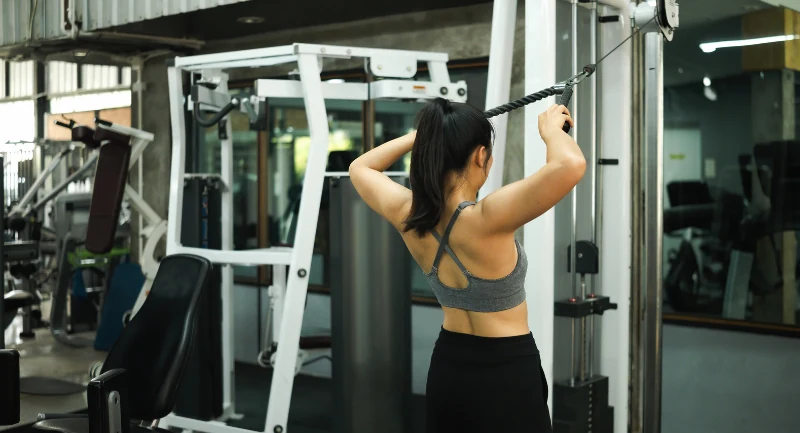
Pull the bar down to your upper chest by driving the elbows down and back.
With one knee and hand on a bench, row the dumbbell to your hip. Work both sides.
Row, rotate the arms up, then press overhead in one continuous sequence.
Upper back on a bench, drive the hips up to a full squeeze.
Rotate and pull the cable diagonally across your body from high to low. Work both sides.
A brisk walk on your rest days to aid recovery and keep you active.
Light stretching and mobility for anything that felt tight in your last session.
Phase 2: Load It Properly (Weeks 5-8)
The pulling work gets heavier now that the pattern is grooved, and pressing arrives to keep the shoulder balanced, because a back-only program creates its own imbalance eventually. The rack pull trains the whole posterior chain to hold a tall position under real load, which is as close to a direct posture exercise as a barbell gets.
Add weight to the rows and pulldowns, add reps to the face pulls and Cuban presses. The small muscles progress by control and endurance, never by load.
Hold a band at shoulder height and pull it apart until your arms are wide.
Hinge forward and row the bar to your lower ribs, then lower under control.
Hinged forward with cables crossed, open the arms wide against the resistance.
Pull the dumbbells toward your face with high elbows, squeezing the rear delts.
Press two dumbbells from chest level to lockout above your chest.
Hold a straight line from head to heels on forearms and toes.
Hold a band at shoulder height and pull it apart until your arms are wide.
Deadlift from pins set just below the knee, focusing on the top half of the pull.
Row a single handle to your side, allowing a longer range through the torso. Work both sides.
Row, rotate the arms up, then press overhead in one continuous sequence.
Press a single dumbbell overhead while bracing against the offset load. Work both sides.
On all fours, extend the opposite arm and leg while keeping the torso still. Alternate sides.
Twenty to thirty minutes of easy walking, outdoors if you can manage it.
Five to ten minutes on hips, ankles, and the upper back.
Posture Workout Plan PDF
Eight weeks of upper back and shoulder strength for desk-bound bodies, with the honest version of what posture training can do.
This is a 3-day plan you run for 8 weeks with full gym access, two alternating sessions of around 35 minutes. Phase 1 (weeks 1-4) opens every session with band and face pull work and builds strict, paused pulling for the upper back, rear delts and rotator cuff. Phase 2 (weeks 5-8) loads the rows, pulldowns and rack pulls properly and adds pressing to keep the shoulder balanced, with a clear rule for which movements progress by weight and which by control.
- Strength, Not Alignment Nobody is stuck in a shape. Holding a position gets easier when the muscles that hold it are stronger, and that is what eight weeks of this changes.
- The Muscles Nobody Trains Rear delts, mid and lower traps, rotator cuff. Three sessions a week of direct work for the region that rows alone never finish.
- Paused Reps Throughout Every pulling rep holds for a second at the end. It is the difference between training the target muscles and moving a weight with your biceps.
Get Your Posture Plan
Includes both training phases, the weekly schedule, and exercise cues for both sessions. Download instantly after you submit the form.
Unsubscribe any time.
Nutrition Guidance
This is strength training for small muscles, and it recovers on the same food as any other kind. Our macro calculator sets your targets and our recipes keep them simple. For more depth, read the best dumbbell exercises and choosing the right plan for your goals.
What Actually Matters Here
- Protein: 1.6 to 2.2g per kg daily. Rear delts and rotator cuff muscles are small, but they rebuild on exactly the same materials.
- Calories: Set by whatever your wider goal is. Thirty-five minute sessions three times a week do not change your requirements much.
- Move during the day too: No program offsets nine static hours. Standing up every half hour does more for how your back feels than any single exercise here.
The training builds the capacity; breaking up long sitting is what spends it. Both, or neither really works.