2-Day Bodyweight Workout Plan
A two-day full body plan using nothing but your bodyweight. Two short sessions a week build strength and fitness anywhere, with zero equipment and no gym required.
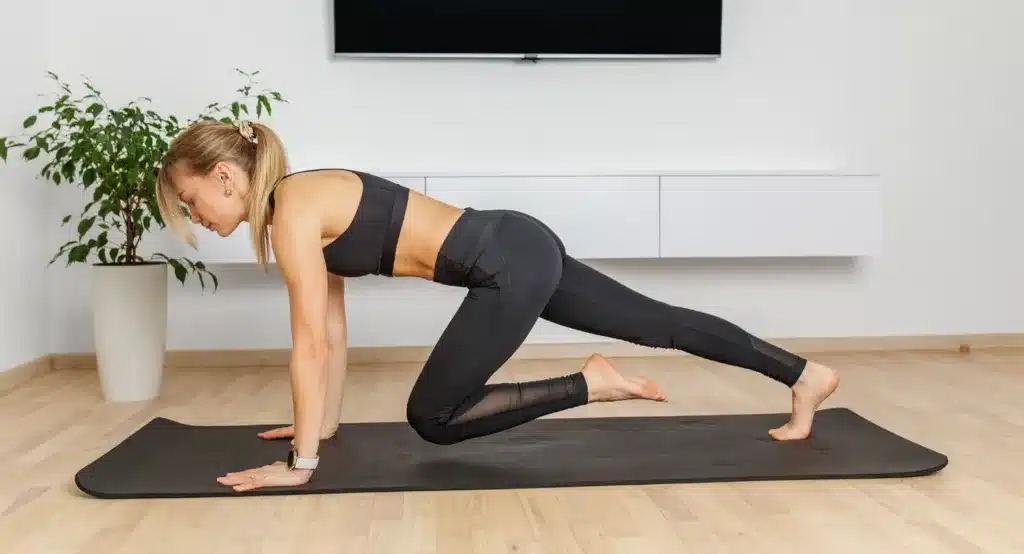
Program Overview
This is a two-day full body plan that needs no equipment at all, just your bodyweight and a little space. It is built for people who want to train at home, while traveling, or anywhere a gym is not available, with only two short sessions a week. For beginners, bodyweight training builds a genuine foundation of strength, control, and fitness.
Each session trains the whole body through bodyweight movement patterns: a squat, a push, a hinge or lunge, a pull where possible, and core work. Because there are no weights to add, you progress by making the movements harder, doing more reps, slowing the tempo, or moving to a tougher variation. Training twice a week gives each session plenty of recovery.
Sessions are short, around 30 to 45 minutes. A pull-up bar or a sturdy table for rows helps round out the back training, but the plan works even without one by leaning on the other movements.
With bodyweight training you cannot just add plates, so you progress in other ways: more reps, slower tempo, shorter rest, or harder variations (for example, moving from knee push-ups to full push-ups to feet-elevated push-ups). This progression is what keeps the plan challenging. Related plans: Beginner Home Workout Plan and Bodyweight Glute Building Program.
Who Is This For?
This plan is for people who want to train anywhere with no equipment.
This plan is right for you if:
- You want to train at home or while traveling
- You have no gym or equipment
- You can train twice a week
- You are a beginner building basic strength
- You want short, convenient sessions
Bodyweight training rewards good technique. Focus on full range of motion and control before making movements harder. A slow, deep bodyweight squat is far more effective than a fast, shallow one. Quality of movement is your progression. When you finish, browse all our home workout programs for your next step.
Weekly Schedule
Phase 1: Learn the Movements (Weeks 1-4)
Two full-body bodyweight sessions per week. Rest 60 to 90 seconds between sets. Focus on full range of motion and control. If a movement is too hard, use an easier variation; if too easy, slow the tempo.
Aim to finish each set with 2 to 3 reps left. If you can do far more than the target reps, slow down or progress to a harder variation. If you cannot reach the target, use an easier version.
Feet shoulder width, sit between your hips to depth, stand tall.
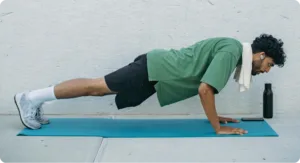
Hands under your shoulders, lower your chest to the floor, press up. Drop to your knees if needed.
Step back, lower your back knee toward the floor, drive back up.
Lie on your back, knees bent, drive your hips up, squeeze your glutes, lower.
On hands and knees, extend opposite arm and leg, hold, return.
Second session squats, focus on smoother, deeper reps.
Between two sturdy surfaces or on a dip station, lower your chest, press up. Use a bench dip if too hard.
Hips high in an inverted V, lower the top of your head toward the floor. Builds the shoulders.
Step one leg behind and across, lower down, return. Hits the glutes from a different angle.
Lie on your back, legs straight and slightly raised, alternate small kicks.
Low-intensity walking on non-training days supports recovery, digestion, and daily energy expenditure without adding fatigue to your working muscles.
Light stretching and mobility for the hips, thoracic spine, and shoulders. Ten focused minutes keeps the tight spots from heavy training in check.
Phase 2: Increase the Challenge (Weeks 5-8)
Phase 2 raises the difficulty: harder movement variations, more reps, and slower tempo. This is how you keep progressing without adding weight.
Move to harder variations (feet-elevated push-ups, deeper or paused squats), add reps, or slow each rep to a three-second lower. Keep challenging yourself the way you would add weight in the gym.
More reps, or add a three-second lower on each rep.
More reps, or elevate your feet to increase the difficulty.
More reps, slower and more controlled.
One leg at a time to increase the challenge on each glute.
Add a two-second hold at full extension.
More reps with a paused, controlled tempo.
More reps, slower descent.
Hips high in an inverted V, lower the top of your head toward the floor. Builds the shoulders.
More reps, controlled tempo.
Longer work periods.
Low-intensity walking on non-training days supports recovery, digestion, and daily energy expenditure without adding fatigue to your working muscles.
Light stretching and mobility for the hips, thoracic spine, and shoulders. Ten focused minutes keeps the tight spots from heavy training in check.
2-Day Bodyweight Workout Plan PDF
Two short full body sessions a week using nothing but your bodyweight, for anyone with a busy schedule and no equipment.
This is a 2-day full body plan you run for 8 weeks with zero equipment. Phase 1 (weeks 1-4) runs two sessions of 5 exercises at 3 sets each, around 35 minutes, covering squats, push ups, lunges, glute bridges, and dips, with 60 to 90 seconds rest. Phase 2 (weeks 5-8) adds a set to most movements and raises the difficulty with harder variations, feet-elevated push ups, paused squats, single leg bridges, and a three-second lowering on every rep.
- Two Sessions That Cover Everything A squat, a push, a hinge or lunge, and core work in every session, so two days a week still trains the whole body.
- Fits Around A Full Week Around 35 minutes per session, no travel, no equipment. Two days is enough to build a base when the work is structured properly.
- Harder, Not Longer Phase 2 progresses by variation and tempo rather than adding time, so the sessions stay short as they get more demanding.
Get Your 2-Day Bodyweight Plan
Includes both training phases, the weekly schedule, and exercise cues for both sessions. Download instantly after you submit the form.
Unsubscribe any time.
Nutrition Guidance
Training creates the stimulus; nutrition determines the result. Whatever your goal, your calories and protein have to line up with it. Our macro calculator sets your targets, and our high protein recipes make hitting them easier. For the nutrition side, our guides on whether home workouts are effective and working out at home are worth a read.
The Basics
- Calories: Eat at or around maintenance calories to support performance and recovery. Our macro calculator sets your starting point.
- Protein: 1.6 to 2.2g per kg of bodyweight daily. Protein drives recovery and muscle retention. Browse our high protein recipes for ideas.
- Hydration: Drink water consistently, especially on training days.
- Sleep: Seven to nine hours per night. Recovery happens between sessions, not during them.
Use the macro calculator to set your calories and protein for your goal, then track your bodyweight as a weekly average and adjust in small increments based on the trend.