4-Day Glute & Lower Body Plan
A four-day lower-body focused split built to grow the glutes, hamstrings, and quads, with enough upper-body work to stay balanced. Two heavy lower days, two volume lower days, progressive overload across two phases.
Program Overview
This is a lower-body focused muscle building program with an emphasis on the glutes. Three of the four weekly sessions train the lower body, each from a different angle: one heavy strength-focused day, one moderate volume day, and one dedicated glute session. A single upper-body day keeps your development balanced so you build a complete physique, not just a lower half.
The glutes respond best to a mix of heavy hip-dominant work like hip thrusts and Romanian deadlifts, plus higher-rep isolation and single-leg work that hits them through a full range of motion. This program combines both across the week, hitting the glutes and hamstrings hard while still training the quads and calves for balanced legs.
Each session takes roughly 50 to 60 minutes. The lower-body volume is high, so your recovery, nutrition, and rest days matter. This is a building program; it works best when you are eating enough to support growth.
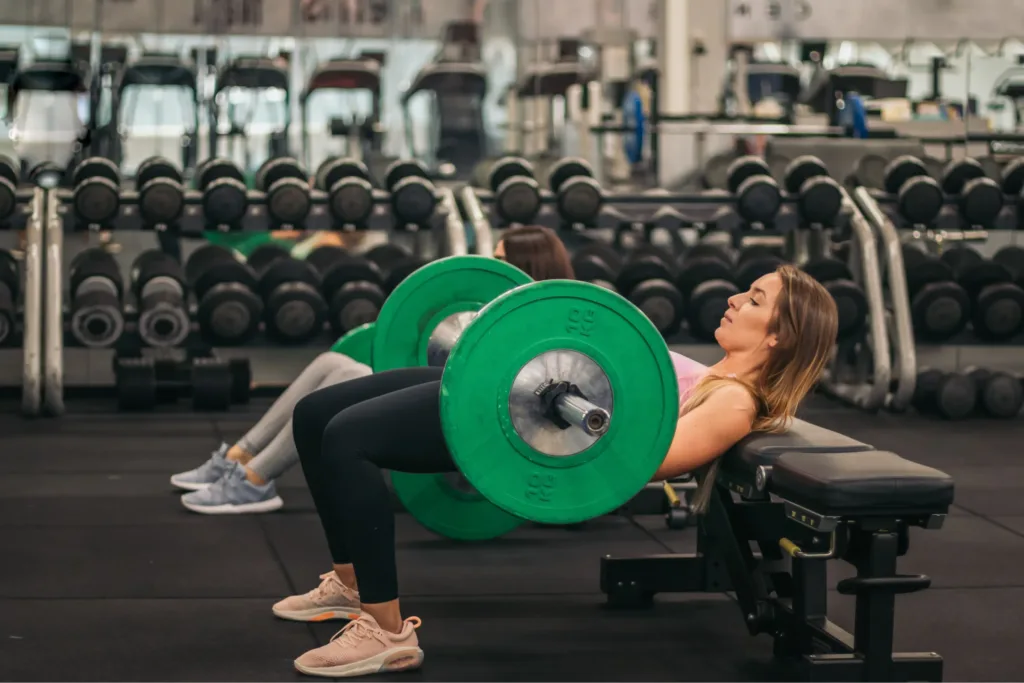
The barbell hip thrust loads the glutes at the top of the range where squats lose tension, and it lets you progressively overload the glutes directly. Paired with Romanian deadlifts, split squats, and cable work, it forms the backbone of glute development. Squats build the quads and contribute to the glutes, but the hip thrust is the single best exercise for targeted glute growth.
Who Is This For?
This program is for intermediate lifters who want to prioritise glute and lower-body development over an 8-week block.
This plan is right for you if:
- You want to grow your glutes, hamstrings, and quads
- You have at least 6 months of consistent training
- You are comfortable with squats, hip thrusts, and Romanian deadlifts
- You can train four days per week for 8 weeks
- You want a lower-body focus without neglecting your upper body entirely
This plan deliberately skews toward the lower body, with only one upper day per week. If you want equal upper and lower development, our 4-day upper/lower muscle gain plan splits your training evenly. Choose this program specifically when the glutes and legs are your priority.
Weekly Schedule
Phase 1: Accumulate Volume (Weeks 1-4)
Four sessions per week: a heavy lower day, an upper day, a volume lower day, and a dedicated glute day. The heavy day uses lower reps on compounds; the volume and glute days use higher reps and shorter rests to accumulate work. Rest 2 to 3 minutes on heavy compounds, 60 to 90 seconds on isolation.
Start with 2 to 3 reps in reserve on compounds and 1 to 2 on isolation work. The glutes tolerate and benefit from high volume, but Phase 1 is about establishing your working weights, not maxing out. Add weight whenever you hit the top of the rep range on all sets. Prioritise a full range of motion and a hard squeeze at the top of every hip-dominant movement.
Upper back on a bench, barbell across your hips with a pad. Drive your hips up to a straight line from shoulders to knees, hold two seconds at the top. Your primary glute builder.
Bar on your upper back, feet shoulder width. Brace, squat to at least parallel or below, drive through your mid-foot.
Feet hip width, bar in front of your thighs. Push your hips back, lower to a deep hamstring stretch, drive hips forward to return.
Standing on a step, lower your heels for a full stretch, drive onto your toes, hold at the top.
Flat bench, grip slightly wider than shoulder width. Lower to your chest under control, press to lockout.
Grip slightly wider than shoulder width, pull to your upper chest driving your elbows down and back.
Seated with back support, dumbbells at shoulder height. Press overhead to lockout, lower with control.
Sit tall, pull the handle to your lower chest, one-second squeeze at peak contraction.
Dumbbells at your sides, slight elbow bend. Raise to shoulder height with a slight elbow bend, lower with control.
Rear foot on a bench, dumbbells at your sides. Lower straight down, drive through the front heel. The video shows the bodyweight version; add dumbbells for load.
Front foot on a small plate or step, rear foot behind. Lower straight down; the elevation increases the glute stretch at the bottom. The video shows the bodyweight version; add dumbbells for load.
Facing away from a low cable, rope between your legs. Hinge at the hips, then drive them forward and squeeze your glutes hard at lockout.
Sit in the machine, pad on your shins. Extend to full lockout, squeeze your quads, lower with control.
Same as Lower A. Calves need the frequency to grow.
Second hip thrust session of the week, higher reps than Lower A. Drive to full lockout, hold two seconds at the top.
One foot planted, opposite leg extended. Drive through the working heel to full hip extension, squeeze at the top. Bodyweight or with a dumbbell on the hip.
Second pull-through of the week, higher reps. Hinge and drive your hips forward, squeezing your glutes at lockout.
Ankle strap on a low cable, facing the machine. Drive one leg back and up by extending the hip, squeeze the glute, return with control.
Seated in the abduction machine or with a band. Drive your knees apart against the resistance, squeeze the outer glutes, return with control.
Low-intensity walking on non-training days supports recovery, digestion, and daily energy expenditure without adding fatigue to your working muscles.
Light stretching and mobility for the hips, thoracic spine, and shoulders. Ten focused minutes keeps the tight spots from heavy training in check.
Phase 2: Intensify (Weeks 5-8)
Phase 2 adds a set to the main hip thrust and squat, and pushes the rep ranges down on the heavy day for heavier loading. The glute and volume days keep their high-rep character but move up in weight. The sessions get harder through load and a small amount of added volume on the priority lifts.
By Week 5 you know your working weights. Phase 2 adds a set to the hip thrust and squat and pushes the loads up. The glutes recover quickly and tolerate frequent training, so you can be aggressive with hip thrust progression in particular. Keep the two-second hold at the top of every hip thrust rep even as the weight climbs; that hold is what makes the exercise effective. If you feel run down, hold your weights for a week before pushing again.
One extra set, lower reps, heavier weight. Two-second hold stays.
One extra set, lower reps, heavier weight. Squat below parallel.
One extra set, lower reps, heavier weight.
Lower reps, heavier load.
Lower reps, heavier weight.
Lower reps, heavier weight.
Lower reps, heavier dumbbells.
Lower reps, heavier weight. One-second squeeze at the top.
Small weight increase only if form stays strict.
Lower reps, heavier dumbbells. The video shows the bodyweight version; add dumbbells for load.
Lower reps, heavier dumbbells. The video shows the bodyweight version; add dumbbells for load.
Lower reps, heavier weight. Two-second squeeze at lockout.
Lower reps, heavier weight. One-second hold at lockout.
Lower reps, heavier load.
One extra set, lower reps, heavier weight. Two-second hold stays.
Lower reps, add a dumbbell on the hip.
Lower reps, heavier weight.
Lower reps, heavier weight. Keep your torso still.
Same reps, heavier weight. Hard squeeze at the end range.
Low-intensity walking on non-training days supports recovery, digestion, and daily energy expenditure without adding fatigue to your working muscles.
Light stretching and mobility for the hips, thoracic spine, and shoulders. Ten focused minutes keeps the tight spots from heavy training in check.
4-Day Glute & Lower Body Plan PDF
A lower-body focused muscle building program for intermediate lifters who want to prioritize glute growth.
This is a 4-day gym program you run for 8 weeks: a heavy lower day, a volume lower day, a dedicated glute day, and a single upper day. Phase 2 adds a set to the hip thrust and squat and pushes loads up across all three lower sessions.
- Three Lower Days, One Upper Day The split leans hard into legs and glutes while still holding upper body steady.
- The Hip Thrust Twice A Week One heavy session and one high-rep session drive glute growth from both ends.
- Extra Sets On The Priority Lifts The hip thrust and squat gain a set as Phase 2 pushes the load up.
Get Your Glute & Lower Body Plan
Includes both training phases and exercise cues for all four sessions. Download instantly on submit.
Unsubscribe any time.
Nutrition Guidance
Building the glutes and legs means building muscle, and building muscle requires enough calories and protein to support growth. This program works best in a slight surplus or at maintenance, with high protein to fuel recovery from the heavy lower-body volume.
Our macro calculator sets your targets, and our guide on bulking successfully covers how to build with minimal fat gain.
The Basics
- Calories: Eat at maintenance or in a slight surplus of 200 to 300 calories per day to support muscle growth while minimising fat gain. Our macro calculator sets your starting point.
- Protein: 1.6 to 2.2g per kg of bodyweight daily. Protein is the raw material for the muscle you are trying to build. Browse our high protein recipes for ideas.
- Carbohydrates: Fill most of your remaining calories with carbs to fuel the high lower-body volume and support recovery between sessions.
- Sleep: Seven to nine hours per night. Muscle grows during recovery. The heavy glute and leg volume in this program demands quality sleep.
The glutes grow when you consistently add load or reps to your hip thrusts, Romanian deadlifts, and split squats over time. Track your working weights and aim to add a little each week. A hard squeeze and full range of motion on every rep, combined with steady progression and enough food, is what builds the glutes.