
The quick version: Pick 3 proteins, 3 carbs, and 3 fats you already like. Build every meal for the next 3 weeks from those 9 foods. That gives you 27 combinations before you change a single spice. Once those meals run on autopilot, add new foods one at a time.
Meal prep usually fails the same way. Sunday turns into a four-hour cooking project: seven new recipes, a two-page grocery list. By Wednesday the containers are half eaten. Thursday is takeout. The plan quietly ends.
That’s not a discipline problem. The plan asked for too many decisions.
The 3-3-3 method cuts them down to one trip to the store. It’s the simplest way we know to start meal prepping, and it works on a normal week, not a perfect one.
Jump to a Topic
What is the 3-3-3 method?
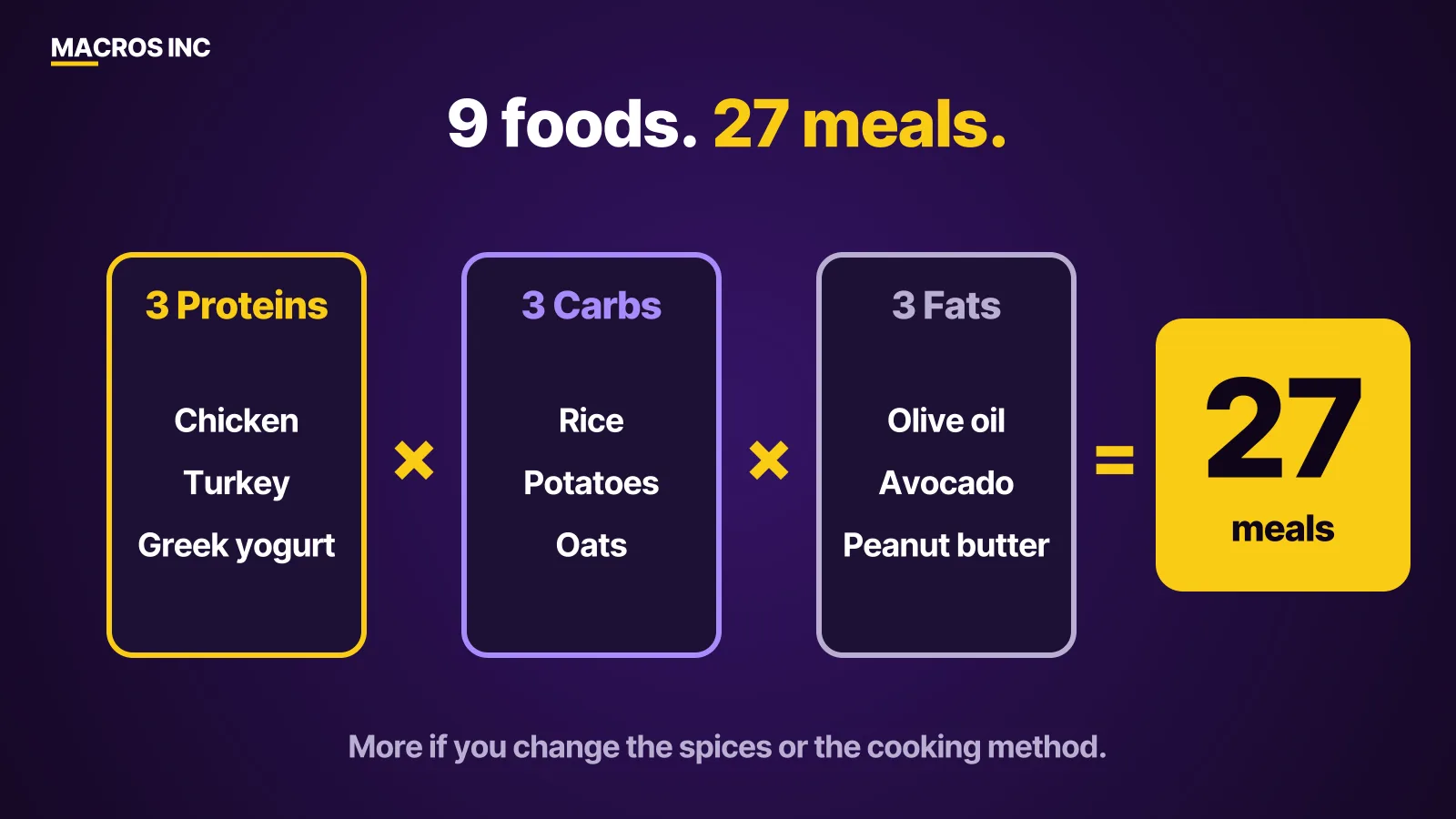
The 3-3-3 method is a meal prep rule: choose 3 proteins, 3 carbs, and 3 fats, then make every meal from those foods for 3 weeks.
Eating from nine foods sounds boring. The math says otherwise. Three proteins times three carbs times three fats is 27 different meals from 9 grocery items. Change the seasoning or the cooking method and the number keeps climbing. Chicken with rice and avocado isn’t the same dinner as chicken with potatoes and olive oil.
The point isn’t variety. The point is you stop deciding what to eat three times a day. You decide once, at the grocery store.
How to start meal prepping with the 3-3-3 method
- Pick 3 proteins you already eat. Not the ones you think you should eat. If you hate salmon, salmon isn’t on the list. Chicken thighs, ground turkey, and Greek yogurt work. So do eggs, tofu, or lean beef.
- Pick 3 carbs. Rice, potatoes, oats, pasta, beans, tortillas, fruit. Choose foods that cook easily in a batch or need no cooking.
- Pick 3 fats. Olive oil, avocado, butter, cheese, nuts, peanut butter. A little goes a long way, so these are the easy picks.
- Treat vegetables as a free add. They aren’t one of your 9. Put them on any plate.
- Shop once. Nine foods, plus vegetables and seasonings. The list fits on a sticky note.
- Cook in batches. Proteins and carbs once or twice a week. Fats are mostly grab and go.
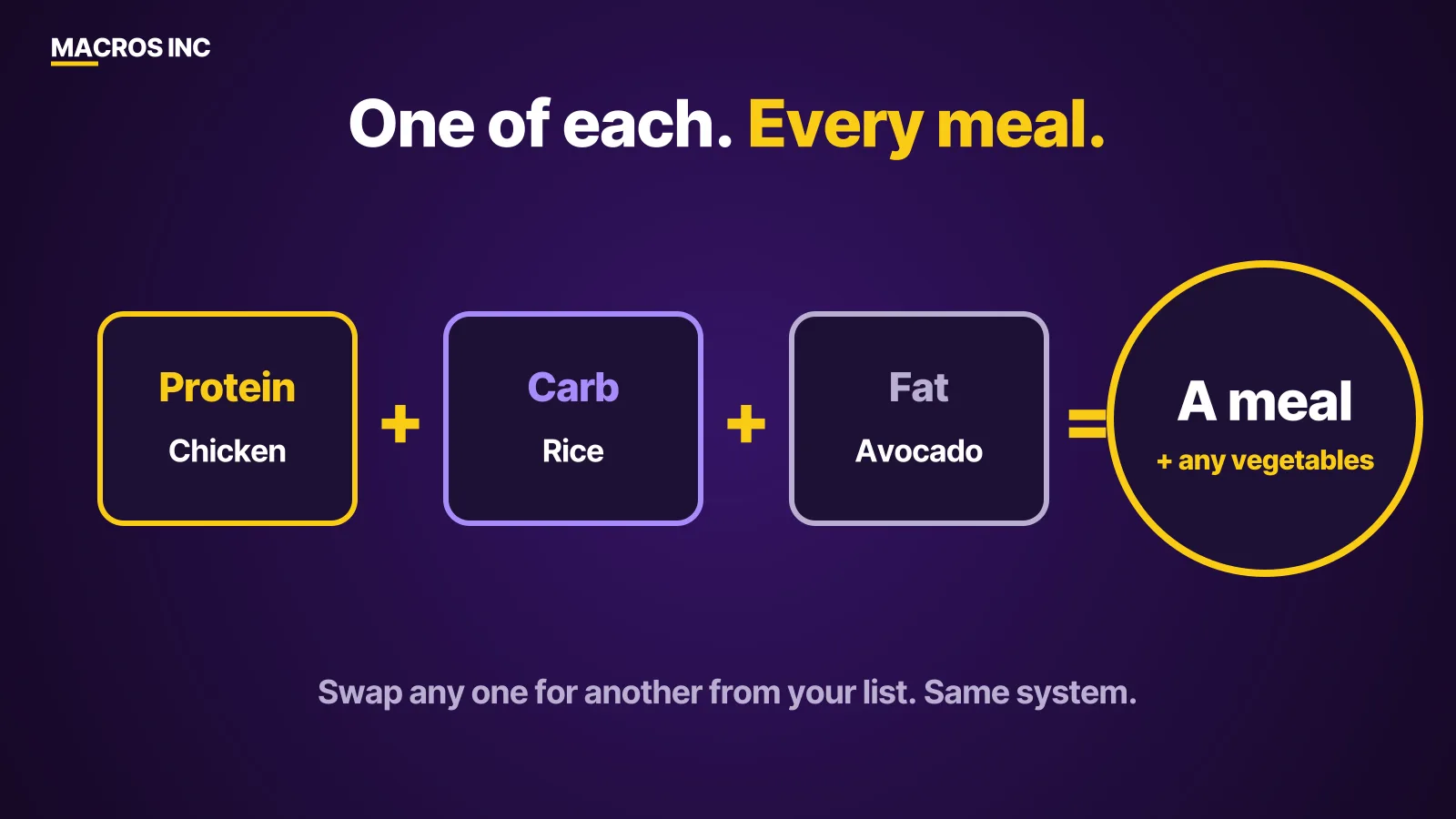
- Mix and match all week. One protein, one carb, one fat per meal. Change the spice, not the system.
- Run it for 3 weeks. Then add one new food at a time.
If you track your food, the 3-3-3 method makes it fast. After the first week, the same 9 foods take almost no time to log. If you don’t track, it still works. Tracking is a tool, not a requirement.
Easy meal prep ideas: a sample 3-3-3 list
Here’s one example. Swap any food for one you like better.
| Proteins | Carbs | Fats |
|---|---|---|
| Chicken breast or thighs | Rice | Avocado |
| Ground turkey | Potatoes | Olive oil |
| Greek yogurt | Oats | Peanut butter |
What a few days can look like:
- Breakfast: oats, Greek yogurt, a spoon of peanut butter
- Lunch: chicken, rice, avocado, salsa, whatever vegetables are in the fridge
- Dinner: ground turkey taco bowl over potatoes roasted in olive oil
- Next day’s lunch: chicken, potatoes, olive oil, lemon, and garlic
Same foods. Different meals. Long day, gym ran late, it’s 8 p.m.? Dinner’s already in the fridge. Grab a protein, a carb, and a fat. Ten minutes.
Meal prep for weight loss: why simple works
Weight loss comes down to eating a little less than your body uses, often enough, for long enough. The hard part is “often enough.” The 3-3-3 method helps in four plain ways.
- Fewer decisions. Off-plan meals tend to happen when you’re tired and nothing is ready. A fridge full of known foods removes that moment.
- Protein at every meal. Every plate starts with a protein. That helps you stay full and helps protect muscle while you lose fat.
- Portions you learn by sight. Eat the same 9 foods for three weeks and you know what a normal serving of rice looks like, no scale needed.
- Easy to adjust. Stalled? Change one portion of one food. You know exactly what you’re eating, so you know exactly what to change.
The method doesn’t set your calories or macros (our macro calculator gives you a starting point). It makes whatever targets you have easier to hit.
Common mistakes, and when to add new foods
- Picking foods you don’t like. Three weeks of a food you only tolerate is how a plan quits on you. Pick favorites.
- Picking foods that are hard to cook in bulk. Fish that dries out. Pasta that’s mush by Thursday. Choose foods that reheat well or need no cooking.
- Forgetting flavor. Salsa, hot sauce, mustard, herbs, and spice blends are how 27 meals stay interesting.
- Changing everything at week 2. Boredom is normal. Change a seasoning first. Keep the 9 foods.
- Treating one bad day as the end. One drive-thru dinner doesn’t end anything. The next meal is still in the fridge.
When to add new foods: after about three weeks, once the 9-food routine runs without thinking. Swap or add one food at a time. If the routine holds, add another. That’s how a short list grows into a way of eating you can keep.
FAQ
Is it OK to eat the same meals every day? For most people, yes, as long as the foods cover protein, carbs, fats, and plenty of vegetables. Repeating meals is how many people learn portions and stop guessing. Rotate in new foods after a few weeks.
Do I have to track macros to use the 3-3-3 method? No. The method works on its own. If you do track, it makes tracking fast because you log the same foods over and over.
What if I get bored? Change the seasoning or the cooking method before you change the food. Grilled, roasted, and taco-spiced chicken are three different dinners.
Is the 3-3-3 method good for beginners? Yes. It’s a simple way to start meal prepping without learning nutrition science first.
How do I stick to a diet when the week falls apart? Keep the food ready before the week gets hard. With the 3-3-3 method, the decision is already made and the meal is already cooked. That’s most of the battle on a bad day.
When the week breaks the plan
You don’t need a coach to meal prep. The 3-3-3 method gets food in the fridge on its own.
What it can’t do is see your week. Travel, a stall, a hard month: something eventually knocks the plan sideways. That’s where a real coach earns their place. They adjust the plan with you, so you aren’t starting over from zero.
That’s Macros Inc coaching: a real coach, a simple plan for food and training, and the right amount of support. Not an app. Not a template.
Not sure coaching fits? Talk it through with our team first.
No gimmicks. No restrictions.
Start your journey with expert coaching, personalized nutrition, and real results, absolutely free for two weeks.
