
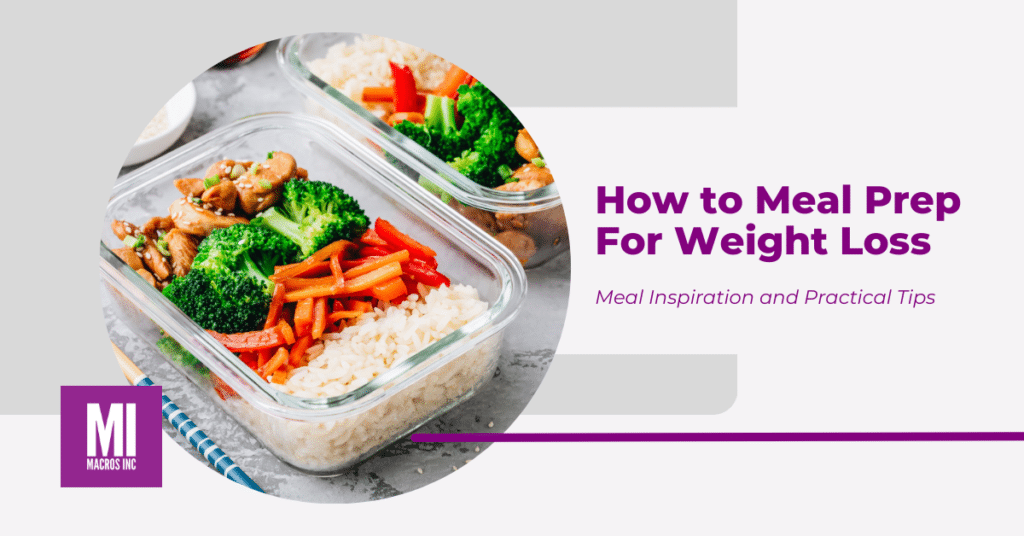
Meal prep gets sold as a weight loss silver bullet, but it isn’t magic. What it actually does is remove decisions. When you’re tired, busy, or out of time, having food already cooked is what stops a meal from turning into delivery or whatever’s quickest.
That’s the real mechanism. Not the matching containers, not the Instagram-worthy stacks of identical boxes. The point is removing the decisions that wreck a calorie deficit.
Done well, meal prep can save a few hours a week, cut your grocery bill, and make hitting your macros nearly automatic. Done badly, with seven identical chicken-and-broccoli boxes you’ve already burned out on by Tuesday, it’s a one-week experiment you abandon. This guide covers how to do the former: how to plan, what to cook, how to store it, and where most beginners trip up.
Jump to a Topic
Why Meal Prep Actually Helps with Weight Loss
The reason meal prep works isn’t anything special about the food itself. It’s three practical effects that compound:
- It removes decisions when willpower is low. Most diet-derailing moments happen between 5 and 8pm, when you’re hungry, tired, and have no plan. Having a meal that just needs reheating cuts that decision out entirely.
- It lets you portion accurately. When you cook in batches, you weigh things once and split them evenly. When you cook a meal at a time, portion sizes drift. Most weight loss stalls come from portion creep, not from the wrong foods.
- It shortens the gap between hungry and eating. Most unplanned snacks happen because food takes 30 minutes to cook and you want to eat now. Prep collapses that to two minutes in a microwave.
What meal prep doesn’t do: it doesn’t substitute for tracking. If your portions are off, you’re still going to miss your targets. The food scale matters more than the containers. And honestly, meal prep isn’t strictly required to lose weight, plenty of people do better with ad-hoc cooking plus accurate tracking. We’ll come back to that at the end.
Start with Your Numbers
Before any cooking happens, you need a target. Otherwise you’re prepping food without knowing whether it’ll move you toward your goal or away from it.
Three numbers matter:
- Daily calorie target. This is the budget. Everything else fits inside it. Our macro calculator gives you a starting point based on your stats, activity level, and goal.
- Protein target. Roughly 0.7 to 1g per pound of body weight for most people in a calorie deficit. Spread across 3 to 5 meals, that lands at 25 to 40g of protein per meal, which is also the sweet spot for muscle preservation while losing fat.
- Carbs and fat. Once protein is locked, the remaining calories get split between carbs and fat however you prefer. There’s no “best” ratio for fat loss at the same calorie target. Pick the split that keeps you full and consistent.
The calorie target is the one that actually determines whether you lose weight. The protein target is what determines whether the weight you lose is mostly fat. For more on why protein is the anchor and how to hit it without inflating your calories, our guide to the 8 things to know about protein covers it.
Pick a Prep Style That Fits Your Week
This is where most beginner guides skip the actual question. There’s no single “right” way to meal prep. There are four styles, each with real tradeoffs:
- Full prep (identical containers). Five to seven ready-to-go boxes of the same meal. Lowest decision load, highest boredom risk. Works well when you’ve found a meal you genuinely like, and not at all when you haven’t.
- Hybrid prep. Cook the protein, plus 2 or 3 carb and vegetable bases (rice, potatoes, broccoli, salad). Mix and match daily, so different combinations come from the same prep. This is the sweet spot for most people.
- Protein-only prep. Cook 1.5 to 2kg of protein in a single batch. Assemble the rest of each meal fresh. Highest flexibility, but you’re still cooking carbs and vegetables daily.
- Component prep. Just do the time-consuming prep work: chopping vegetables, pre-cooking grains, marinating proteins. Cooking happens fresh. Lowest fridge space, highest day-of effort.
If you’re just starting, default to hybrid prep. It gives you enough variety to not hate Wednesday’s lunch while keeping the Sunday workload manageable.
What to Actually Prep
A weight loss meal prep typically includes a lean protein, a starchy carb, a vegetable, and something to flavor it.
Lean proteins (pick 2 to rotate)
- Chicken thighs. Cheaper than breast, more forgiving when reheated, harder to overcook.
- Ground turkey or 90/10 ground beef. Cooks in 10 minutes, works in everything from tacos to bolognese.
- Hard-boiled eggs. Keep about a week in the fridge. Zero reheating needed.
- Greek yogurt. No cooking required. Just portion into containers with fruit and nuts.
- Tinned tuna or salmon. The lazy prep option. Open the tin, add to a salad bowl.
- Extra-firm tofu. Press, slice, marinate, and pan-sear or bake.
Carbohydrate bases (pick 1 to 2)
- Rice (white or brown). Keeps 4 to 5 days cooked. White rice reheats better than brown.
- Potatoes (sweet or regular). Keep 3 to 4 days. Roast a whole tray at once.
- Oats. Best as overnight oats, ready to eat for 4 to 5 days.
Vegetables
Frozen vegetables are honestly fine for meal prep. They’re flash-frozen at peak freshness and don’t go bad sitting in your freezer. Don’t let anyone tell you fresh is automatically better; it isn’t, especially mid-week when “fresh” has been in your fridge for five days.
If you want fresh, broccoli, carrots, peppers, and cherry tomatoes hold up 4 to 5 days in containers. Leafy greens wilt fast, so prep those day-of.
Sauces (the boredom-killer)
The same chicken with three different sauces feels like three different meals. Keep a few of these on hand:
- Soy sauce, lime, and chili
- Greek yogurt, lemon, and dill
- Tomato, garlic, and Italian seasoning
- Salsa with lime
- Plus a couple of hot sauces in the fridge for fast variety
For recipe-level inspiration, our 40+ macro-friendly recipes roundup is built around exactly this kind of weight-loss-friendly cooking, with calorie and macro breakdowns for every dish.
Need Higher-Protein Ideas?
Weight loss prep usually means a higher protein target than usual. Our high-protein recipe library is built around macro-efficient meals that batch and store well.
A 90-Minute Sunday Workflow
Most weeks, prep for 5 days can be done in 90 minutes if you cook things in parallel. Here’s the structure:
- 0 to 10 minutes. Preheat the oven to 400°F. Get a pot of water boiling for grains. Season your protein and put it on a sheet pan in the oven.
- 10 to 30 minutes. While the protein roasts, chop all your vegetables. Get everything for the week done in one go to save cleanup. Put hardy vegetables (broccoli, peppers, carrots) on a second sheet pan with a little oil and salt.
- 30 to 50 minutes. Add rice or potatoes to the boiling water. Put the vegetable tray in the oven (or on a second rack). Start mixing your sauces.
- 50 to 70 minutes. Everything finishes cooking around the same time. Let things cool for 10 minutes so condensation doesn’t soggify your containers.
- 70 to 90 minutes. Portion into containers using a food scale. Label with the meal name and the date.
The single biggest time-saver is cooking in parallel: oven, stovetop, and prep happening at the same time. The single biggest accuracy-saver is weighing the protein on a kitchen scale. If you’re not sure how to set portions when working from raw ingredients, our guides on how to use a food scale and calculating calories in homemade food walk through both.
Tools you actually need
- One sharp chef’s knife (8-inch works for most people)
- One large cutting board
- Two sheet pans
- A large pot
- A digital food scale
- 5 to 7 storage containers (glass or BPA-free plastic, both work)
You don’t need a massive equipment investment to start. If you want to add a few quality-of-life upgrades that genuinely speed things up, our roundup of 5 gadgets that make meal prep suck less covers the ones that earn their counter space.
For knife skills specifically, our YouTube shorts cover the basics:
Storage and Reheating
Most cooked food keeps 3 to 5 days in the fridge. Past that, the texture starts to go even if the food is technically still safe. The rough timeline by category:
- Cooked chicken and beef: 3 to 4 days
- Cooked rice: 4 to 5 days
- Cooked potatoes: 3 to 4 days
- Roasted vegetables: 3 to 5 days
- Hard-boiled eggs (in shell): up to a week
- Overnight oats: 4 to 5 days
If you’re prepping more than 5 days at once, freeze the back half. Cooked grains and proteins freeze well. What doesn’t freeze well: leafy greens, anything with a high water content (cucumbers, tomatoes), and creamy sauces, which separate on thawing.
Containers are personal preference. Glass doesn’t pick up stains or smells and goes in the microwave without warping. Plastic is lighter and unbreakable. Both work.
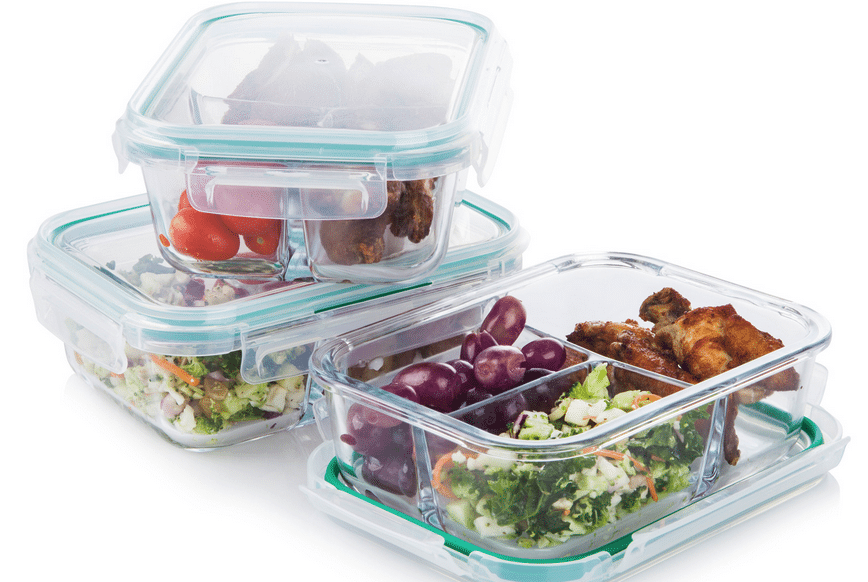
Reusing glass jars from condiments and pickles is a low-cost way to start, no specialty containers required.
For reheating, the microwave is fine. Heat in 60-second bursts and stir between to avoid hot and cold spots. Add a splash of water before reheating rice or protein and they won’t dry out.
Common Pitfalls (and When Meal Prep Isn’t Necessary)
Beginners tend to fail in predictable ways. Worth knowing the pattern so you don’t repeat it.
- Cooking 7 identical meals on day one. You’ll be sick of it by Wednesday. Default to hybrid prep instead, and vary sauces.
- Under-portioning protein. Most people eyeball protein at 60 to 70% of what they actually need. Weigh it. Divide your daily target by your meal count, and weigh that amount per container.
- Skipping the food scale. Cups and spoons drift fast. Most people underestimate carbs by 30 to 50% when eyeballing rice or oats. If your weight loss has stalled and you’re “doing everything right,” this is the first thing to check.
- Over-prepping in week 1 and quitting by week 3. Start with 3 to 4 days, not a full week. See if you like the routine before scaling it up.
- Spending too much. Meal prep is supposed to save money, not generate a $200 grocery bill for fancy ingredients. Our guide to meal planning on a budget covers the staples that stretch furthest.
When meal prep isn’t necessary
Honestly, some people lose weight better without meal prepping. If you cook every day, enjoy it, and your portions are accurate, prepping in advance doesn’t add much. If meal prep makes you dread Sundays, you don’t need it. You need to track calories, hit your protein target, and cook things you’ll actually eat. The point is making your calorie target easy to hit, not following a specific aesthetic.
Treat prep as one tool for getting consistent, not as the way. Use it when it helps, drop it when it doesn’t.
If you’d rather skip the trial-and-error and have someone build a sustainable system around your actual schedule, food preferences, and weight loss timeline, you can get matched with a Macros Inc coach. They’ll set your numbers, adjust them as you go, and help you avoid the patterns that have stalled your progress before.
For more visual meal prep walkthroughs, our YouTube channel has recipe shorts and full prep sessions.
No gimmicks. No restrictions.
Start your journey with expert coaching, personalized nutrition, and real results, absolutely free for two weeks.
